What Is on the Truck
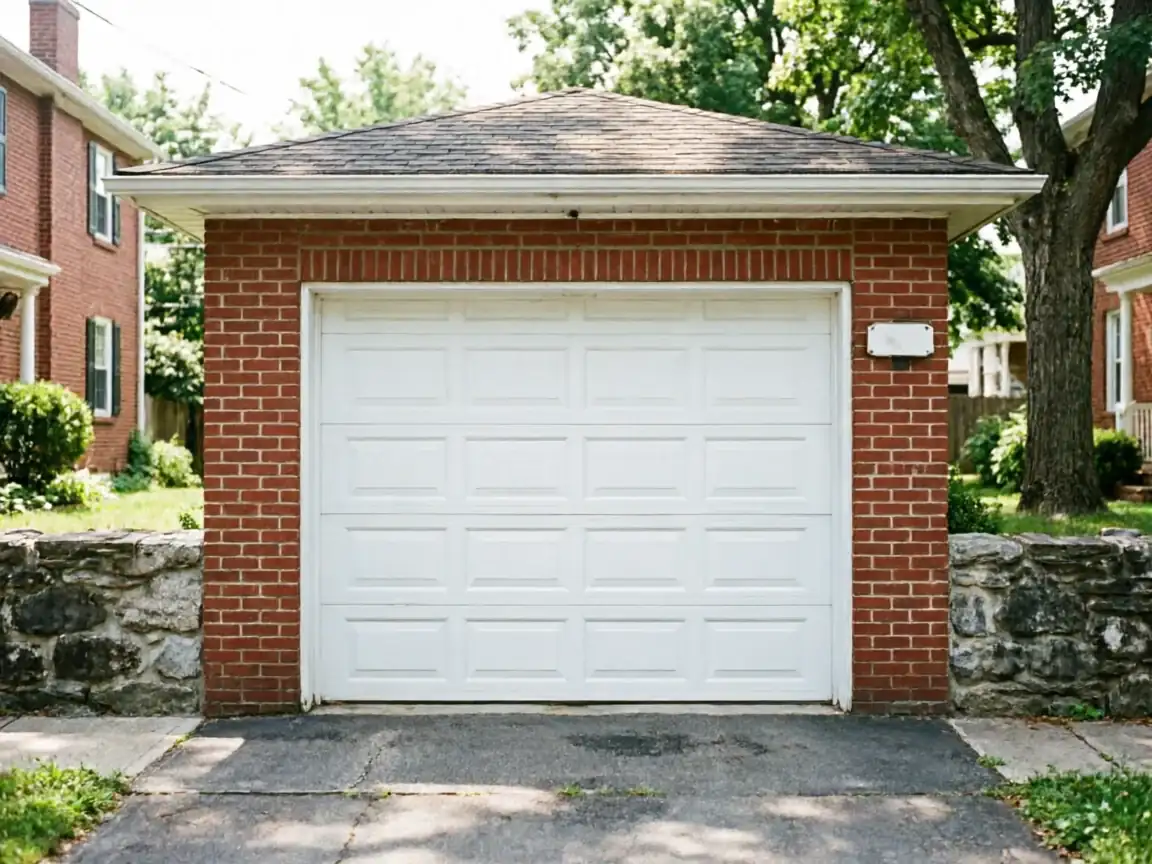
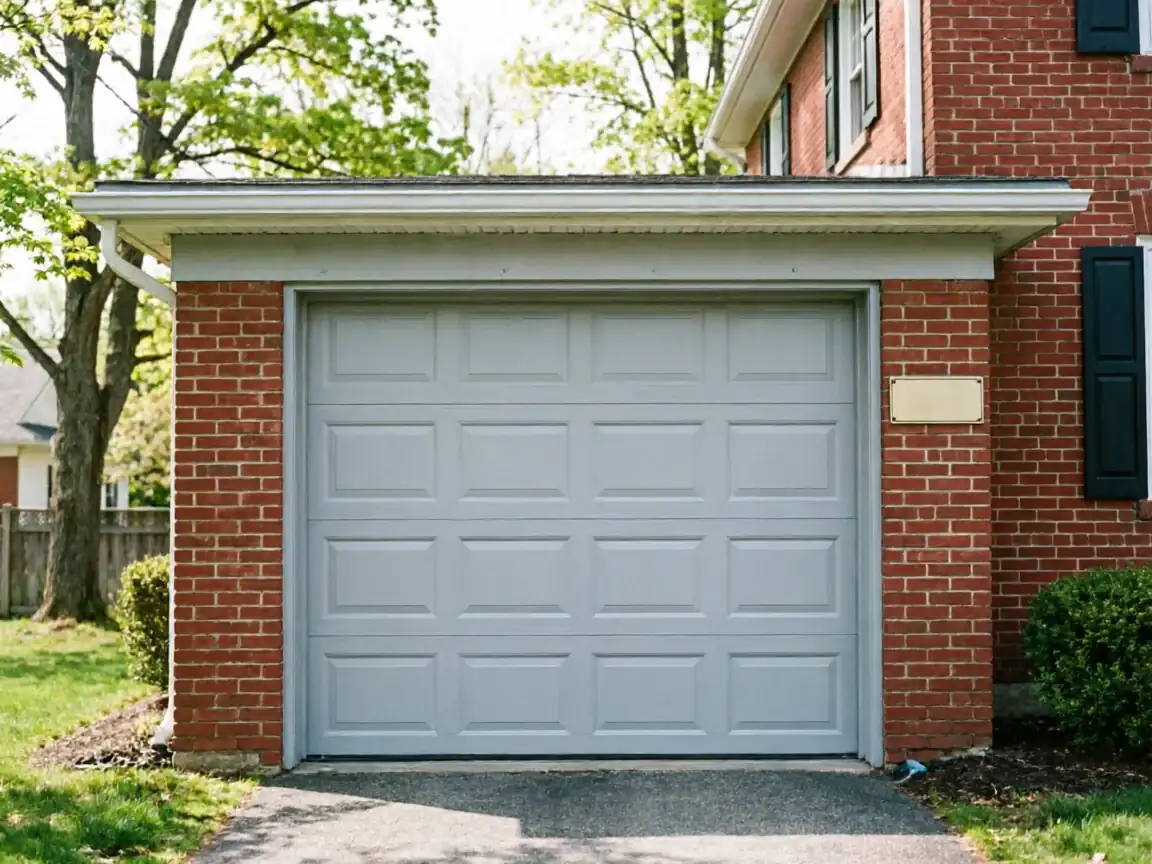
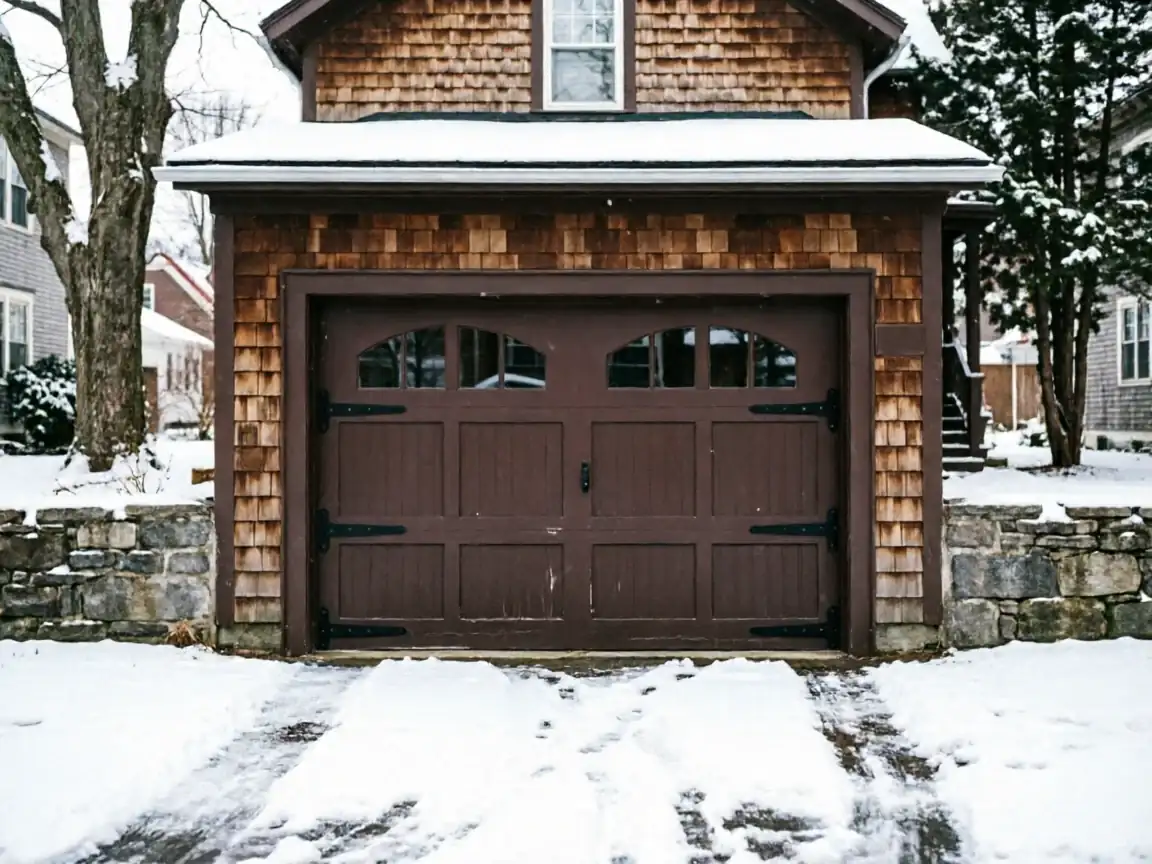
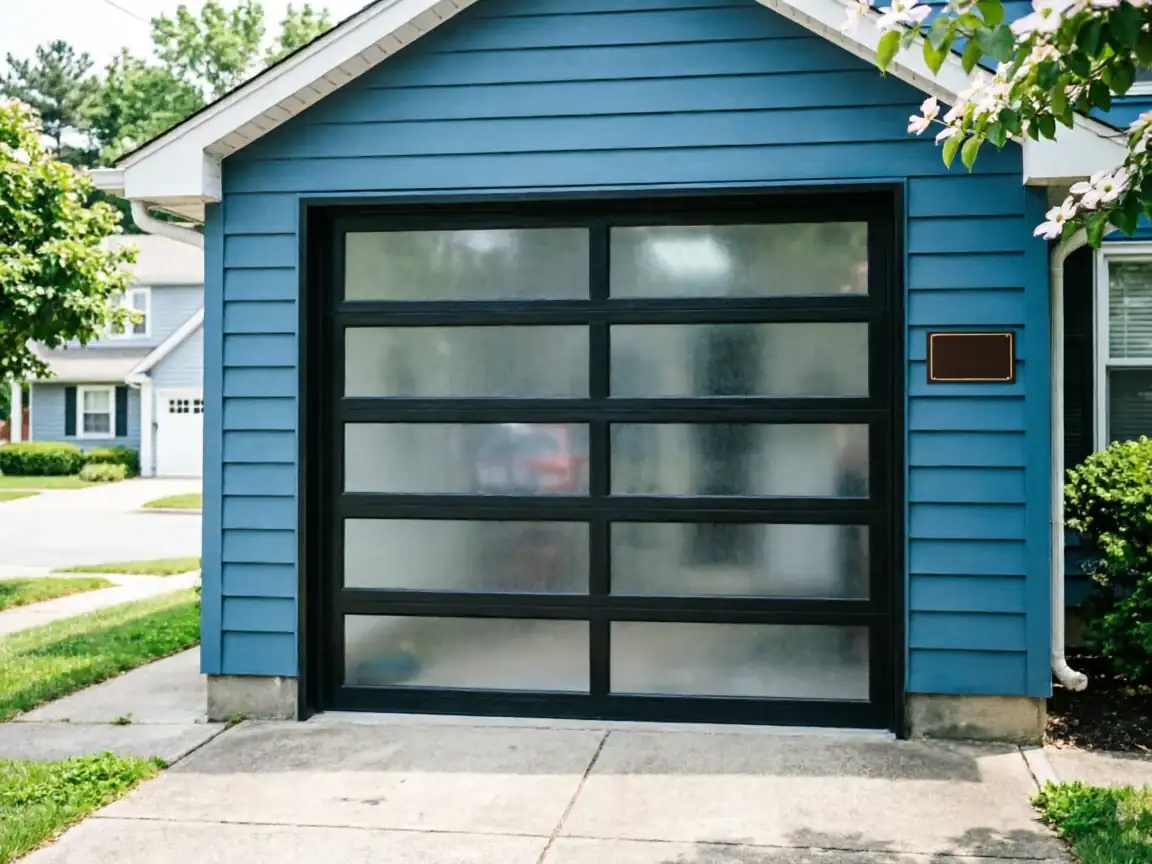
For a house this close to Wilmington, the truck carries standard torsion springs in the wire sizes and wind lengths that match 1950s and 60s door weights - mostly 7-foot single doors and 16-foot double doors, since that's what went up on this stretch between 1940 and the early 2000s, with most of it dating to the Eisenhower years. We also carry center brackets and stationary cones, because original brackets on doors this age are often bent or rusted at the weld, not just the spring. What we don't stock on the truck: oversized commercial springs or odd European wind sizes. If a previous owner put in a nonstandard spring, that's a call-ahead order, not a same-visit swap.
What You Are Seeing
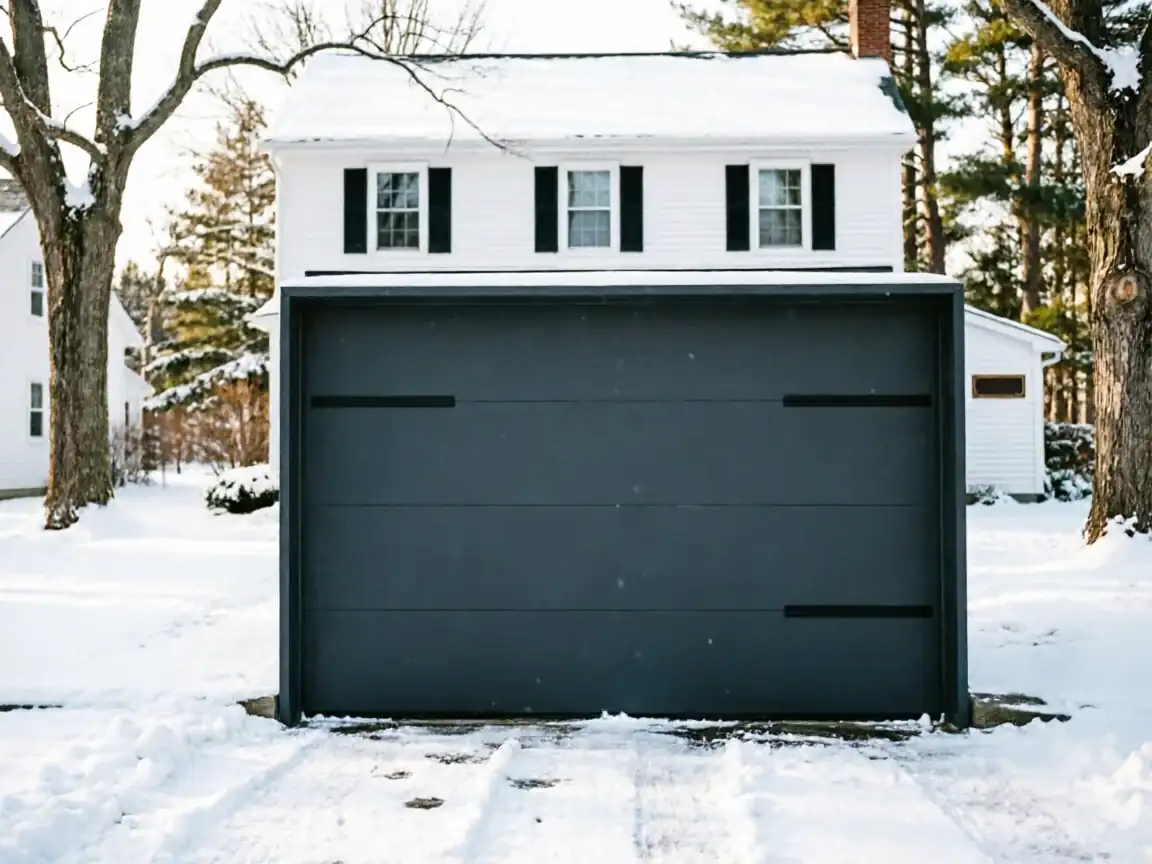
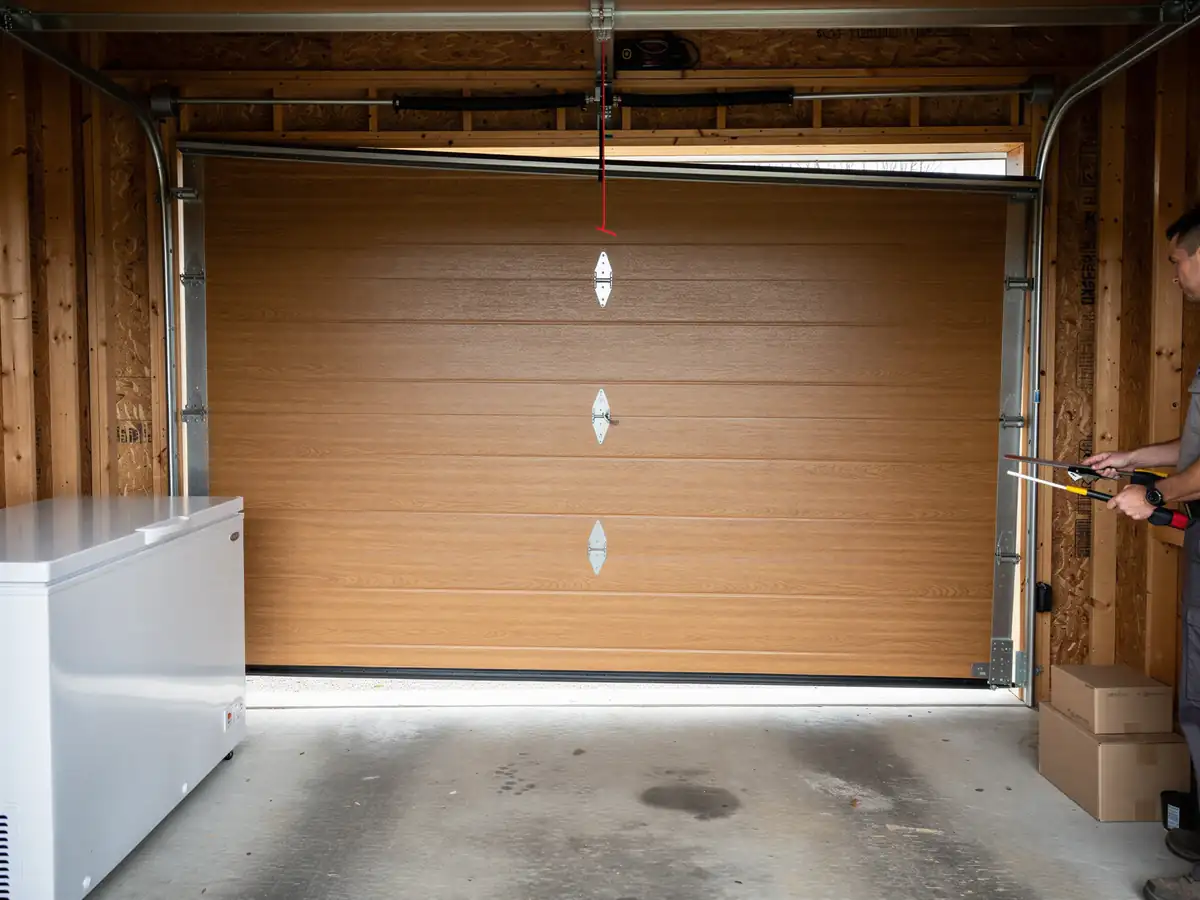
The usual signs: the door won't lift past knee height, or it drops fast and hard when you try to close it by hand. Sometimes it's a loud bang from the garage, like a gunshot, followed by the door refusing to open at all - that's the spring letting go, not the opener failing. On the older single-spring doors common in Edgemoor, a snapped spring often lets the door come down crooked, with one side touching the floor before the other. That asymmetry is a tell: a dual-spring door failing usually stays level a little longer before it jams.
How Long It Takes
A straightforward single-spring replacement on a door like the ones common in Edgemoor usually runs under two hours once the truck is on site, including checking cable wear and bracket condition while the door's already open. Double-spring jobs take longer because both sides need to be balanced against each other, not just swapped one at a time. The two-mile drive from Wilmington doesn't add meaningfully to the job - it's close enough that travel time isn't the bottleneck, parts and door condition are.
What the Fix Involves
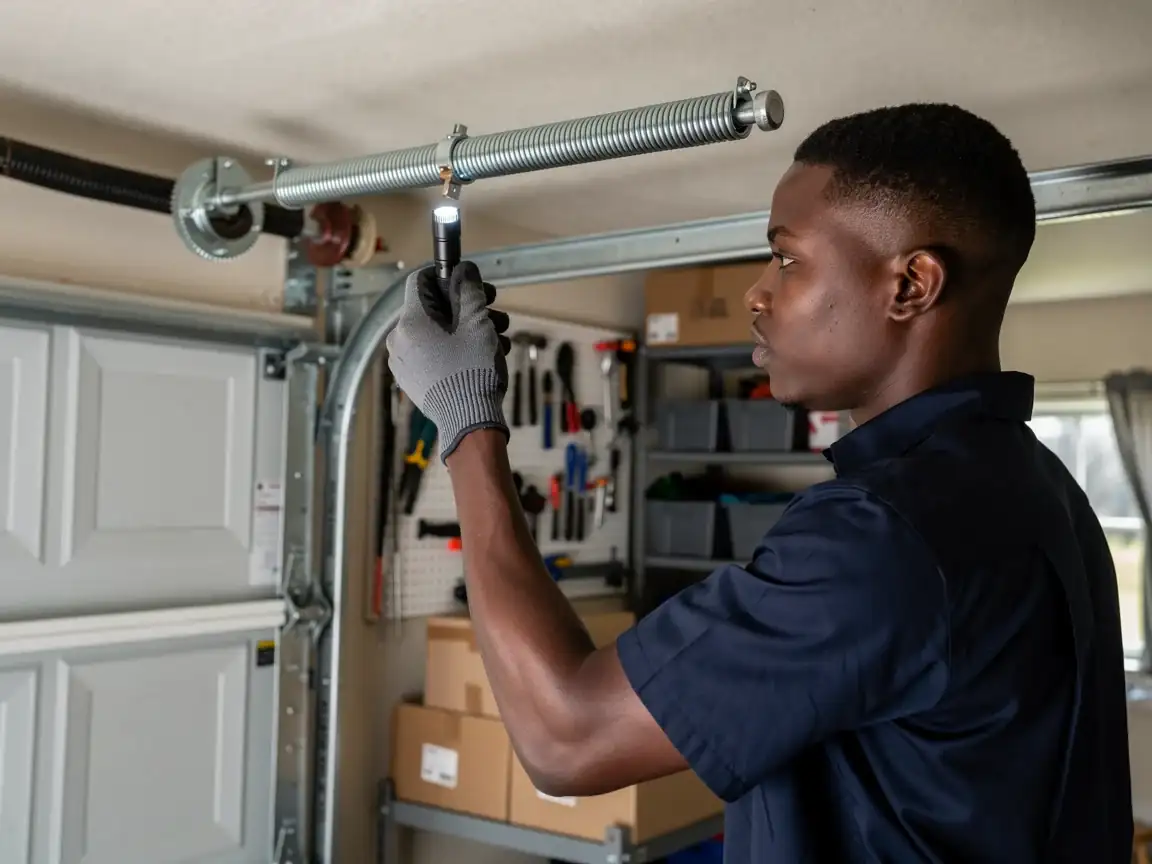
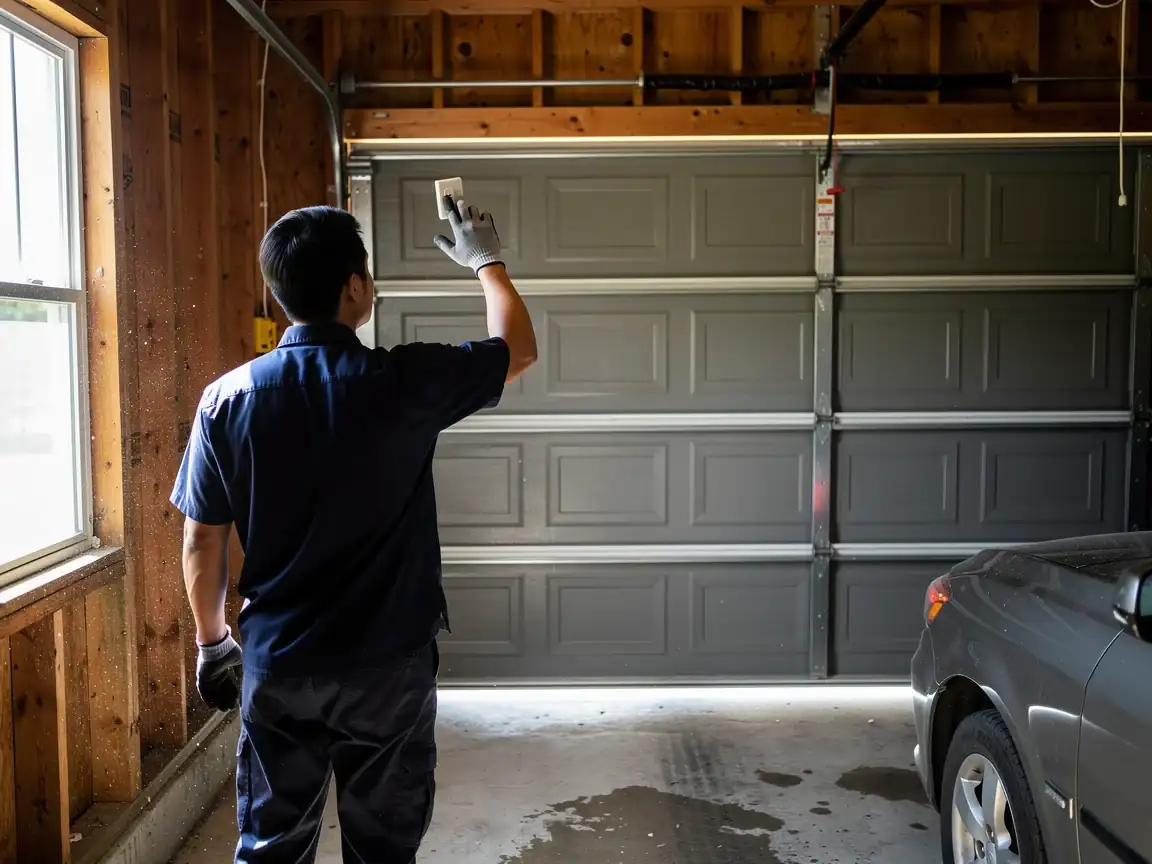
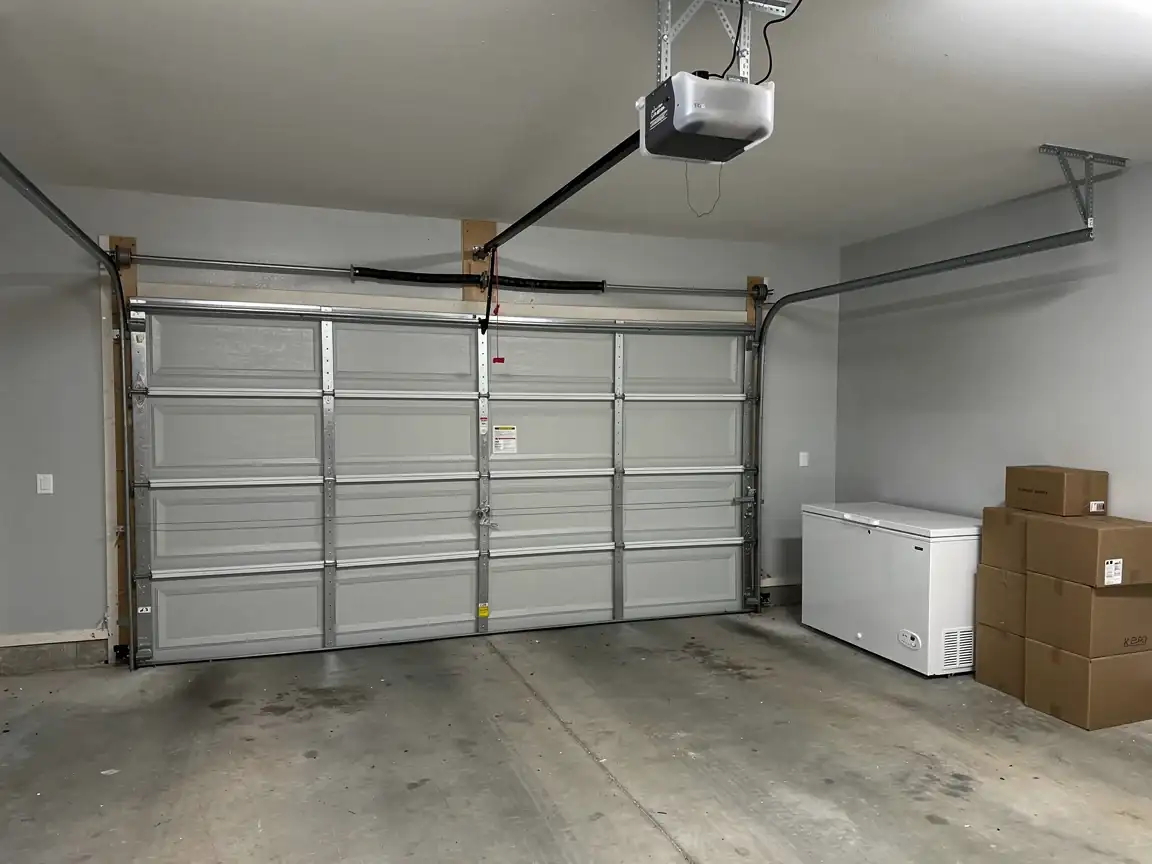
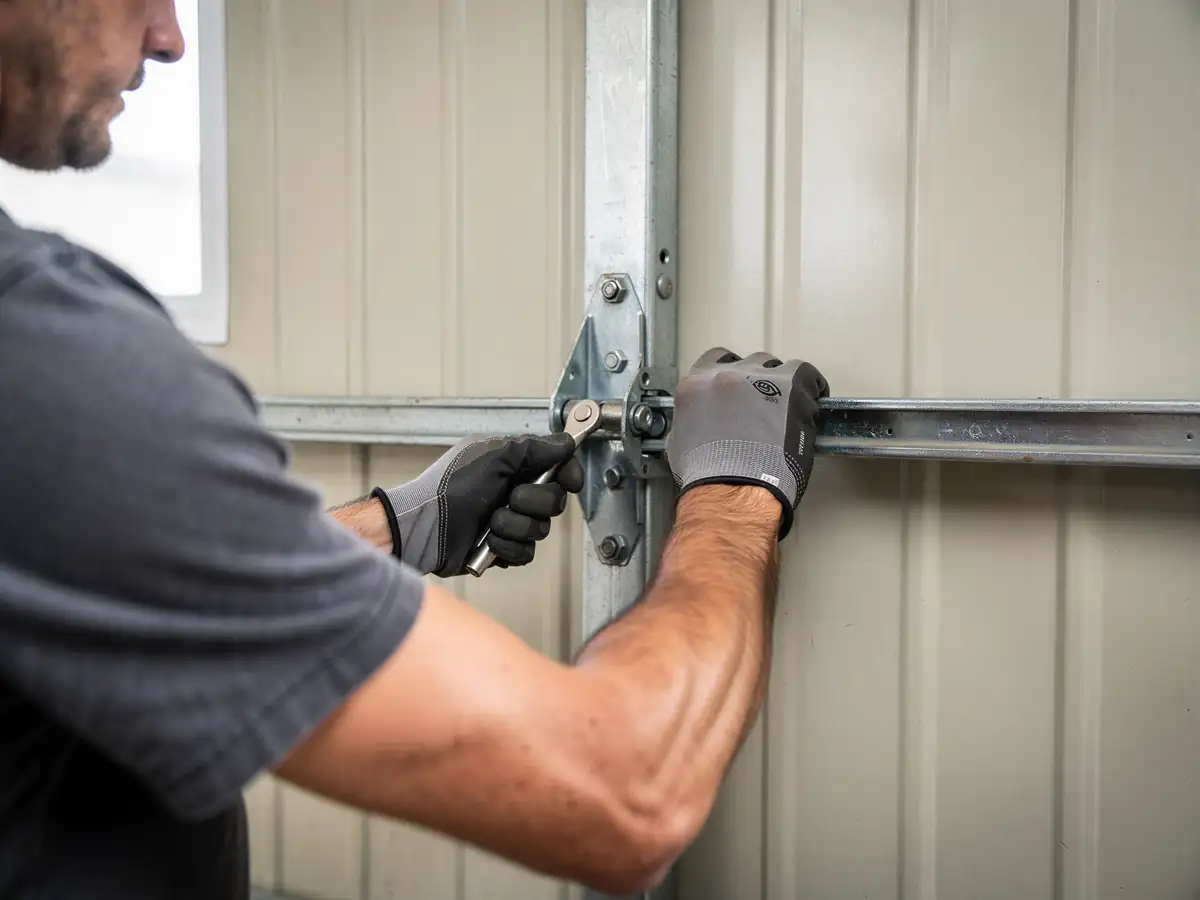
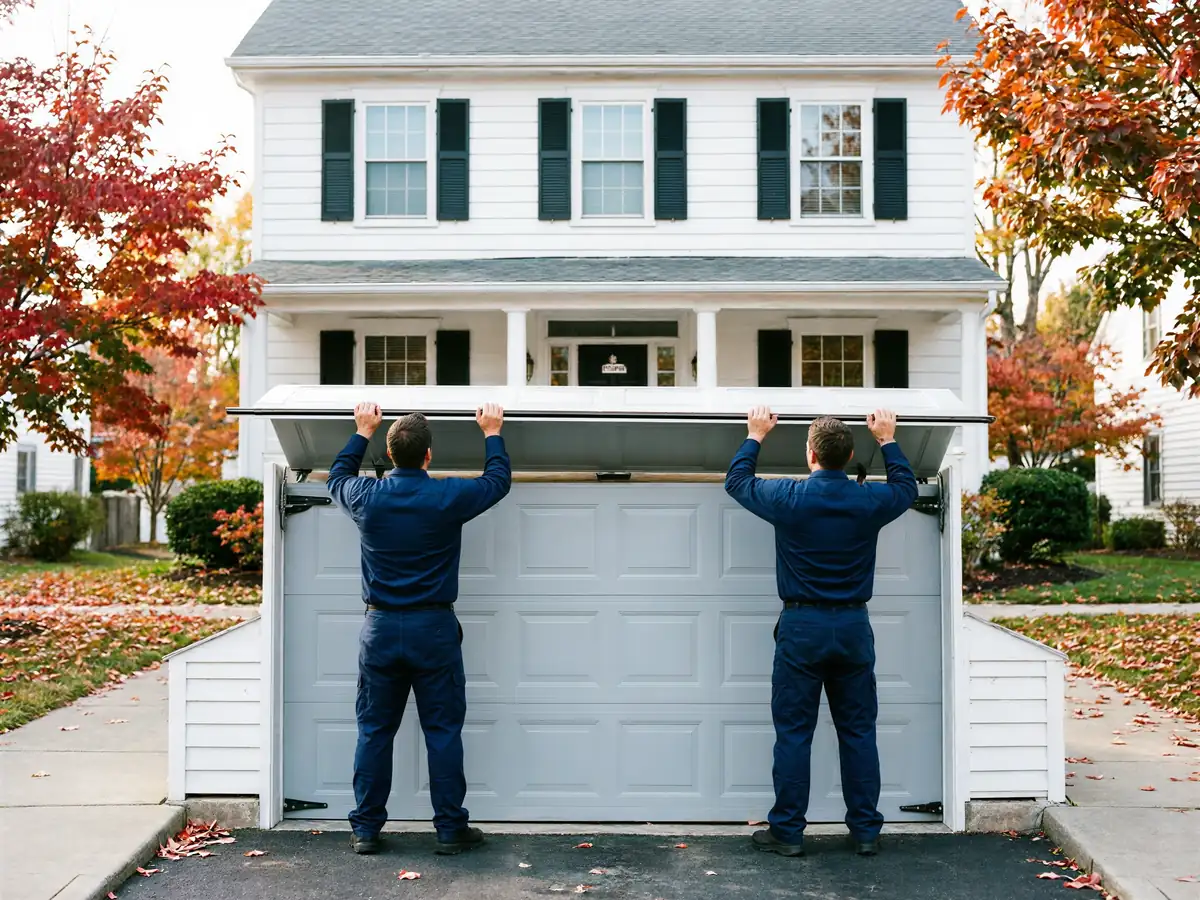
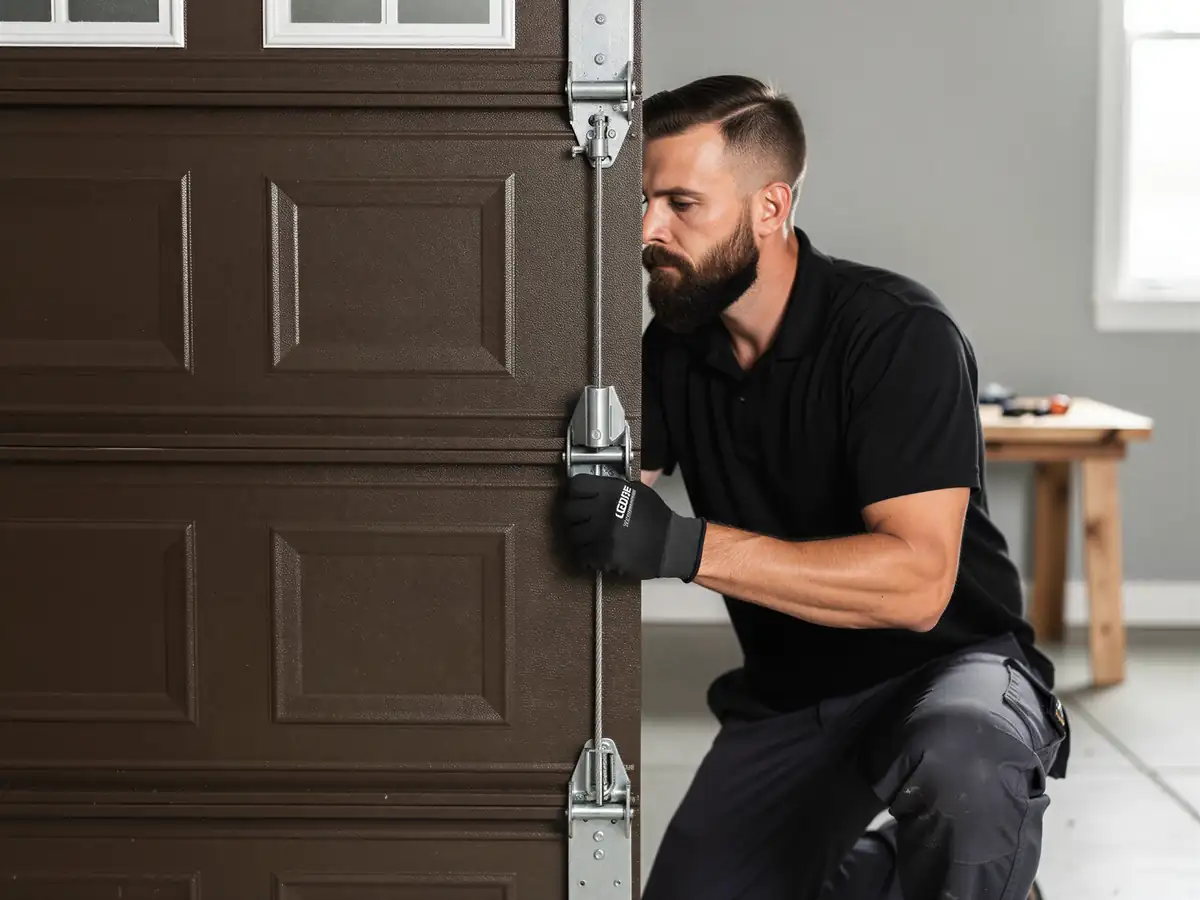
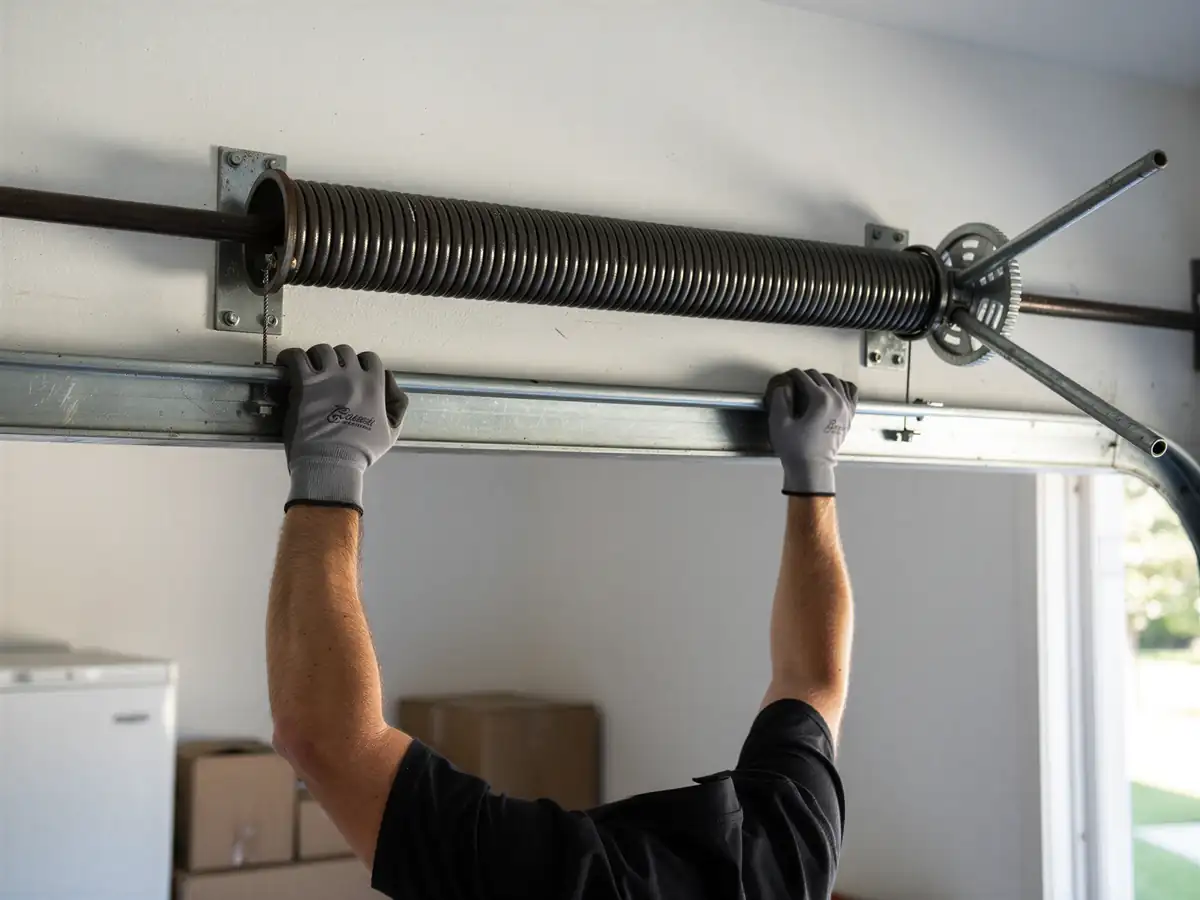
We unwind the old spring fully before touching anything else on the door - that's the dangerous part, and it's also where rushing causes injuries. Once the spring's off, we check the center bracket, the cable drums, and the bearing plates, since on a door built around the late 1950s these parts have usually outlived at least one spring already. New spring goes in sized to the actual door weight, not just whatever size came off, because a mismatched original is common enough on houses this age that we check it every time. Last step is winding to balance: the door should hold level at any point when lifted by hand, with no help from the opener. If it doesn't, the spring's wound wrong, and we fix that before we leave, not after a callback.