The Seasonal Bit
Housing in this service area was mostly built between 1940 and 2001
With the median year sitting around 1965. That's not a small detail when it comes to garage doors. A door installed with the house in 1965 was never built to any insulation standard, because there wasn't one to build to. It was a single layer of steel, maybe with a couple of horizontal ribs for stiffness, and that was the whole spec.
Owners in neighborhoods stretching from Edgemoor to Bellefonte to Elsmere are often surprised to learn their door is original
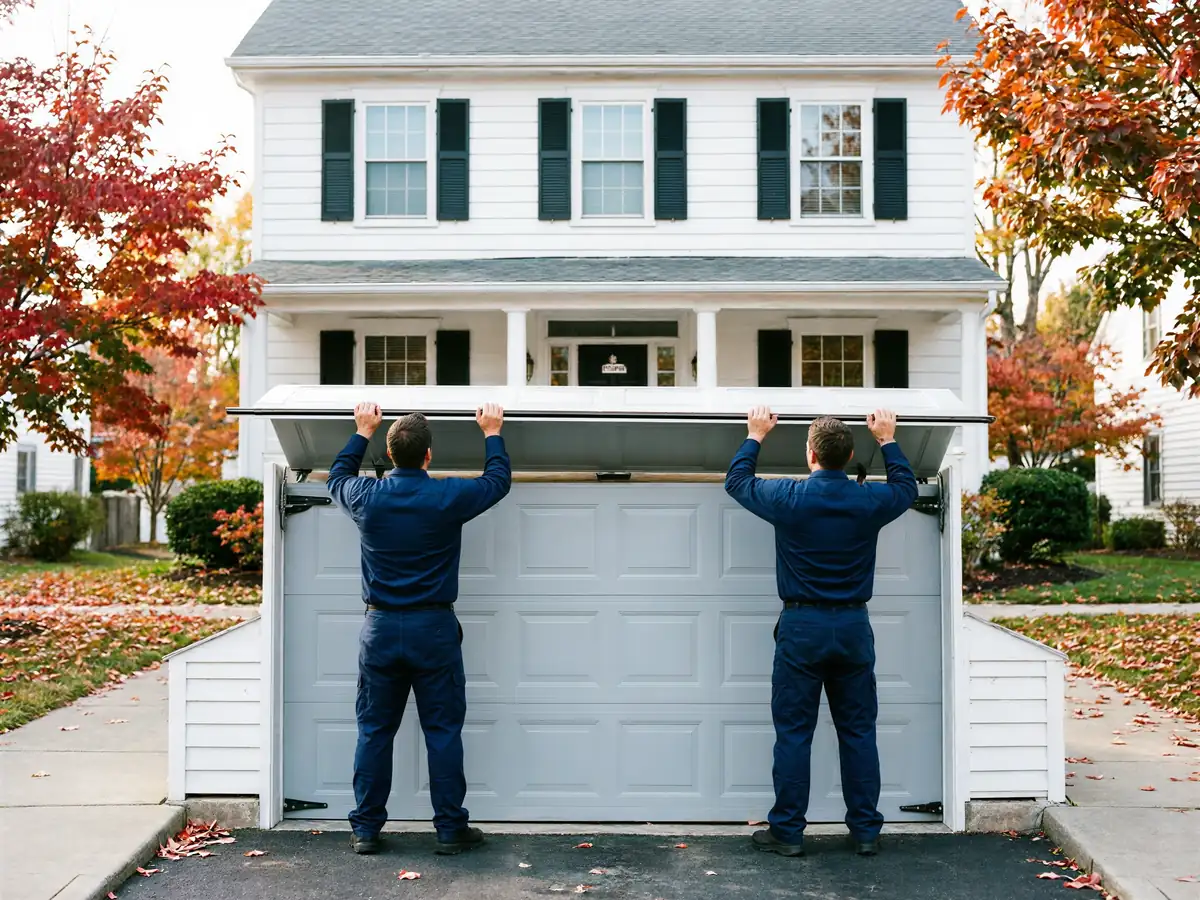
Or close to it. Nobody replaces a garage door unless it breaks, so a lot of 1960s and 70s doors are still hanging on their original tracks, doing the job they were built for, just not built for what winter does to an attached garage now. The seasonal part of this isn't exotic weather. It's a 55-year-old door meeting a cold month it was never designed to handle well.
If your house falls in that build range
Which covers a large share of homes in this area, your garage door is worth a second look before the cold really sets in, not after a cable snaps in January.
What the Weather Here Does to It
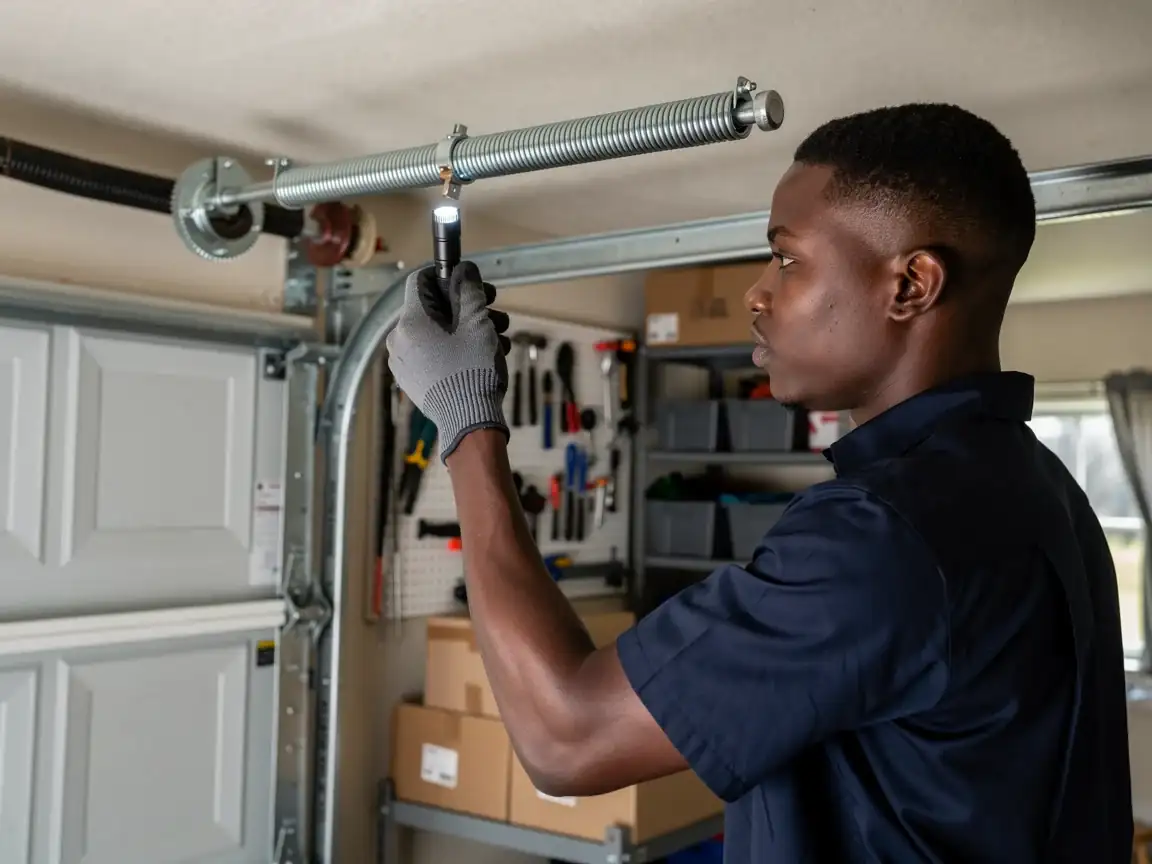
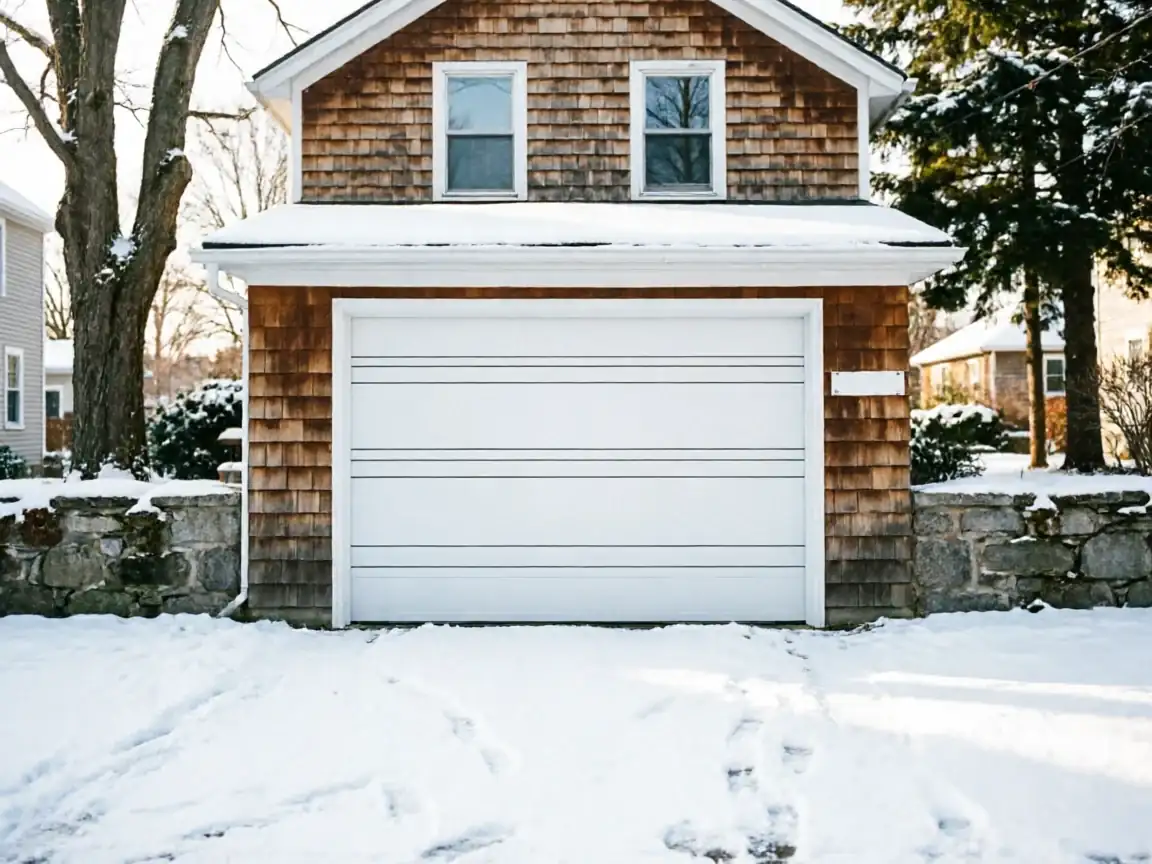
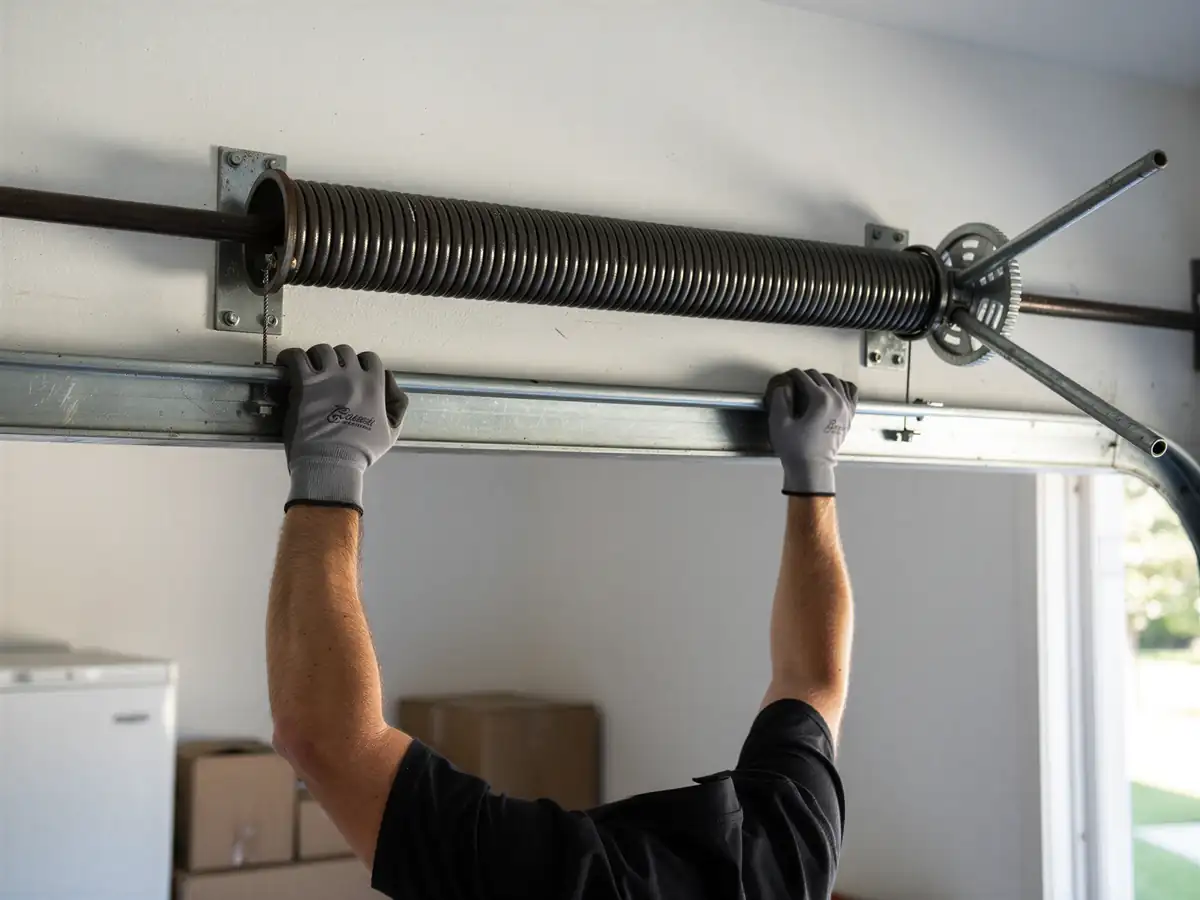
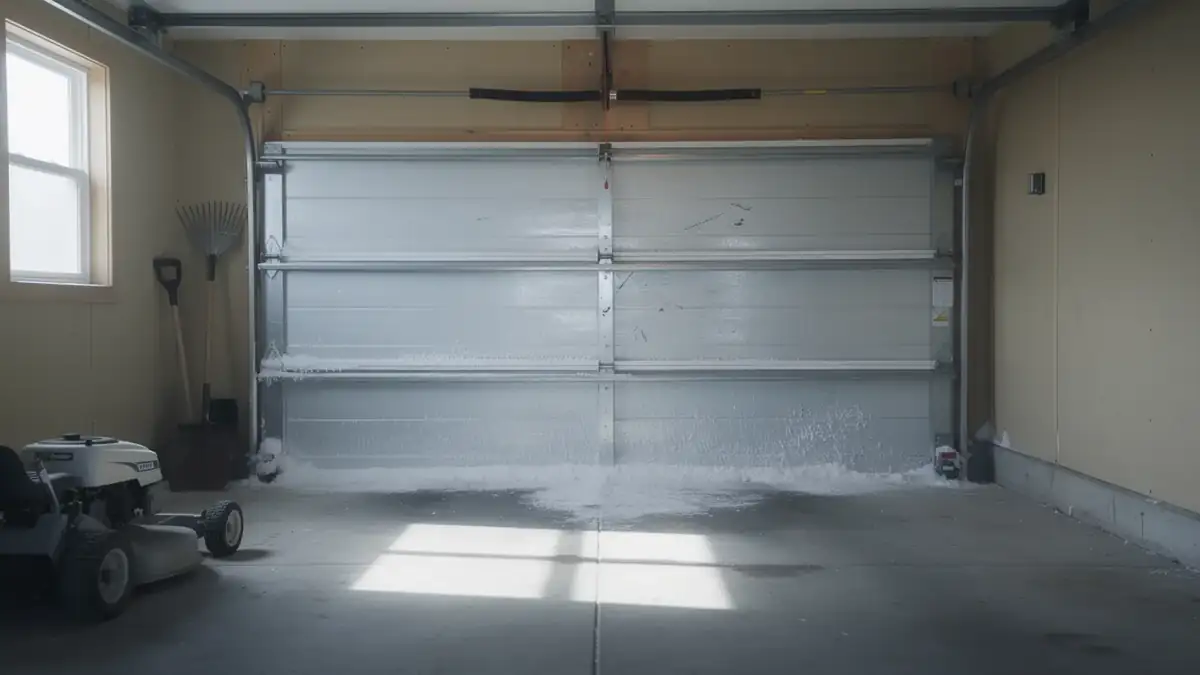
This area sits in a cold-severe climate band. That matters for an uninsulated steel door in a specific way: metal contracts in the cold, and a single layer of steel with no thermal break contracts a lot. Panels that fit snugly in August can develop a visible gap at the bottom seal by midwinter. Torsion springs lose a little tension in sustained cold, which is why doors that worked fine in October start feeling heavy, or hesitant, by December.
On an attached garage, an uninsulated door is also a direct path for cold air into the structure next to it, whether that's a mudroom, a laundry room, or a wall shared with living space. In a cold-severe climate, that's not a comfort issue alone. It's condensation on the inside face of the door, which over years turns to surface rust on original steel doors that have never been refinished.
We're not going to tell you every door needs replacing because of one cold snap. But in this climate band, a door built before insulation rules existed is doing more thermal damage, season after season, than most owners realize until they're standing in the garage in a coat.
The Problem
The core problem is simple: a huge share of garage doors in this area predate any insulation requirement, because the houses they're attached to predate one too. Across the 16 named areas that make up this service territory, the dominant housing stock is 1960s and 70s construction. That means the doors are, on average, single-skin steel with no polystyrene or polyurethane core, no thermal break at the frame, and weatherstripping that was never designed to do much more than keep rain out.
That's not a defect. It's just the code and the market of the era. The problem shows up now, when an owner on an original 1965 door wants a quieter opener, or notices the garage running ten or fifteen degrees colder than the rest of the house, or finds the bottom panel has started to bow where moisture collected against uninsulated steel for decades.
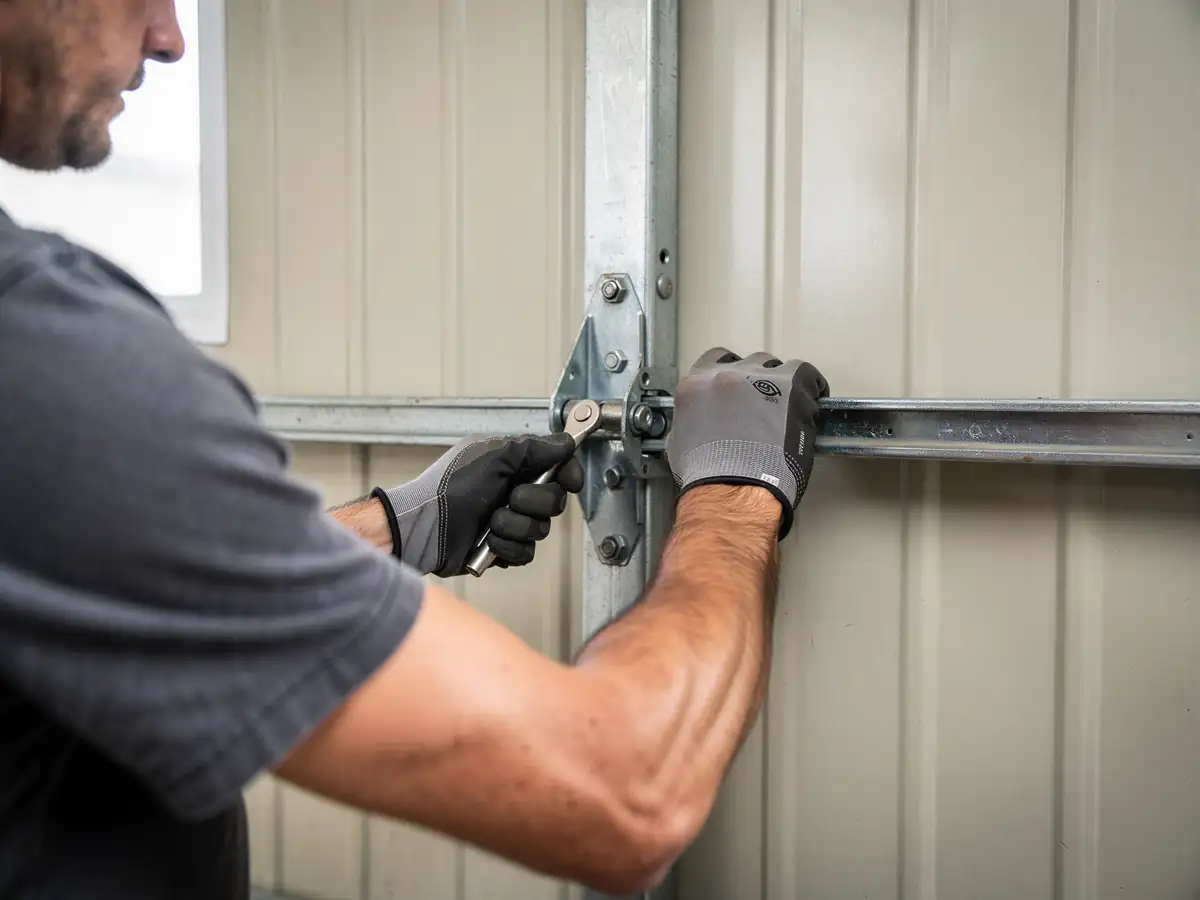
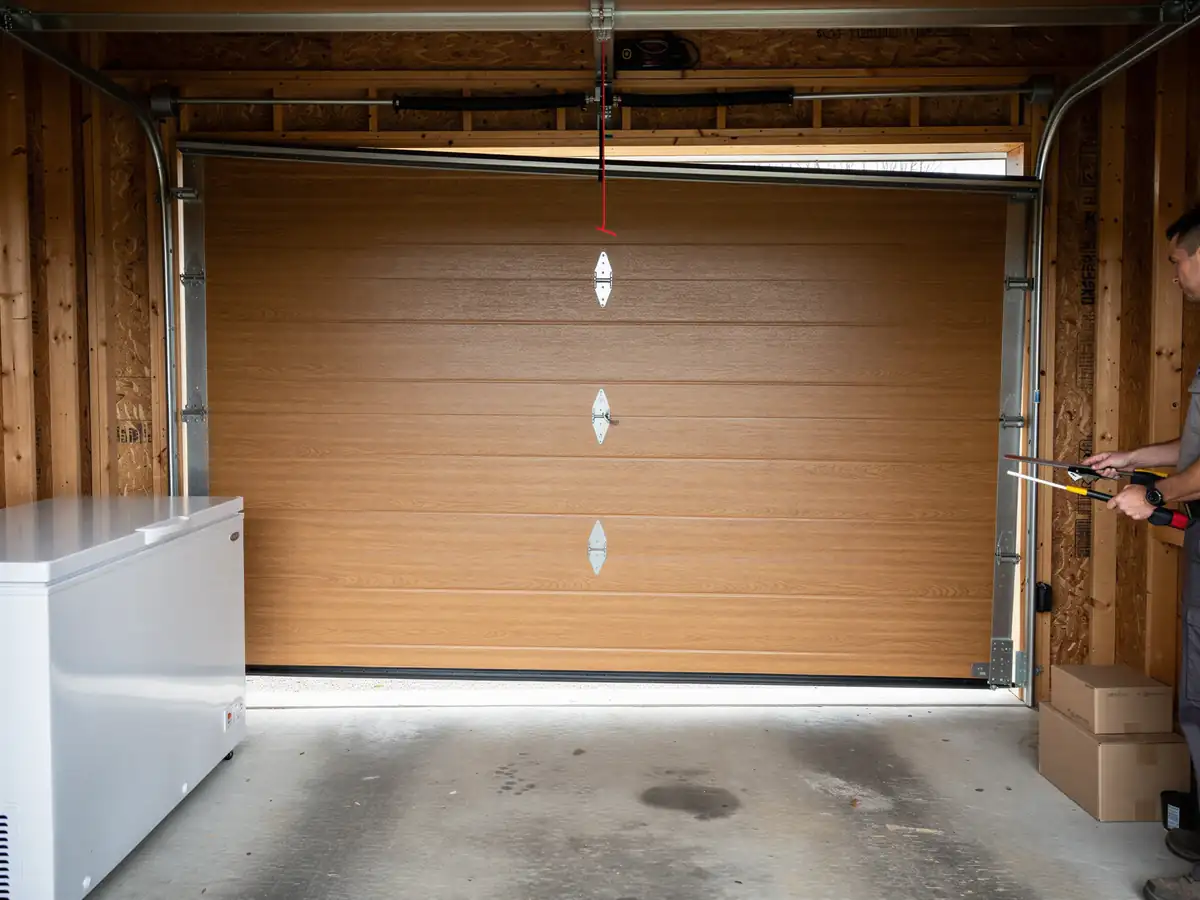
We'll be straight with you: not every original door needs to come out. Some are structurally fine and just need new weatherstripping and a serviced spring system. Others, especially ones that have taken on rust at the bottom panel or warped from years of condensation, aren't worth patching. Telling the difference is a five-minute look at the door, not a guess over the phone.
What It Costs
We don't have a number we can put on a page and call accurate
Because the honest cost depends on what's actually wrong: whether you're replacing weatherstripping and a seal on an otherwise sound original door, or swapping the whole panel set for an insulated model, or discovering the track and spring system need attention too once the door's off its hinges. A single-layer 1960s steel door and a modern insulated replacement aren't priced the same job, and we're not going to pretend otherwise with a flat number that fits neither.
What we can tell you is what drives the cost up or down
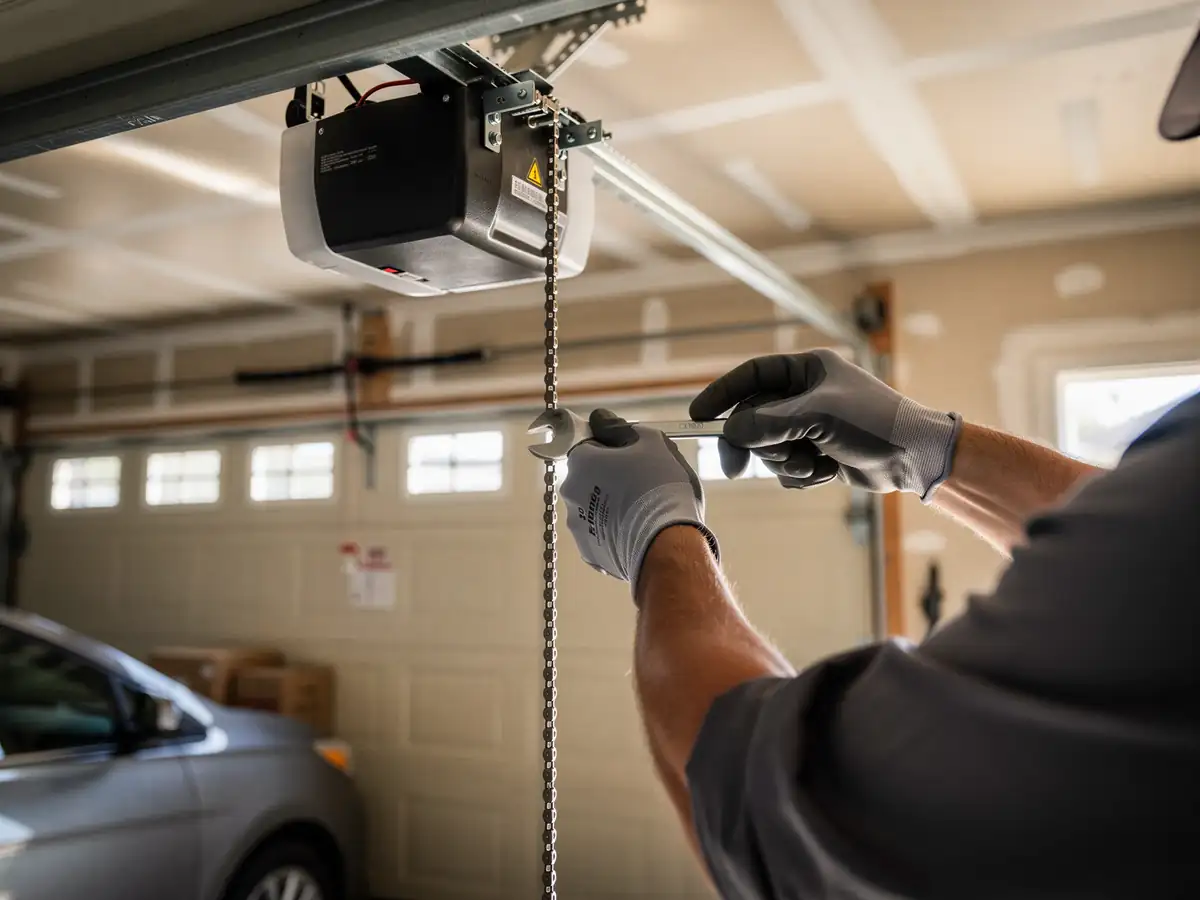
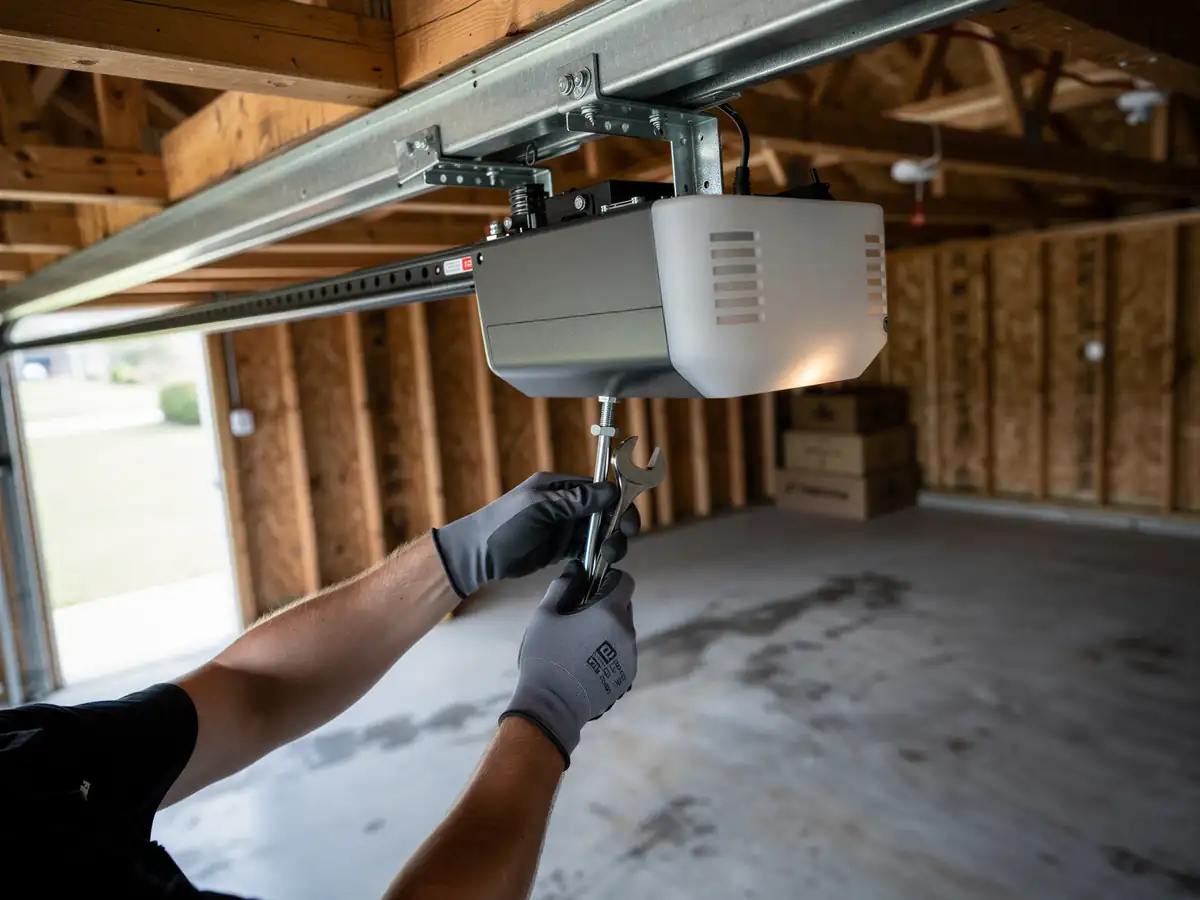
Whether the opener and track are being reused or replaced, whether the original hardware is torsion or extension spring, and how much of the house's original 1965-era frame is still square enough to take a new door without carpentry. Given the housing stock here, that last point comes up more than people expect.
If you want a real number, we need to see the door
That's not a dodge, it's how a quote on a job this variable ends up being accurate instead of being a number we have to walk back once we're standing in your garage.