What It Costs
We can't give you a number here without seeing the opener
Because the range on an opener call is wide. A dead capacitor or a burned-out logic board costs a lot less than a full opener swap, and a job that looks like a motor failure sometimes turns out to be a spring doing the motor's work for it - which is a different repair and a different bill.
What we can tell you is what drives the cost up or down
Whether the opener is a chain or belt drive, whether the circuit board is still made, and whether the wall control and safety sensors need replacing along with the head unit. Wilmington's housing stock runs from the 1940s through roughly 2001, with a lot of it clustered in the 1960s and 70s, so we're often matching parts to openers that are 20, 30, even 40 years old. Older openers sometimes have no replacement board available at all, and at that point we're talking full unit replacement rather than repair, whatever the original plan was.
- 40 years
We'll always quote the actual job once we've opened the housing and looked at the drive and the board
A phone quote on an opener you haven't seen is a guess, and we don't guess.
Why This Fails Locally
Wilmington sits in a cold climate band with real seasonal swings, and that matters more for openers than most people expect. Cold contracts lubricant inside the gearbox, stiffens belt and chain drives, and makes capacitors that are already marginal fail outright on the first hard freeze of the year. We see a jump in opener calls every winter, and it's rarely random - it's the cold finishing off a unit that was already weak.
The other factor is age. With housing across the service area built mostly between 1940 and 2001, and a heavy concentration in 1960s and 70s construction, a large share of the openers we're called to are original or close to it - chain-drive units with mechanical limit switches, not the belt-drive, soft-start models going in new. Those older openers weren't built with the safety reversal and force-limiting circuits that modern codes require, so when one of them fails, we're not just fixing it, we're often explaining why a straight repair isn't the right call anymore.
Put those two things together - older gear and a hard winter - and you get a predictable failure pattern: strained gears, cracked drive belts, and boards that short out the first cold morning they're asked to push a heavy, worn door.
What Is on the Truck
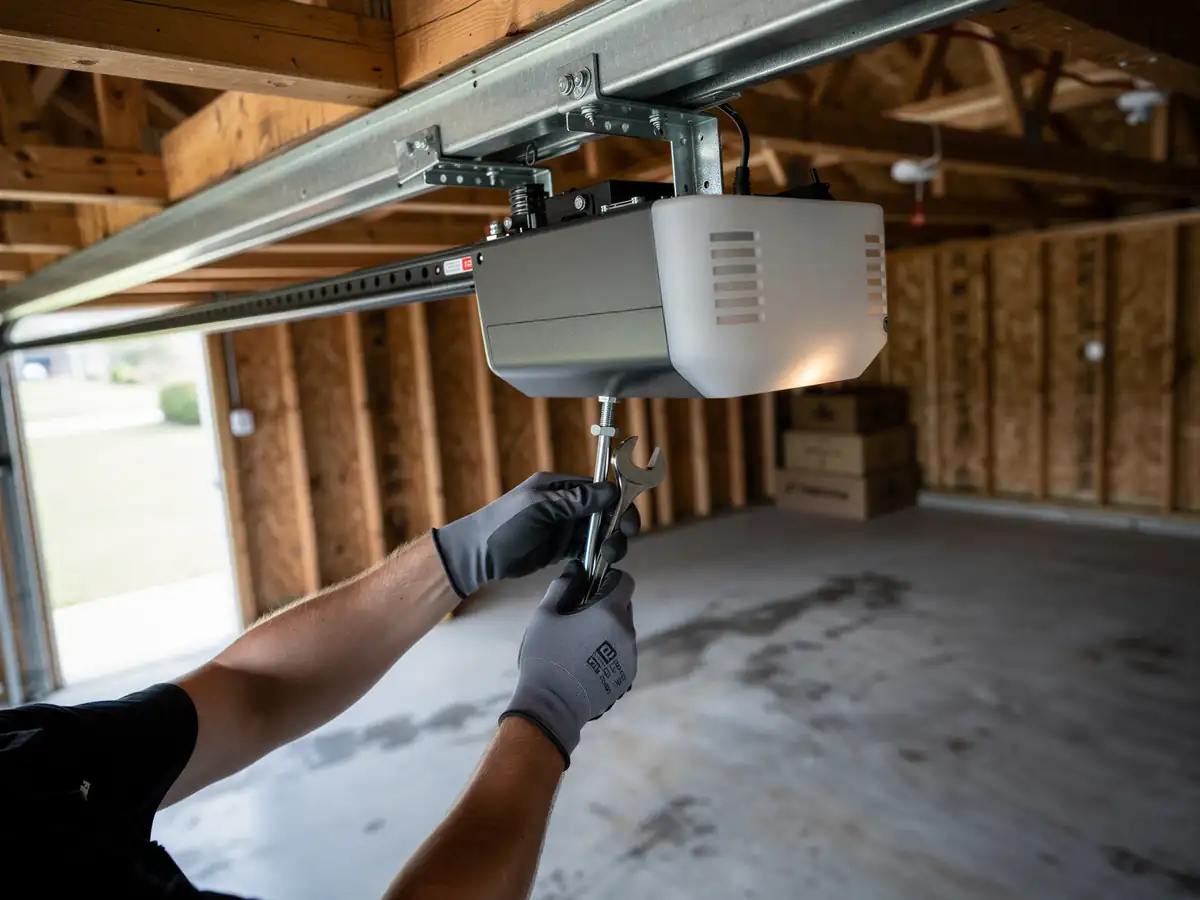
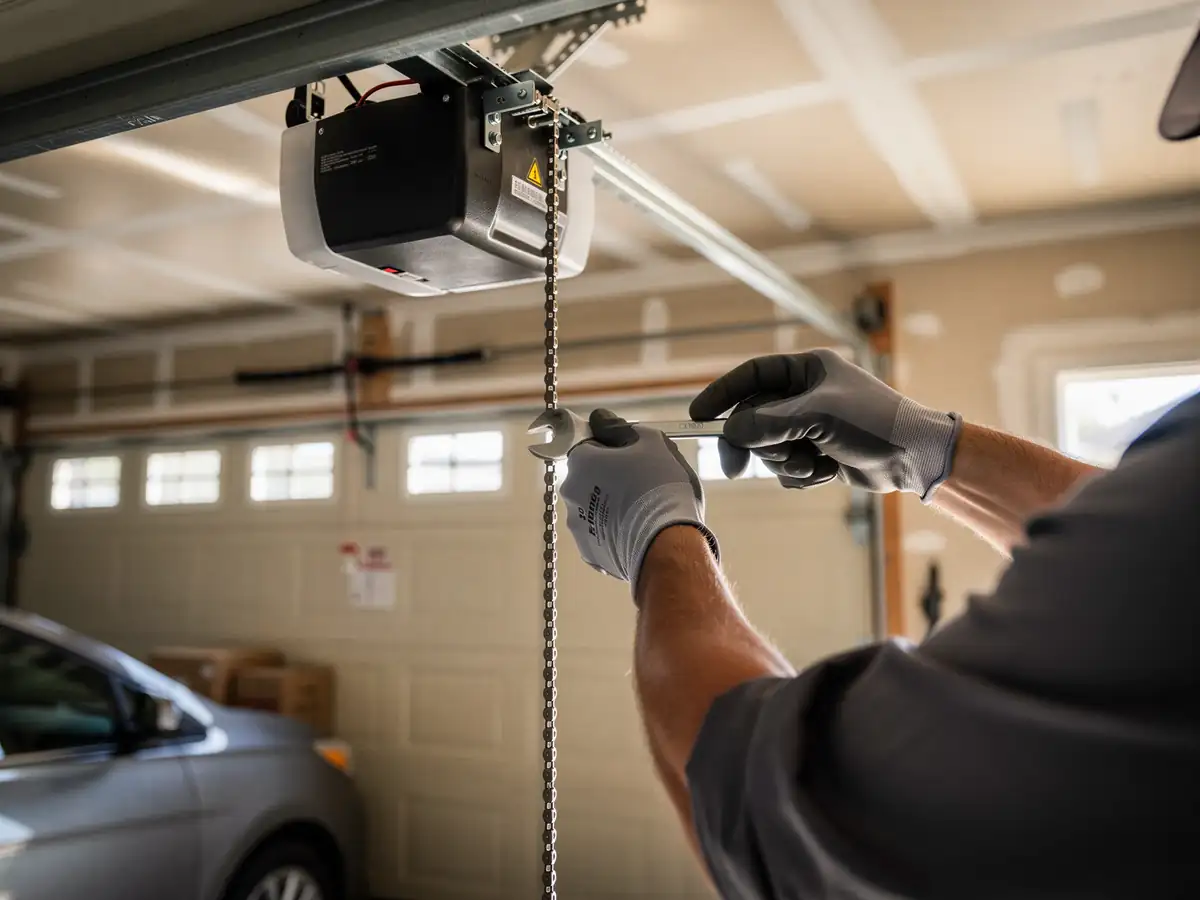
For opener calls we carry logic boards and capacitors for the common chain and belt-drive brands still in service, drive gears and sprockets, limit switch kits, safety sensor pairs, and wall control units. We also carry a stock of full opener units for when the board or the motor itself is gone and there's nothing left to repair.
What we don't carry is every board for every opener ever made. Some units - especially ones original to houses built in the 1940s through 60s - used proprietary parts that haven't been manufactured in decades. If that's what's on your ceiling, we'll say so on the spot rather than order a part that doesn't exist and leave you waiting on it.
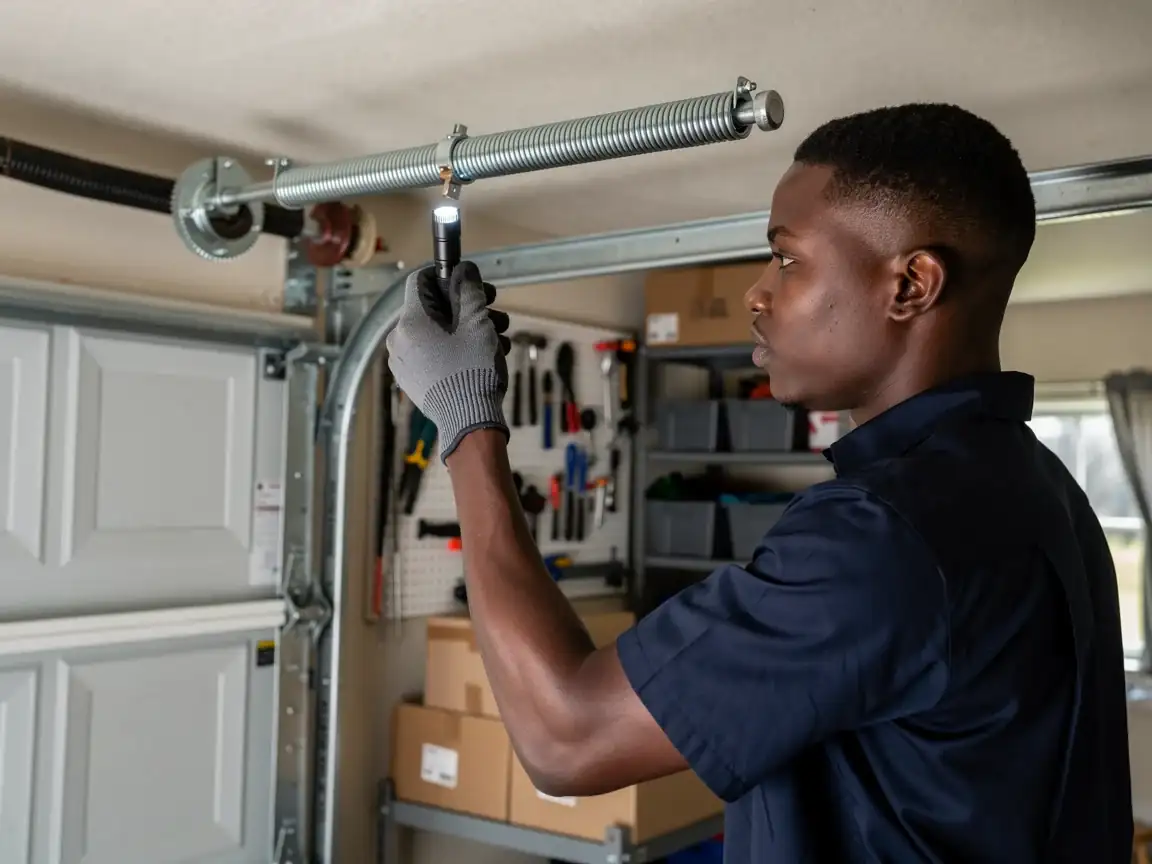
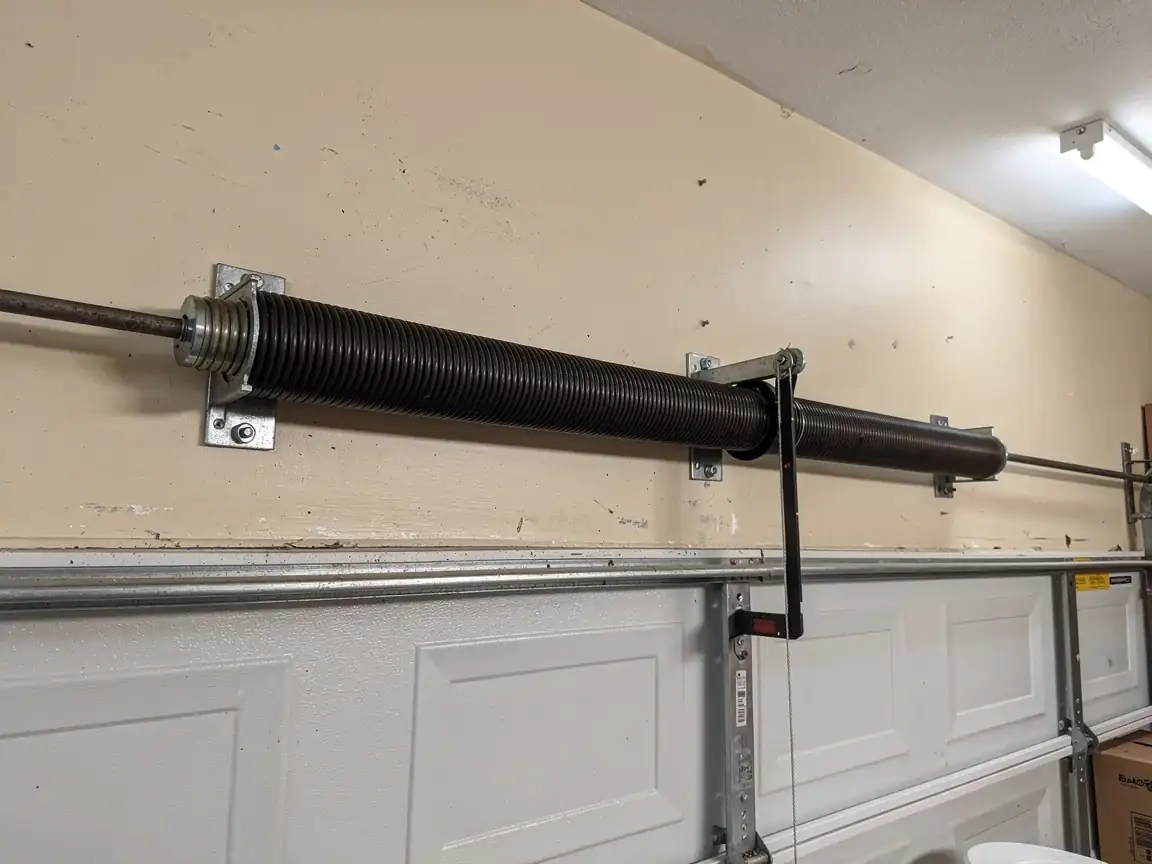
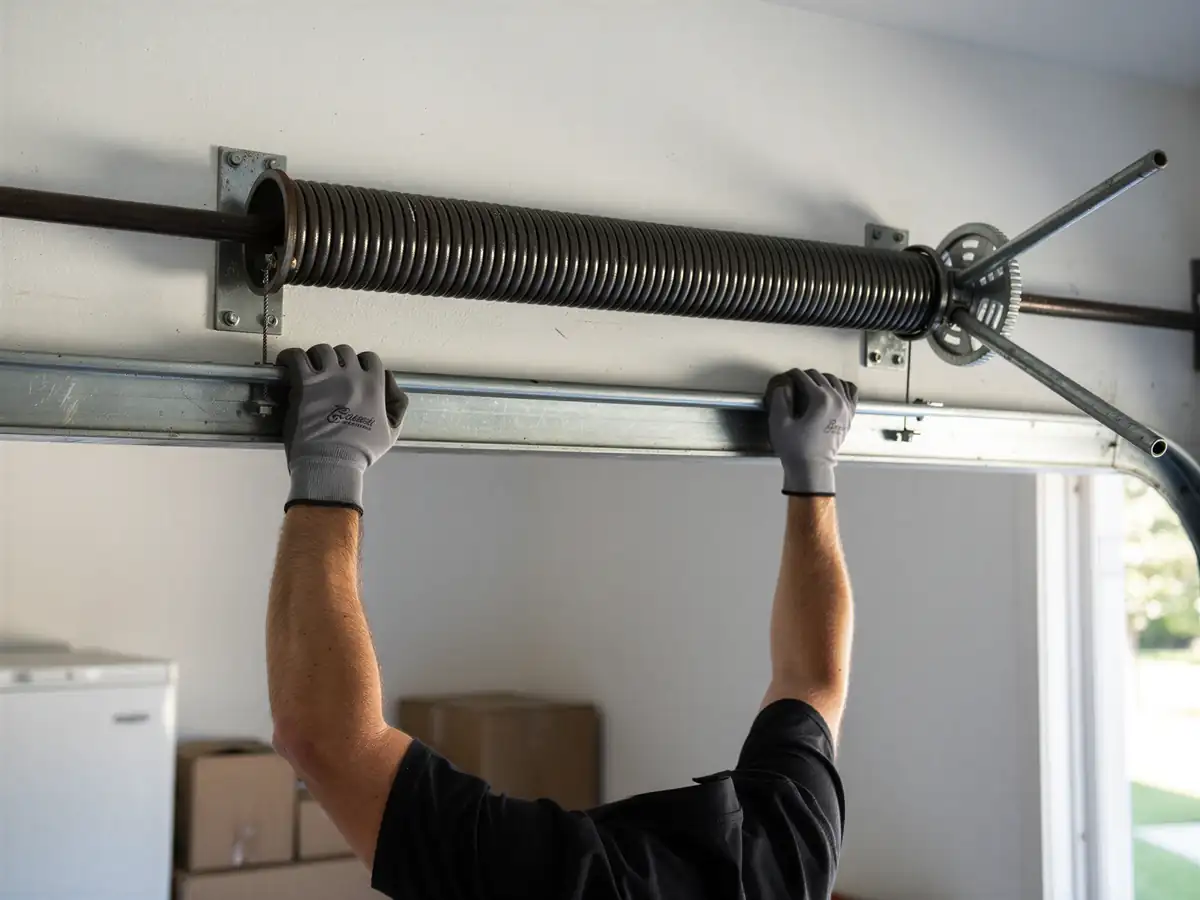
We also carry torsion spring sets and cable on the same truck, because a dead-sounding opener is frequently a tired spring, not a tired motor, and we'd rather diagnose that correctly than sell you a new opener that solves nothing.
What You Are Seeing
A few patterns show up again and again on opener calls here
The door doesn't move at all, but the motor hums - that's usually a stripped gear or a capacitor that's given out, not a dead motor. The door opens but won't close, or reverses partway down - check the safety sensors first, since a knocked-out-of-alignment sensor eye is the single most common cause, especially after a winter of ice buildup on the floor track.
A remote that used to work from across the driveway and now only works a few feet away points to a logic board losing strength
Not a dead remote battery. And an opener that runs loud, grinding, or with a delay before it catches - that's often the drive gear wearing down inside the housing, a slow failure that gets worse through a cold season rather than better.
If your opener is original to a house built decades back
Don't assume the fix is simple just because the symptom seems small. On older units, a cheap-looking fault is sometimes the first sign the whole gearbox is near the end.