The Seasonal Bit
Garage doors don't make noise for no reason
And the noise you hear in October is rarely the noise you hear in February. Houses here went up mostly between 1940 and 2001, with the median landing around 1965, which means a lot of original torsion hardware is still hanging on tracks nobody has serviced since the Johnson administration. That hardware doesn't announce itself in July. It announces itself the first cold week of the year, when steel that's been sitting loose all summer suddenly has to do work in contracted metal.
A squeak that shows up only on the coldest mornings and quiets down by afternoon is usually dry rollers or a dry torsion spring
Lubrication that worked fine at 70 degrees and stopped working at 25. A grinding sound that gets worse week over week, cold or not, is a different animal: a bearing or roller wearing out, not just drying out. The seasonal pattern is the diagnostic tool. If the noise tracks the thermometer, start with lubrication. If it doesn't, start looking at parts.
What the Weather Here Does to It
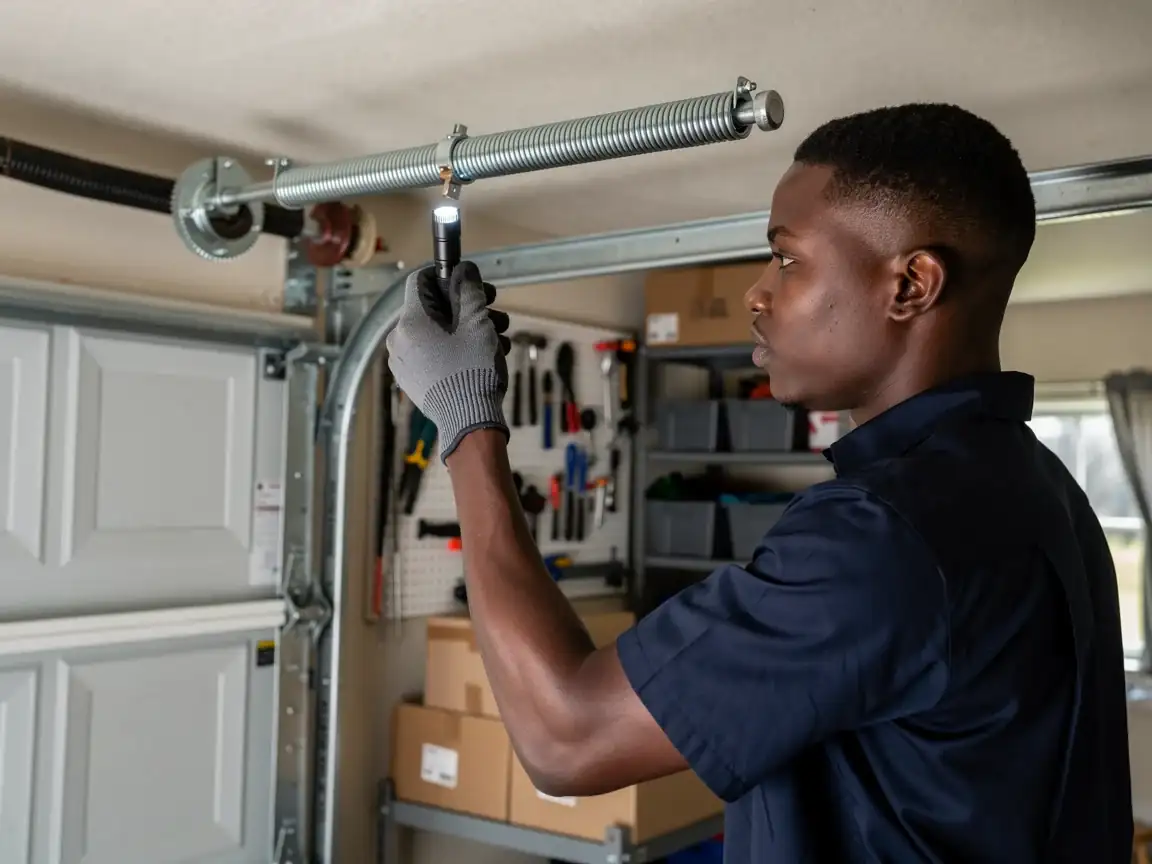
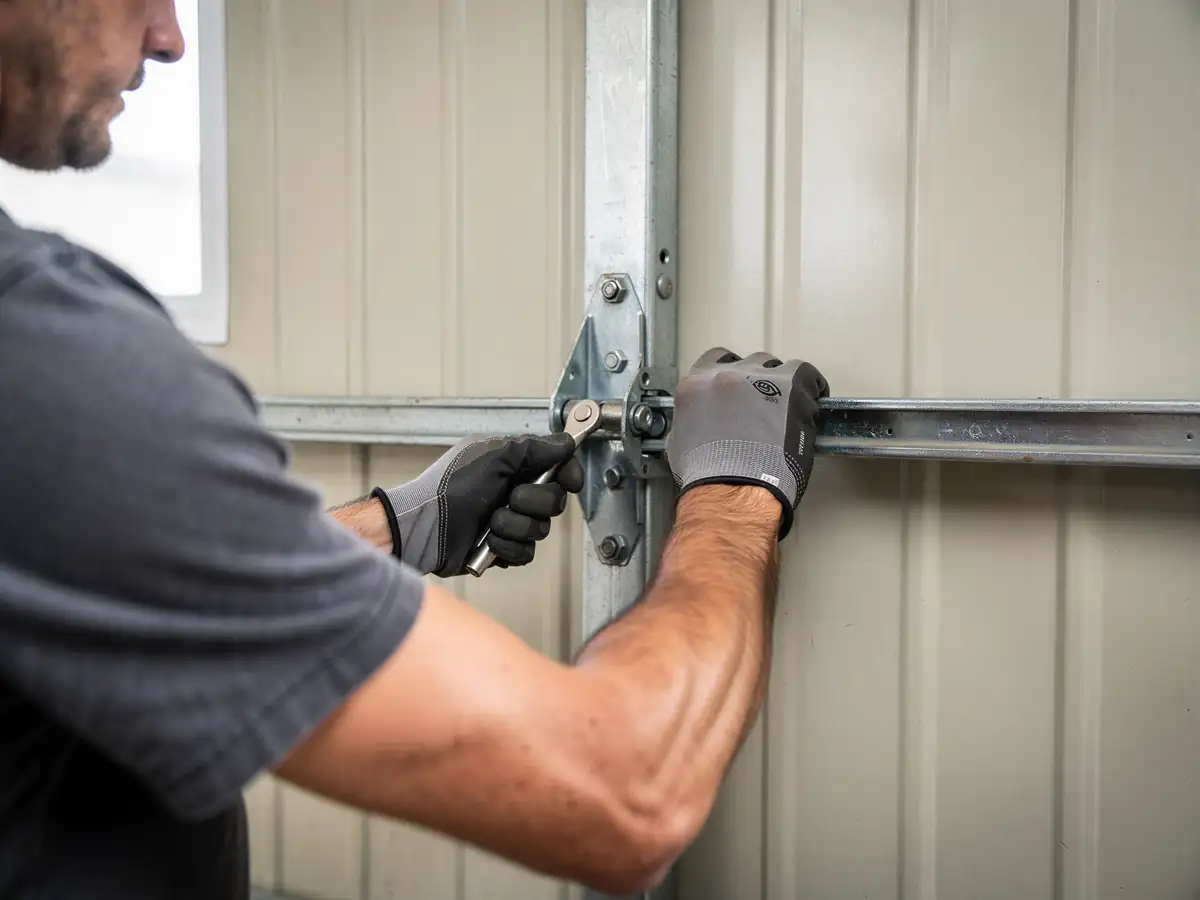
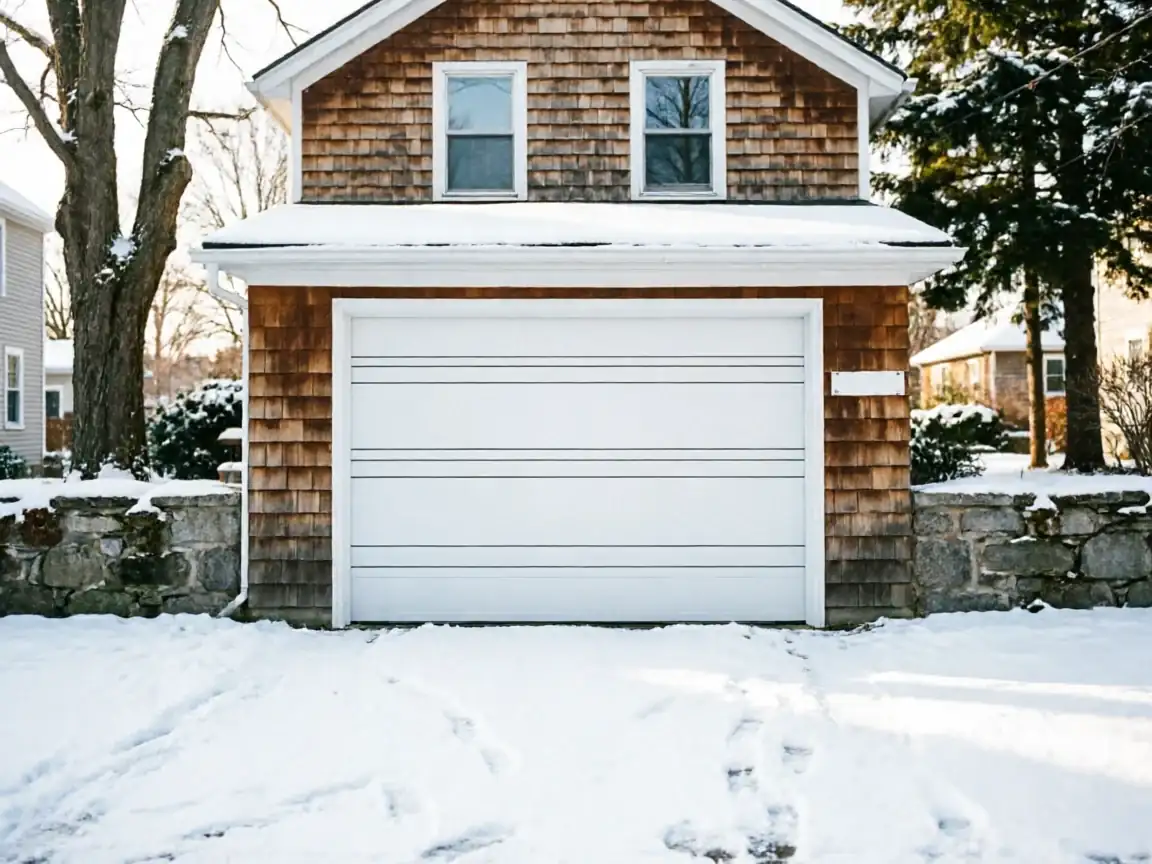
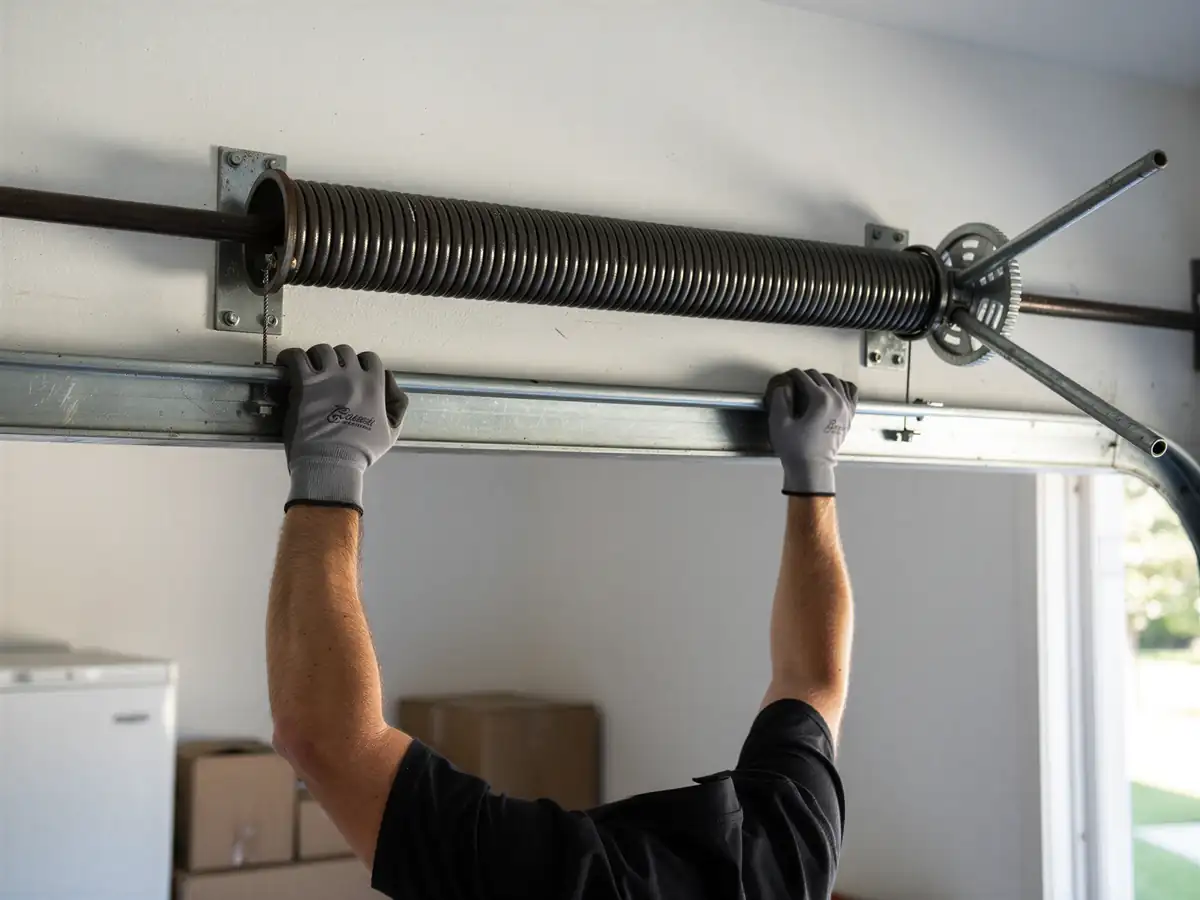
This area sits in a cold-severe climate band, and that matters more to a garage door than most owners think. Steel contracts in the cold. A torsion spring wound to spec at 60 degrees sits tighter at 20 degrees, and a track bolted straight at 60 degrees can pull slightly out of true at 20. Neither of those is a defect. It's just what steel does, and on an older door it shows up as a bang, a pop, or a shudder right as the door starts or stops moving.
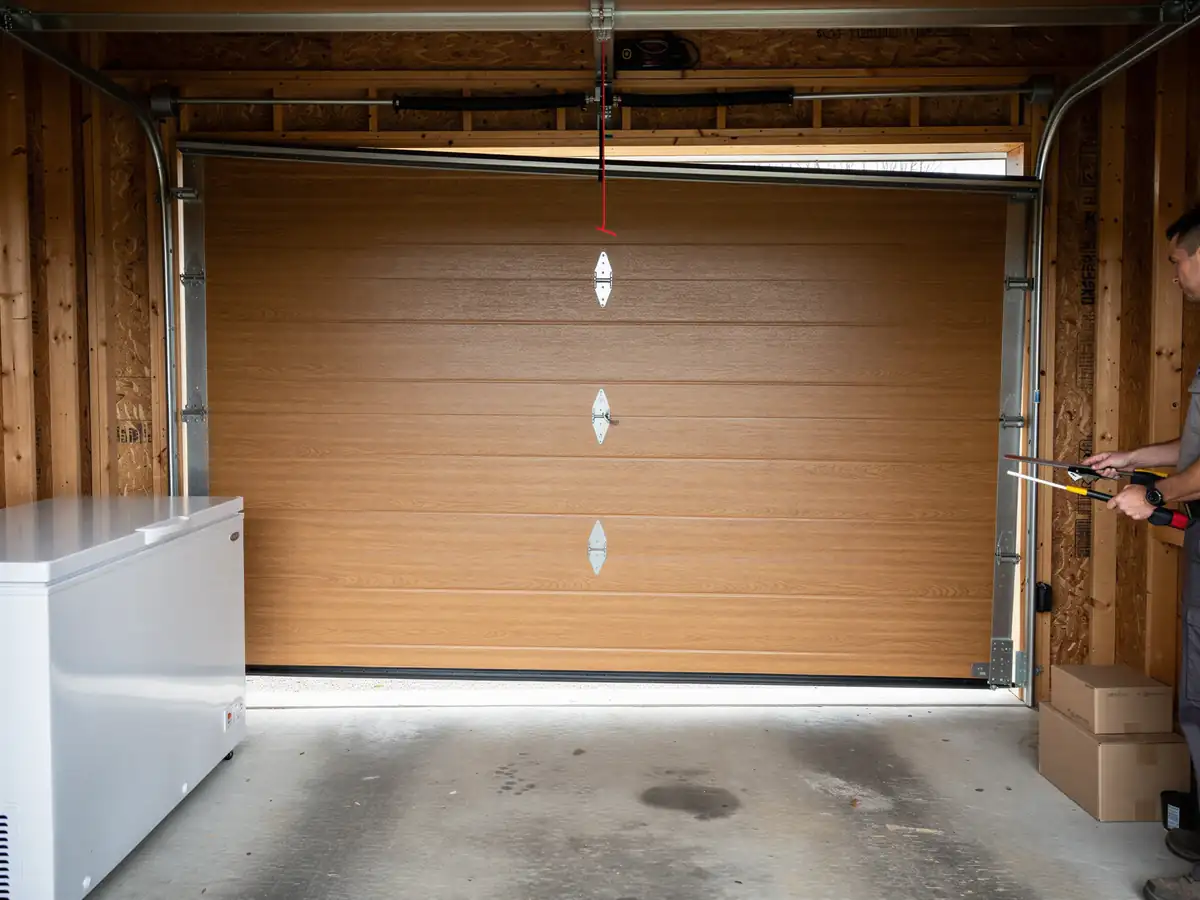
The popping sound a lot of owners describe right when the door reverses direction at the top or bottom of its run is almost always this: a stress point in the track or the spring hardware releasing as the metal settles. On a newer door with modern galvanized track, that stress point is designed in and the pop is minor. On a door original to a 1960s build, the hardware wasn't engineered with this climate's full swing in mind, and the same pop can mean a bracket working itself loose a sixteenth of an inch at a time. One season of that is nothing. Several winters of it is how a track goes out of alignment without anyone touching it.
The Problem
Across the areas we work - Edgemoor, Bellefonte, Elsmere, Newport, Wilmington Manor, Greenville, New Castle, Claymont, Hockessin, Pike Creek, Brookside, North Star, Bear, Delaware City, St. Georges, and Glasgow - most garages are still running doors and hardware from the 1960s and '70s. That's not a guess about any one house; it's the pattern across the service area's housing stock, and it's why the same two or three noise complaints come up over and over.
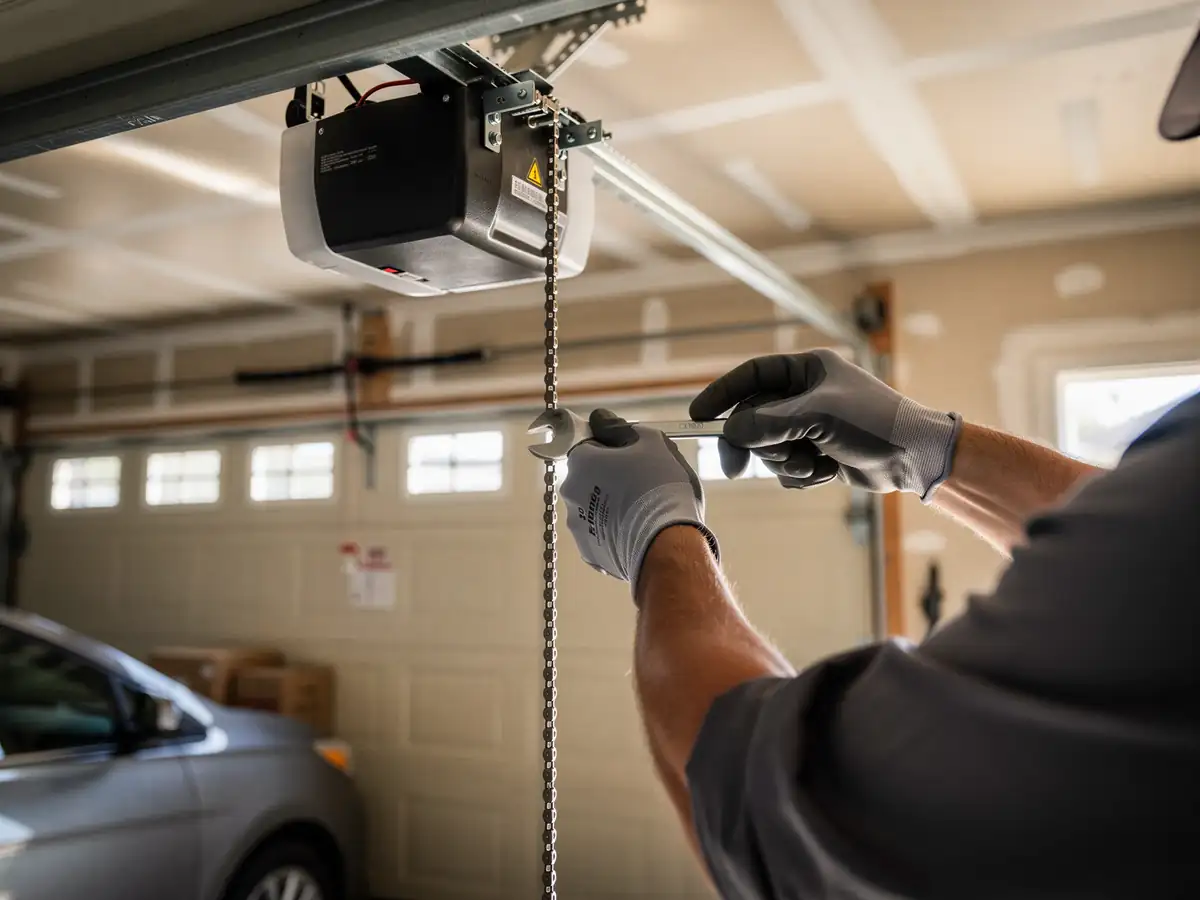
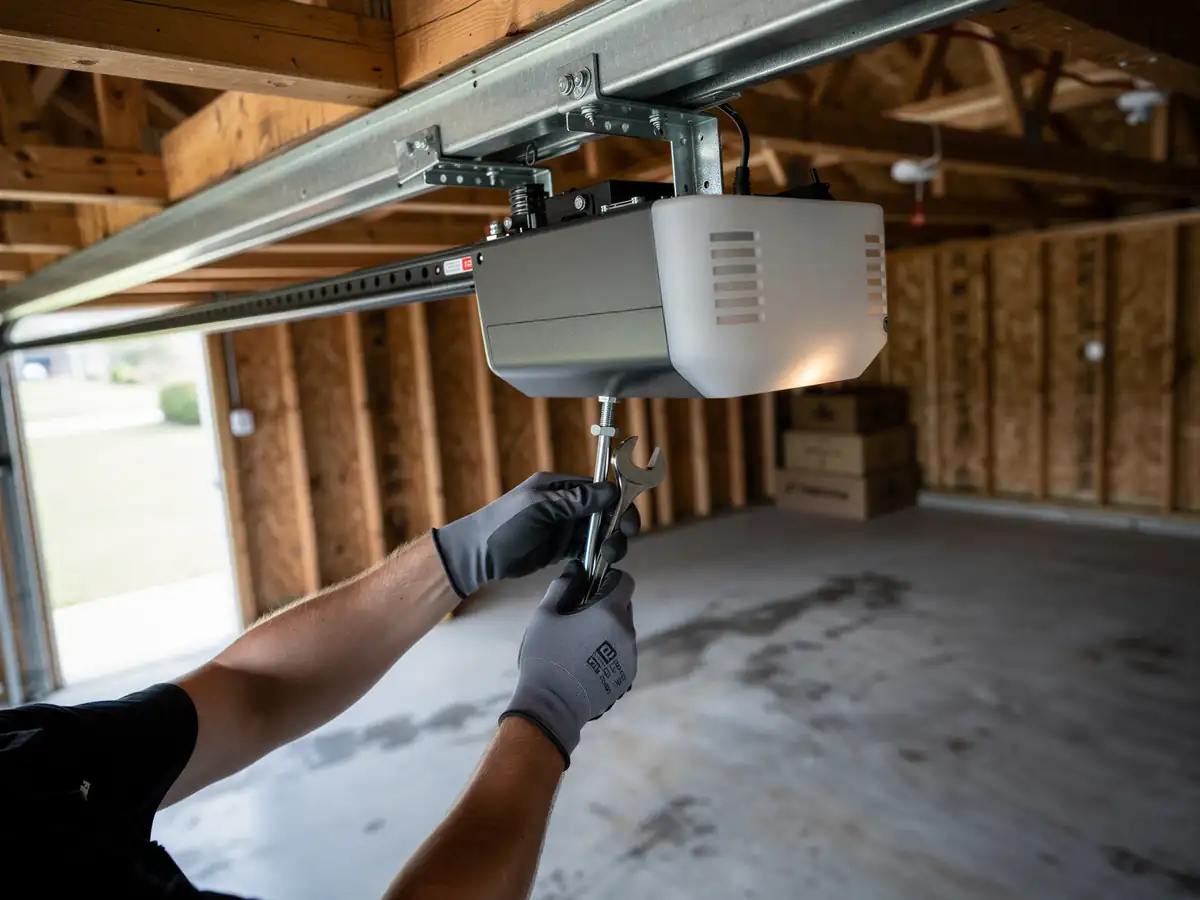
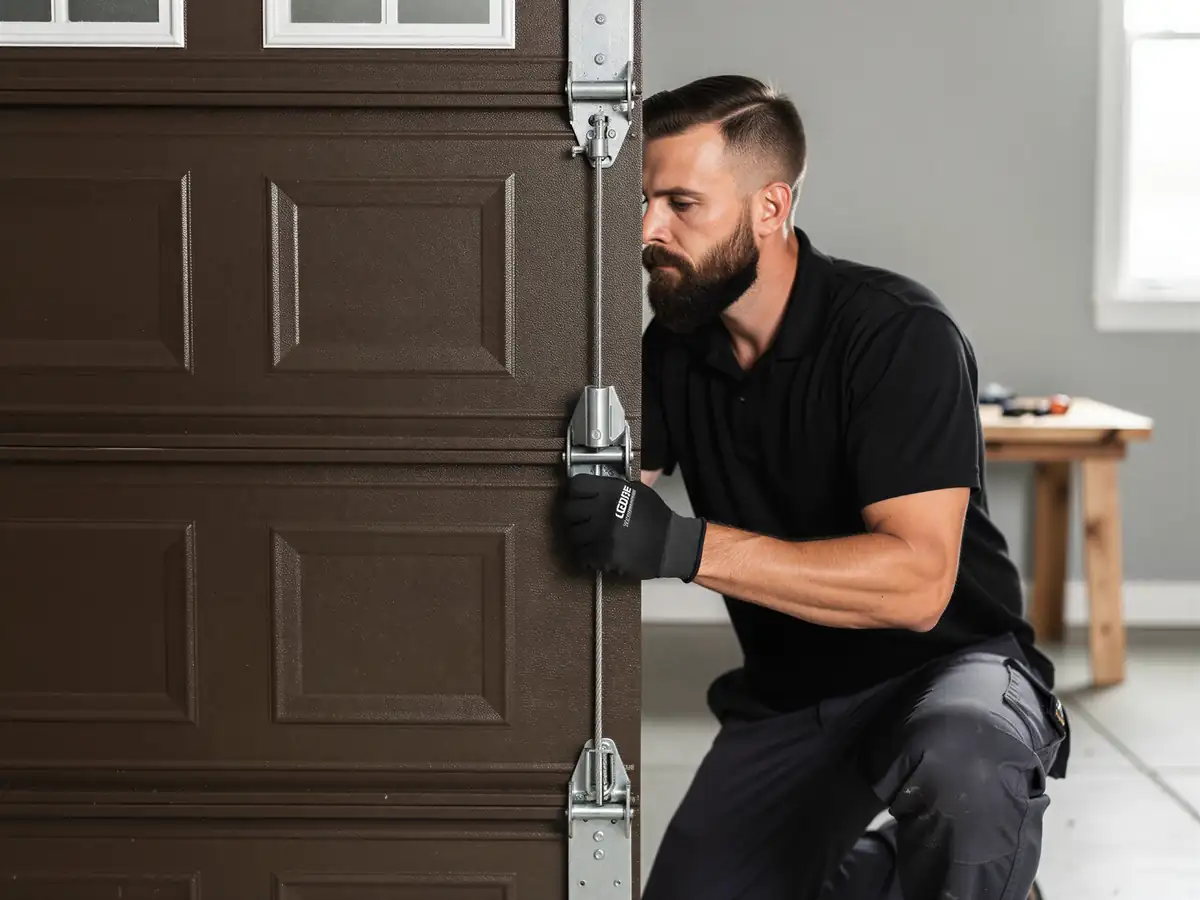
The most common is a rhythmic thump as the door travels, which on a door this old is usually a flat spot worn into a roller that's done its 50-plus-year job and is done. The second is a sharp bang on opening, which on original torsion hardware is often a cable that's frayed near the drum and is about to let go - not an emergency yet, but close to one. The third is a low groan from the opener itself, which on a house with the original 1960s or 70s opener motor means a gear set that's worn past the point lubrication fixes.
One honest limit here: we can tell you a lot from a description over the phone, but a noise that's intermittent or load-dependent really does need someone standing in the garage running the door. Guessing wrong on a spring call is how people get hurt.
What It Costs
We're not going to put a number here that isn't backed by a quote
Because a 1965 door with original torsion hardware and a 2001 door with a composite opener are not the same job, and pricing one off the other would be a guess dressed up as a fact. What we can tell you is how the age of the stock in this area affects the bill, which is the part owners actually want to know before they call.
Parts for doors from this housing era aren't always sitting on a shelf
A roller or a cable is stock. A specific torsion spring sized for a door nobody's made in decades sometimes isn't, and that can mean a short wait rather than a same-day fix. That's the honest trade-off of owning a house from this build era: the door is probably still fine structurally, but the parts conversation is different than it would be on new construction.
The area's median household income sits at $87,826
And most repair calls here land well under what that income supports without strain - this isn't a market where replacement is the default answer to a noisy door. Repair usually wins unless the opener or the door itself has reached the end of its run, and a real quote after a look at the hardware is the only way to know which side of that line you're on.
- $87,826 median household income