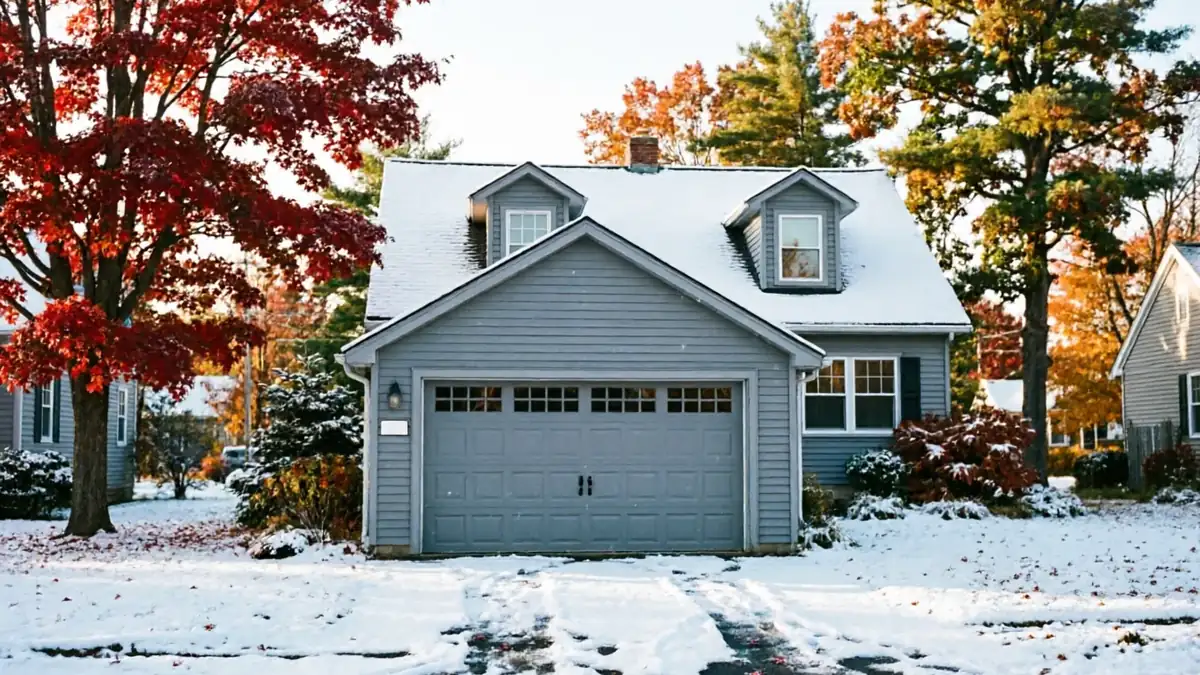
What the Weather Here Does to It
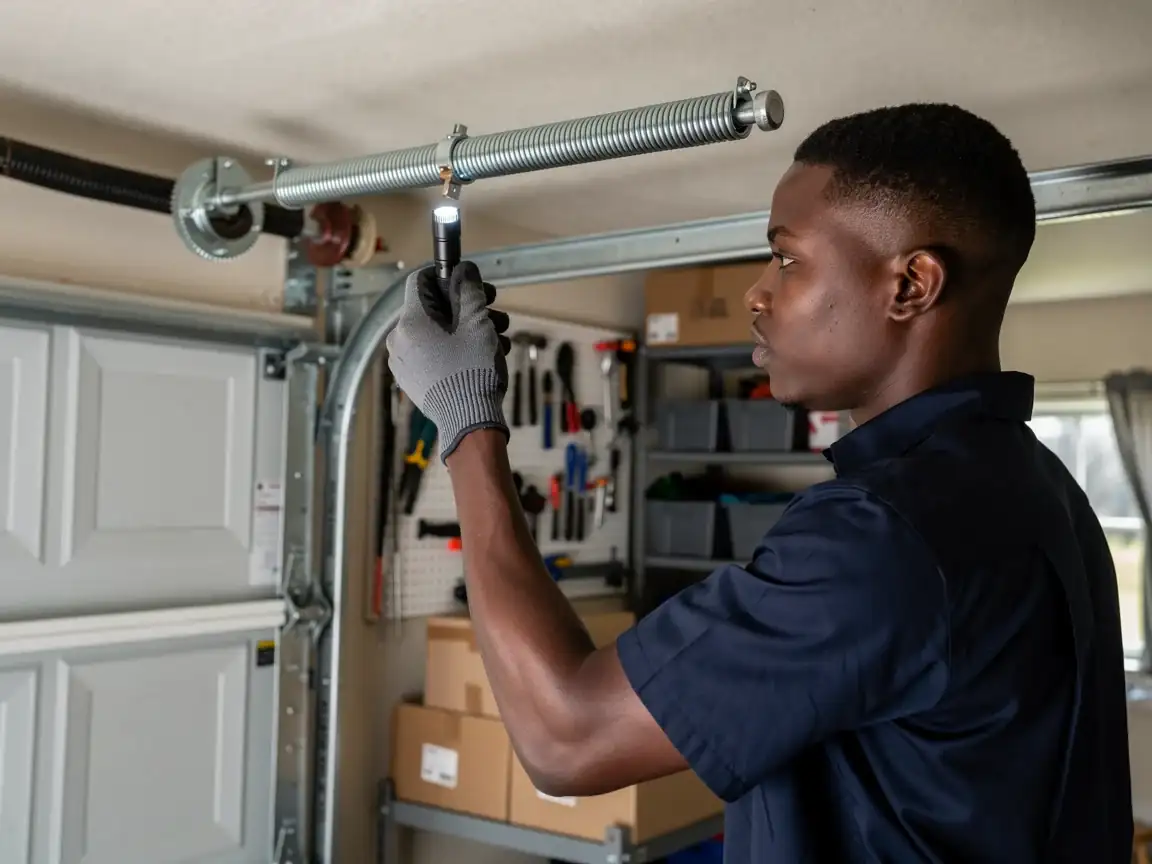
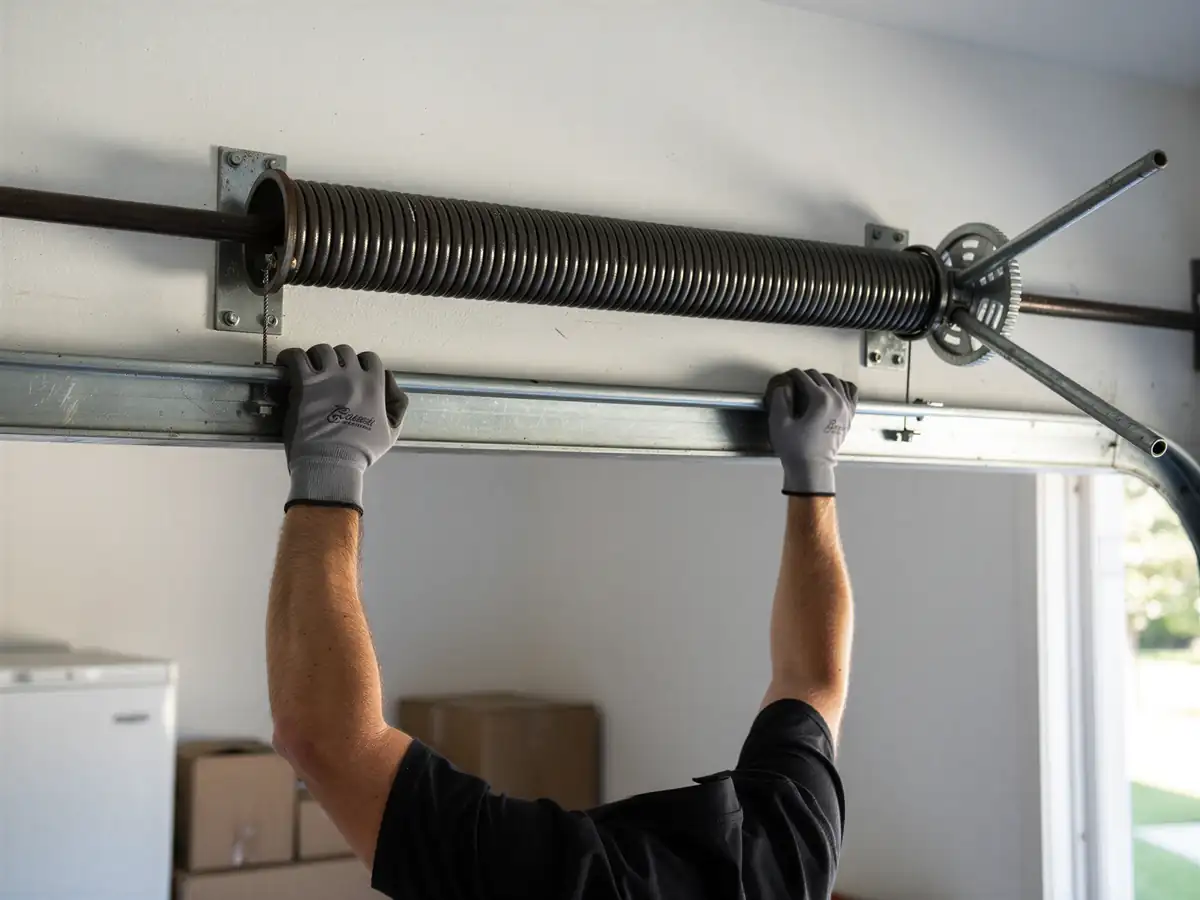
Wilmington sits in a cold-climate band with real winter severity, not a mild one that spares the hardware. Repeated freeze cycles stiffen the lubricant inside the coil and tighten tolerances in the bearing plates at each end of the shaft. A spring rated for a certain number of cycles at 70 degrees doesn't get that same life at 20. On the housing stock common here - built between 1940 and 2001, with a lot of it dating to the 1960s-70s push across these neighborhoods - the springs are often the original gauge, sized for a wood or early steel door that's heavier than what gets installed today. Heavier door, aging coil, cold mornings: that combination is what actually breaks a spring here, not just the temperature on its own.
The Problem
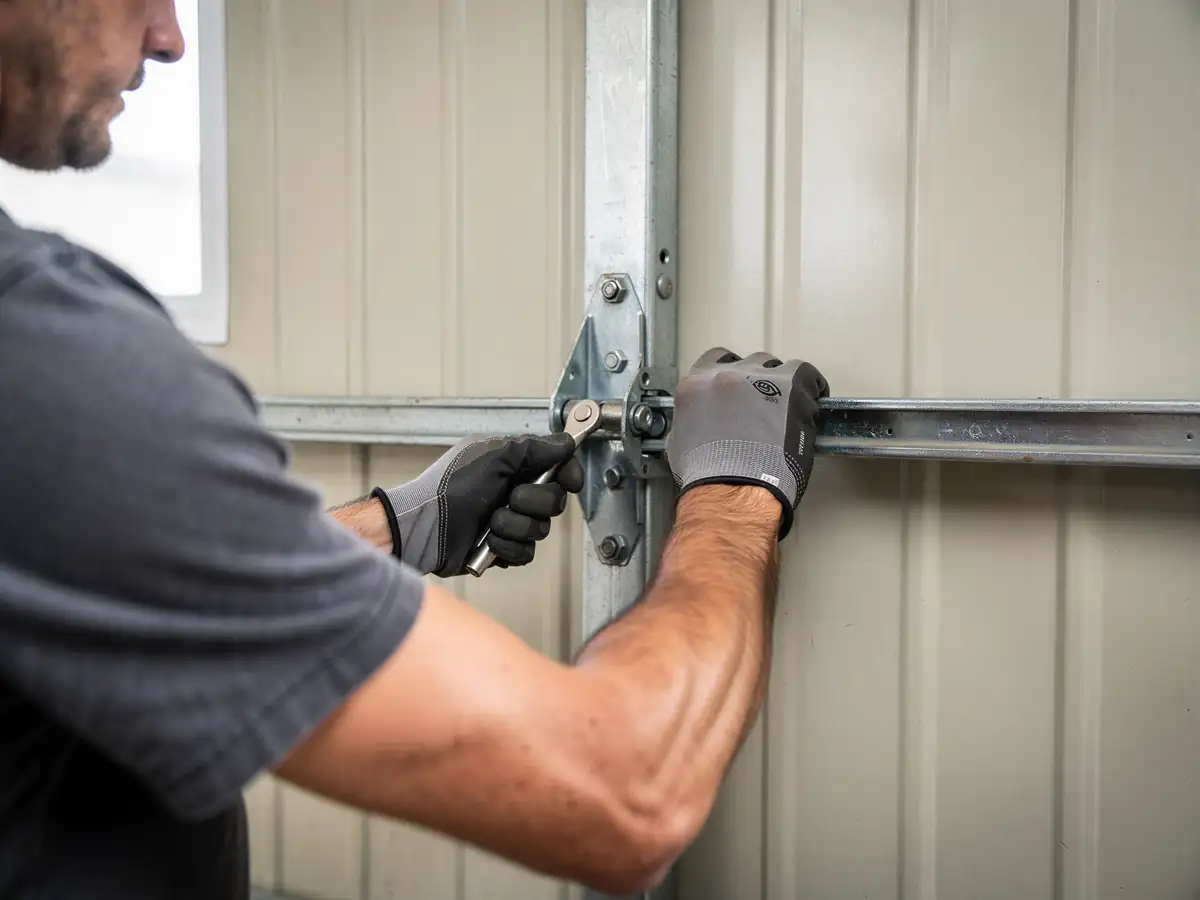
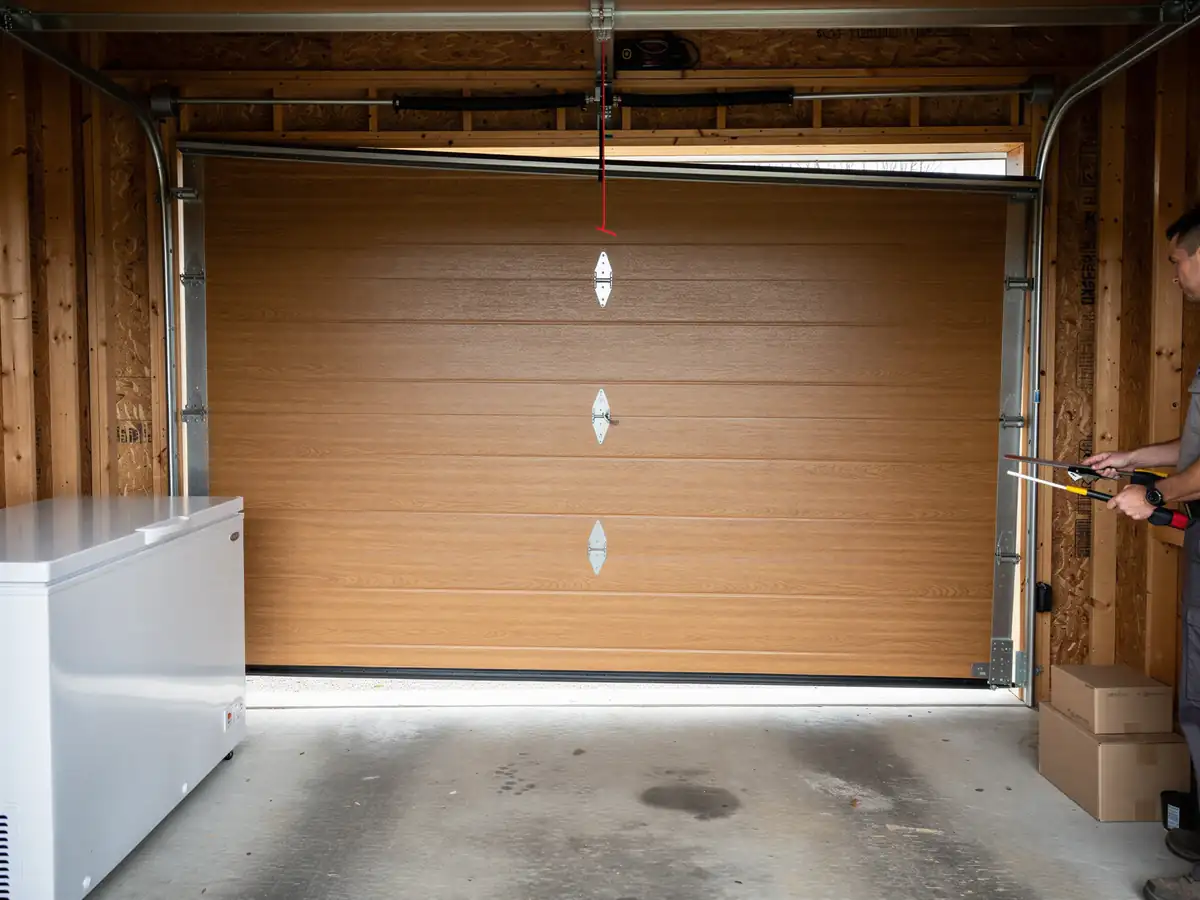
A broken torsion spring doesn't just mean a noisy door. It means the opener is trying to lift the full weight of the panel section by itself, which it was never built to do, and that's how you burn out a motor or strip a gear on top of the spring repair. On the older doors still common through Newport, New Castle, and Wilmington Manor, we also find mismatched spring pairs from a prior quick fix, or a single spring doing a two-spring job. That's a repair that looks done but isn't. The honest limitation here: we don't recommend patching one spring on a double-spring door and calling it finished, even though it's cheaper in the moment. It just means a second failure, usually within the year, often in another cold spell.