The Seasonal Bit
Most of the off-track calls we get cluster in two windows
The first hard freeze and the first real thaw. A door that's run fine all fall suddenly binds, jumps a roller, or won't close square. It's not bad luck. Doors built on older track systems move with the temperature more than people expect, and the housing in this part of Delaware gives us a lot of that older track to work with.
Houses here mostly went up between 1940 and 2001
With the median build year sitting around 1965. A door installed or last upgraded anywhere near that era is running on steel track and roller hardware from a different generation of manufacturing tolerance. It wasn't built sloppy - it was built to the standards of its time, which means tighter clearances that don't forgive seasonal movement the way newer track does.
We're not saying every 1960s door is a ticking clock
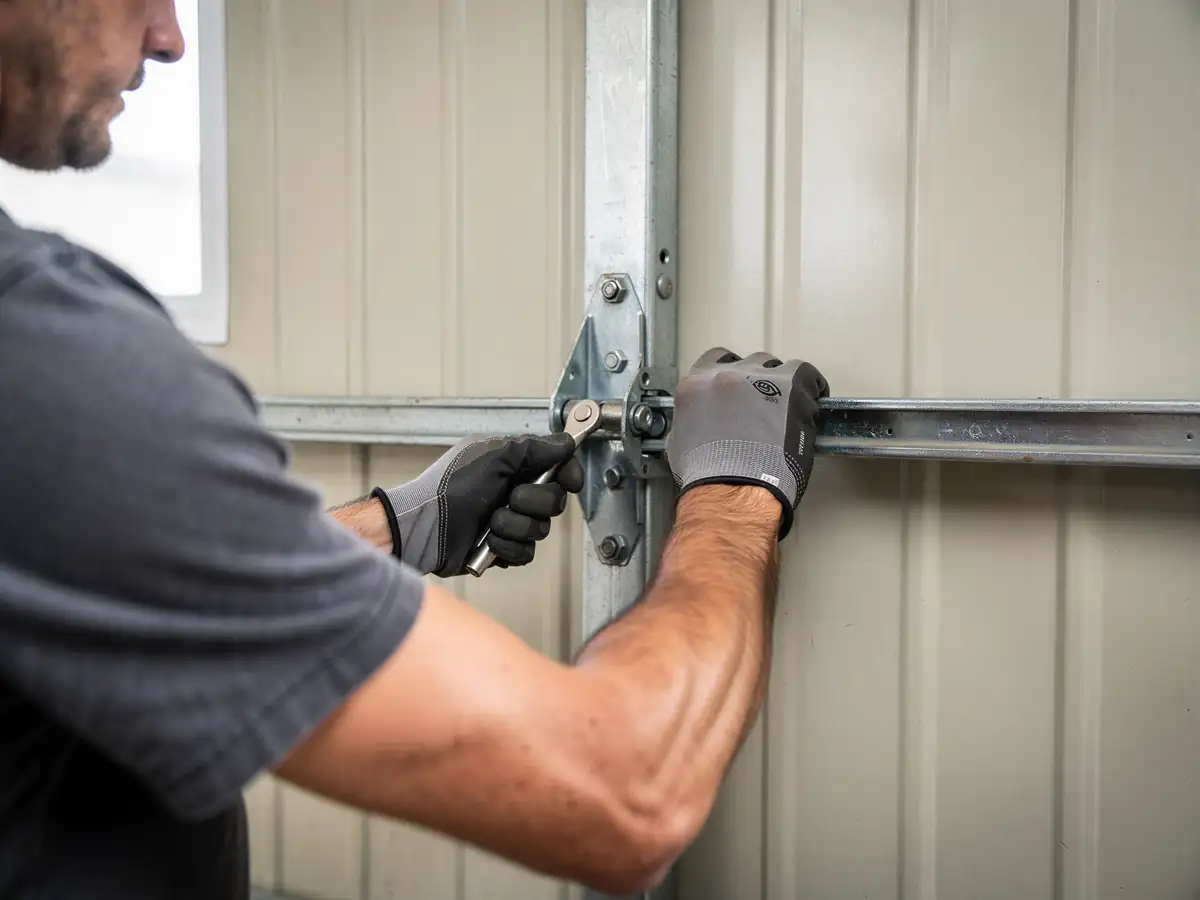
Plenty run fine for decades with basic upkeep. But when a door starts walking off its track here, the first thing we check isn't the opener - it's whether the track itself has shifted on brackets that have been holding the same position since before the warranty on the house expired.
What the Weather Here Does to It
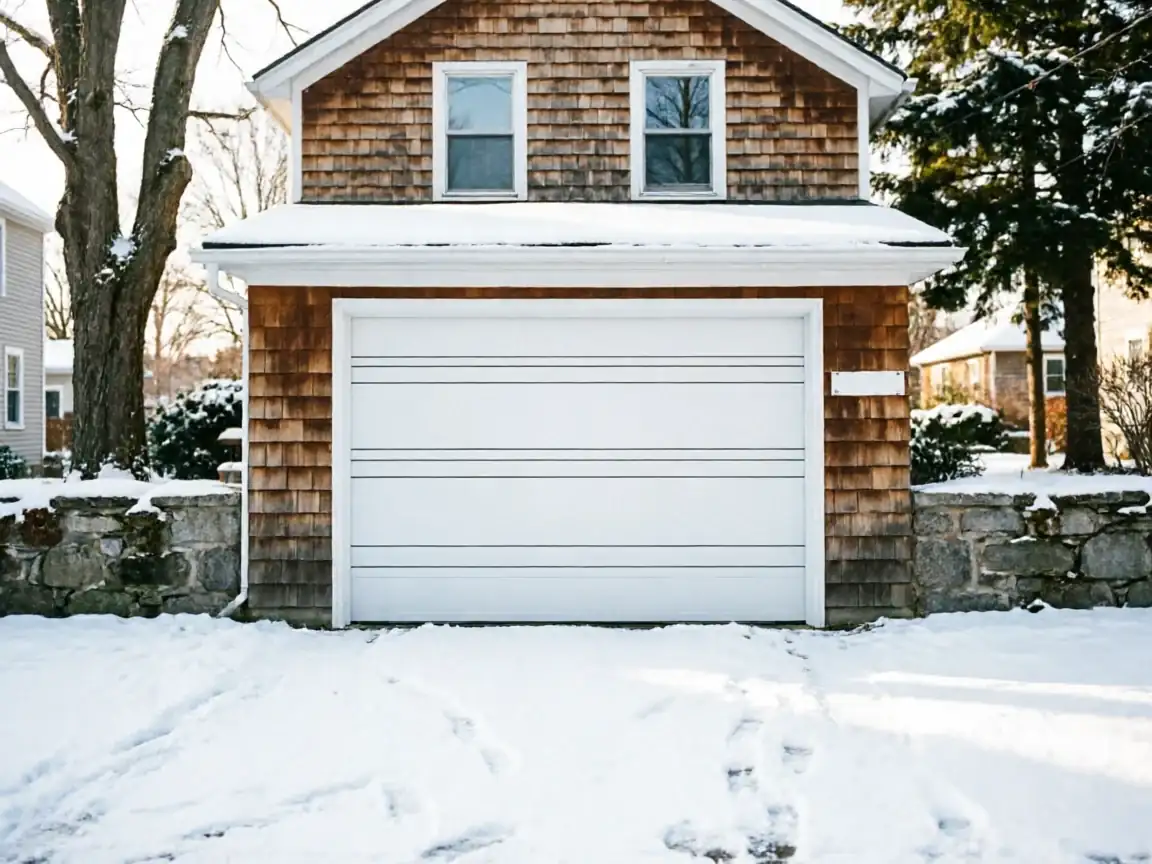
Wilmington sits in a climate band rated cold and severe. That's not a marketing phrase - it describes real freeze-thaw cycling, and freeze-thaw is the single biggest mechanical stress a garage door track sees all year.
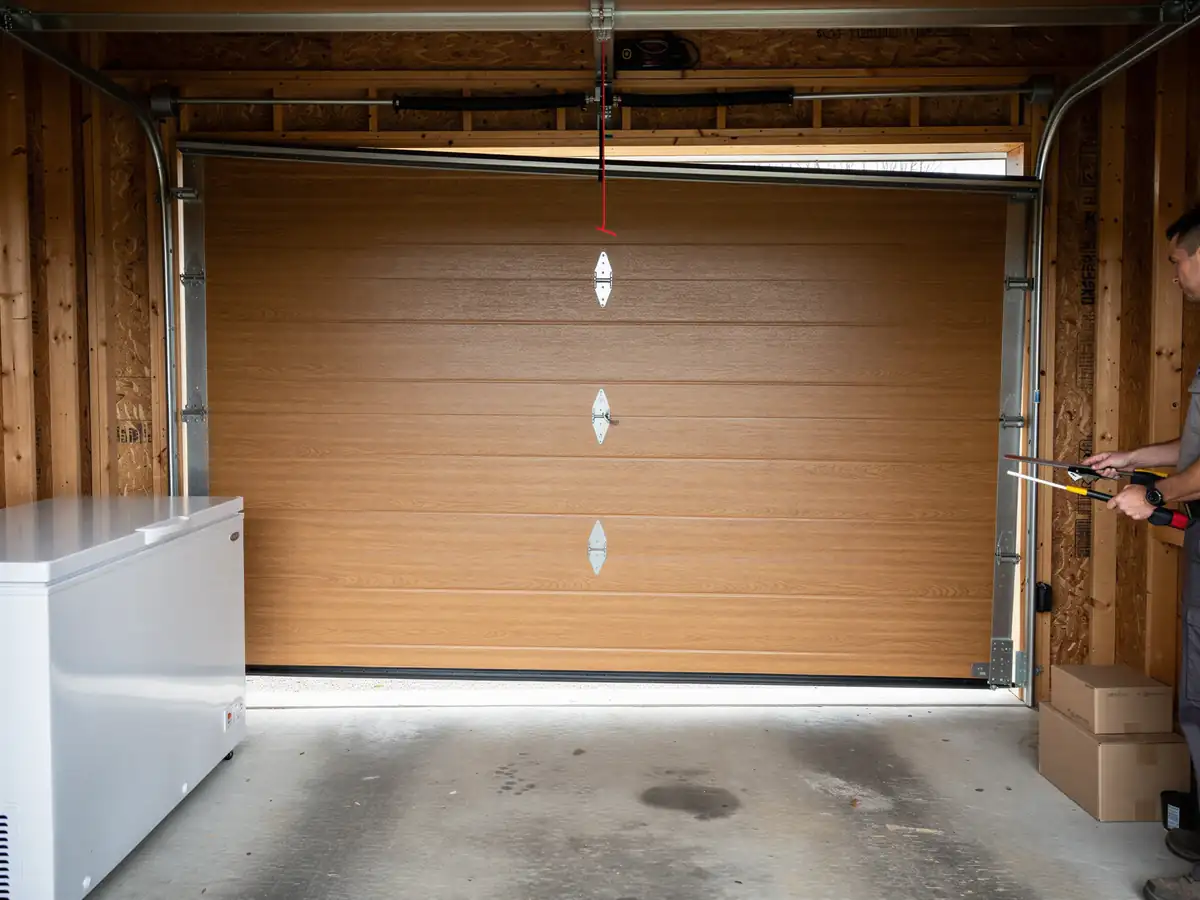
Here's the mechanism: the track mounts to wood jamb framing and concrete slab anchors. Concrete doesn't move much, but the wood framing around it swells and contracts with moisture and cold. Over a severe winter, that framing shifts a fraction of an inch - enough to pull a track bracket out of true. The door still looks straight standing still. It's only when it travels that you see the roller ride up the edge of the track or catch on a bent section.
This is why a door that worked fine in October can bind hard in January with nothing else having changed. Nobody touched the opener, nobody hit the door with a car - the building itself moved underneath the hardware. It's also why a track that gets knocked slightly out of alignment in November often doesn't fail outright until the cold sets the misalignment permanently into place a few weeks later.
The Problem
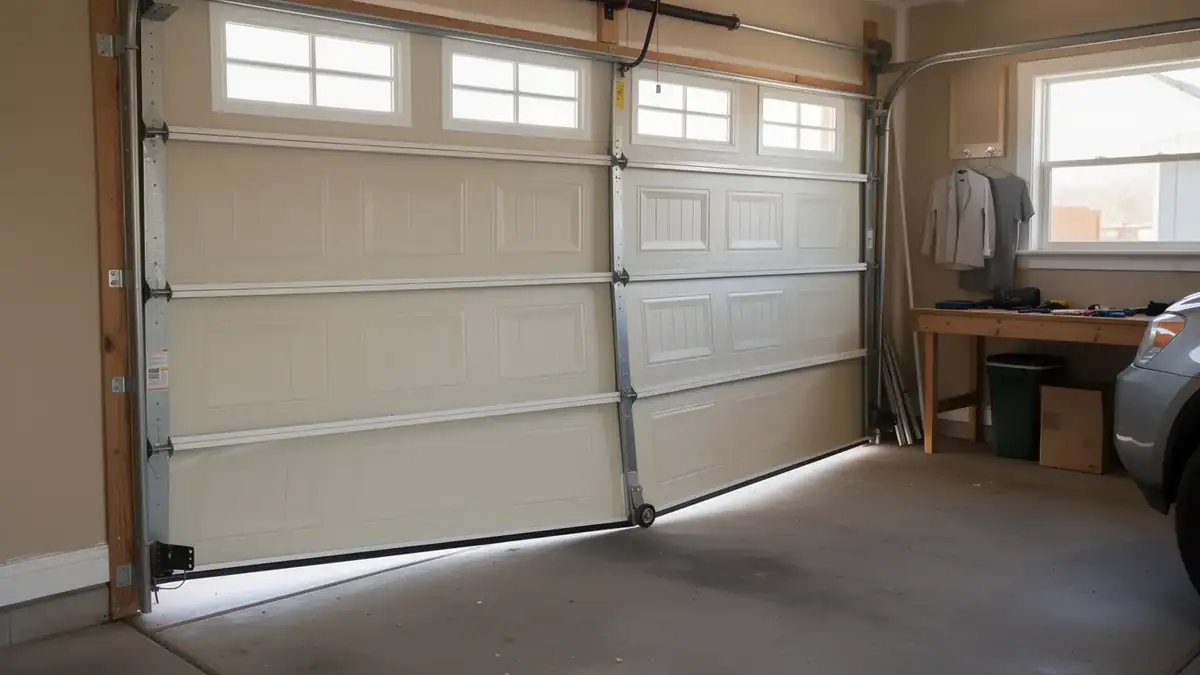
Off-track almost always comes down to one of three things, and the age of the housing stock here decides which one you're more likely to have. In the 1960s-70s stock that makes up a lot of the sixteen named areas around Wilmington, the common culprit is a bent track section from age or a minor impact years ago that never got corrected - the door kept running, just slightly wrong, until the slope finally caught a roller.
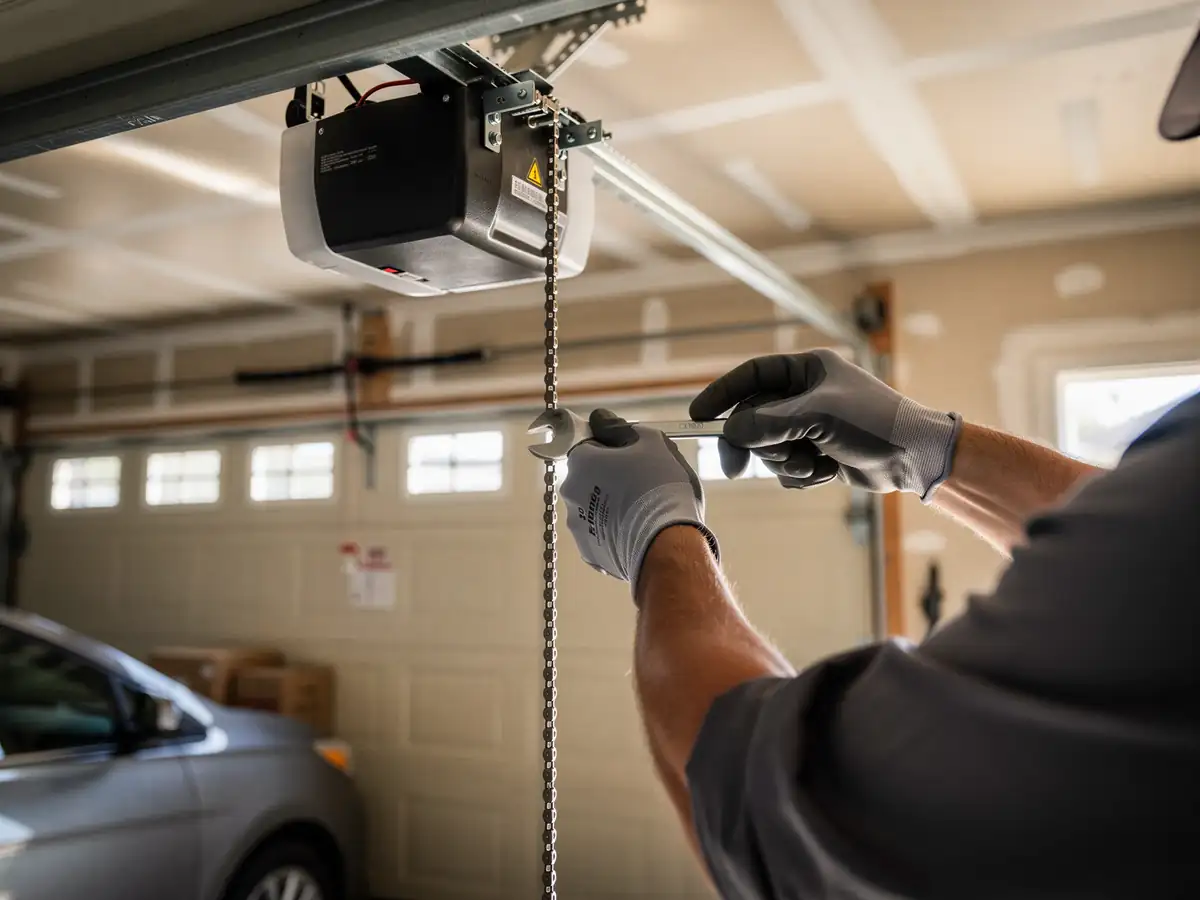
In newer construction, it's more often a bracket that's worked loose from the jamb, usually from an opener pulling harder than it should because a spring is losing tension and nobody's noticed yet.
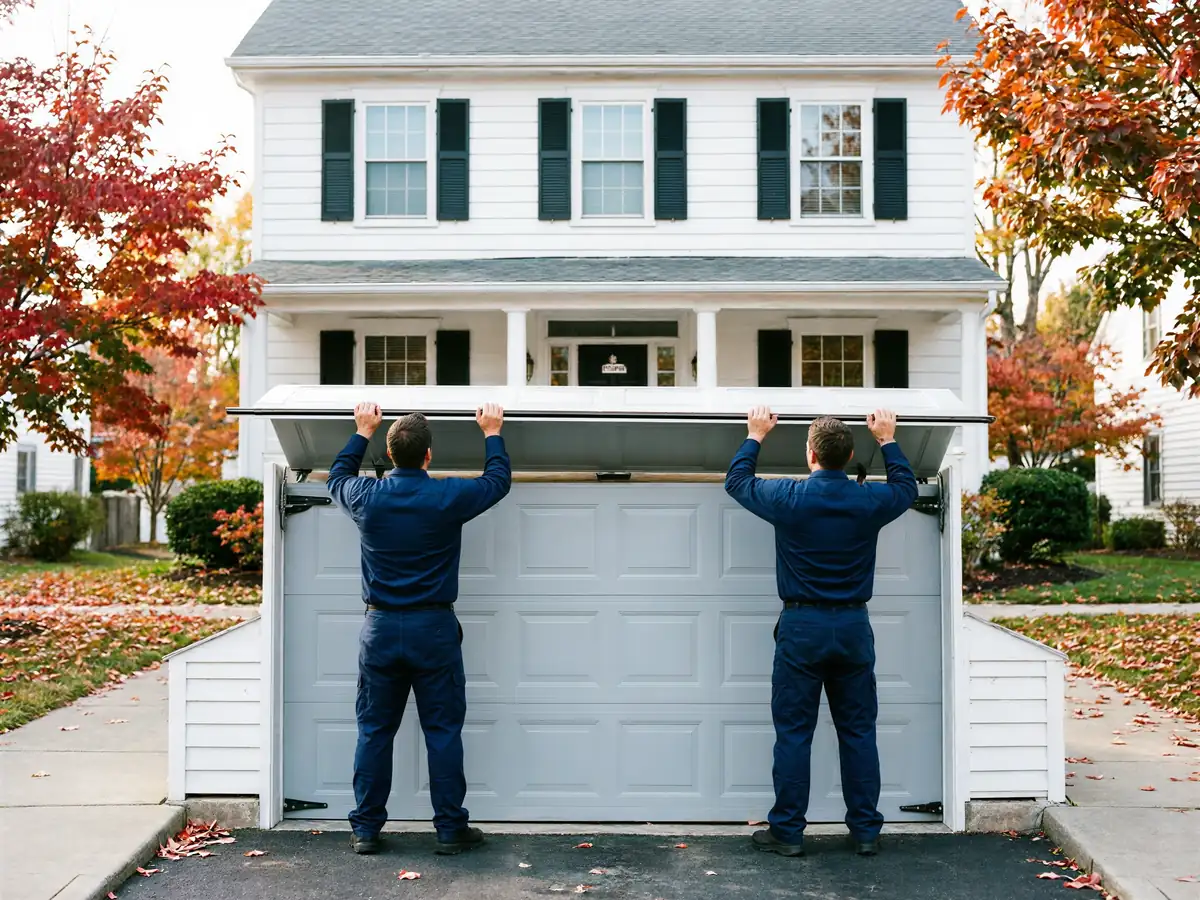
The third cause is a broken cable or one that's jumped its drum, which lets one side of the door drop while the other stays up - that's the one that looks the most alarming and is usually the simplest fix, provided nobody's tried to force the door closed by hand first. Forcing it is the thing that turns a one-hour repair into a bent track and a new section.
What It Costs
We don't have a flat number to give you here, and we're not going to invent one
Cost on a track repair depends on what's actually bent, how old the hardware is, and whether the bracket pulled out of wood that's still sound or wood that's gone soft from years of freeze-thaw cycling. A door on 1960s-era track with a single bent section is a different job than one where the jamb itself needs to be shored up before the bracket goes back in.
What we can tell you
If the track is bent in more than one place, or if this is the second time this winter the door's jumped the same section, straightening it again is usually a short-term fix. At that point replacing the track section costs about the same as another service call to re-true it, and it holds through the next freeze instead of failing again. We'll tell you straight which one you're looking at before we start, not after.