What It Costs
We don't post a flat number for cable repair here
Because what's actually wrong with your door changes the job. A single frayed lift cable on a lighter door is a different repair than two snapped cables on a heavy insulated double door where the drum or the spring also needs attention. Anyone who quotes you a price over the phone before looking at the door is guessing.
What we can tell you is how we price it once we're there
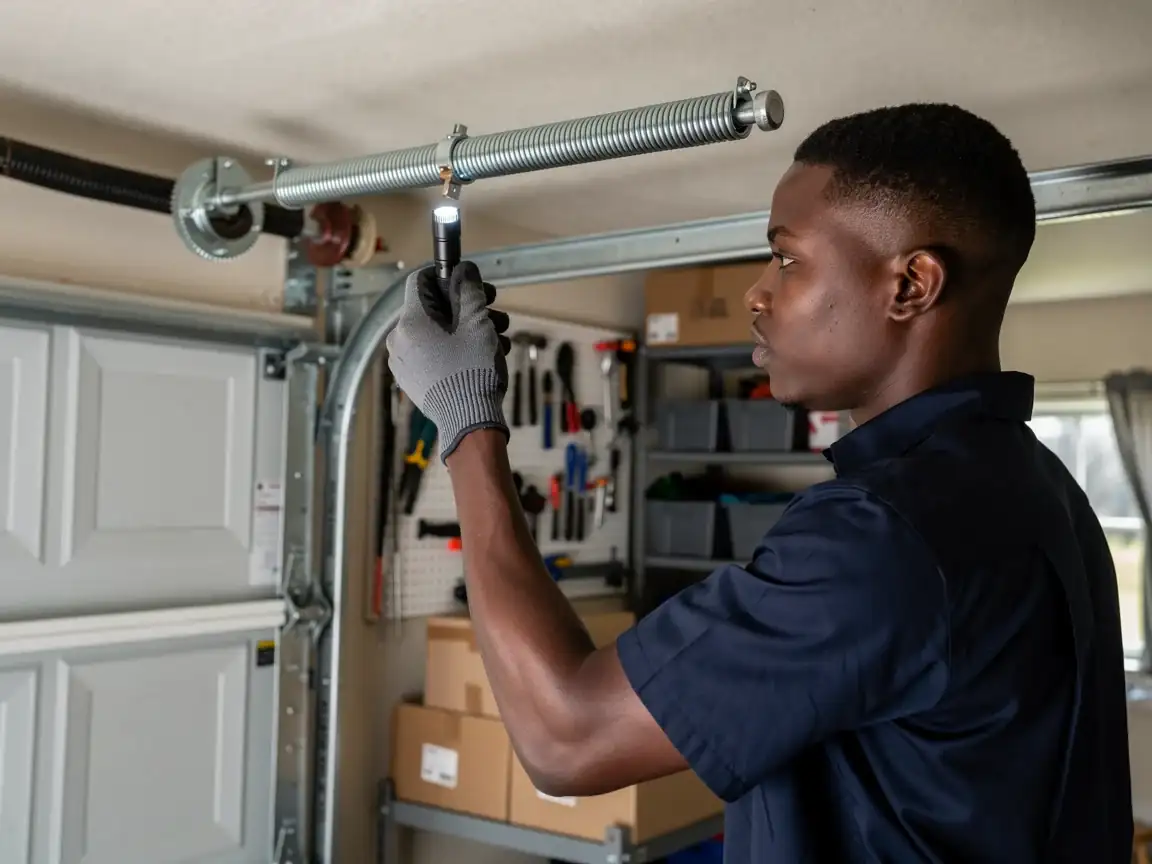
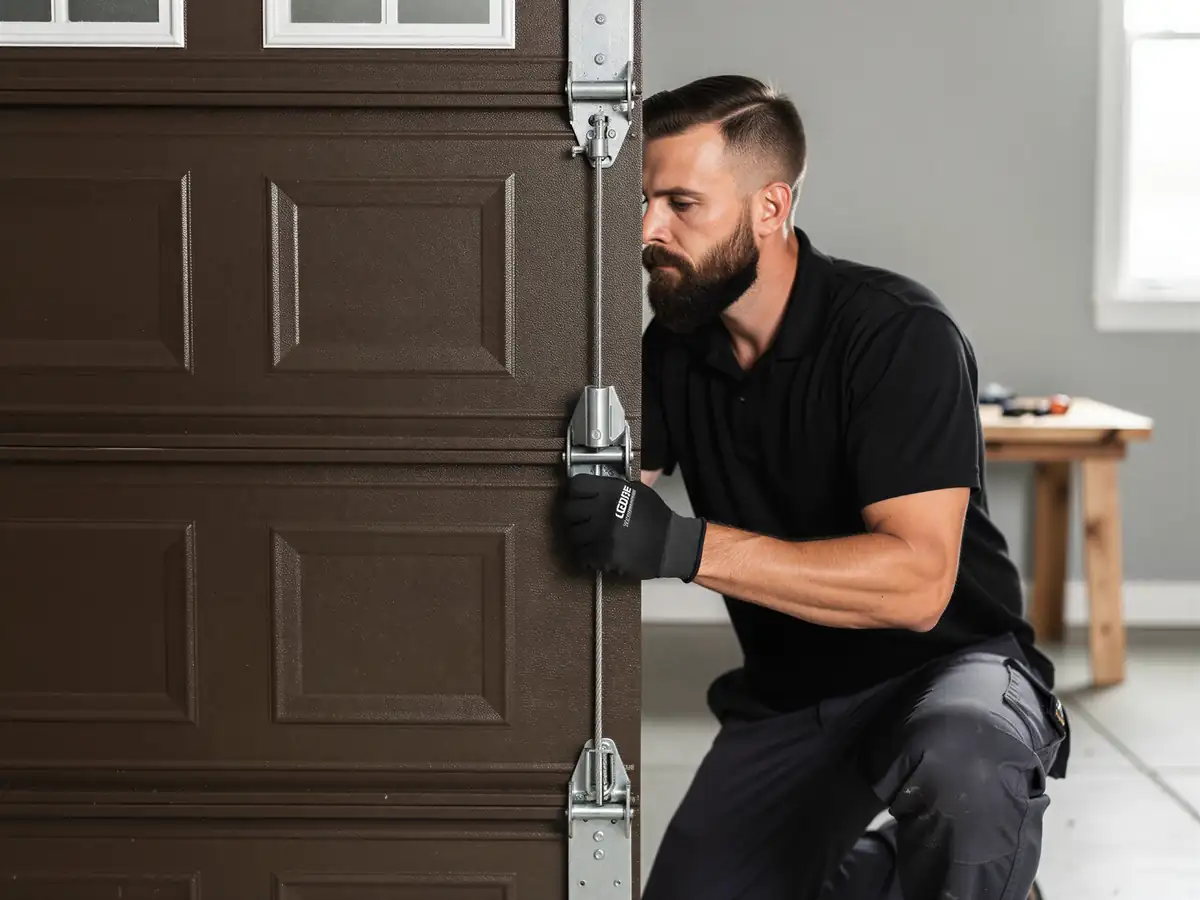
We look at cable gauge, drum condition, whether the spring system is still under tension safely, and whether the track or rollers took damage when the door dropped. You get a number before any work starts, not after.
One honest limitation
If your door is original to a house built in the 1960s or earlier, matching hardware sometimes means we're sourcing an older cable drum or a non-standard length rather than grabbing a stock part off the truck. That can add a day if it's not something we carry. We'll tell you up front if that's the case rather than make you wait and wonder.
Why This Fails Locally
Wilmington's housing stock runs mostly 1940 to 2001 with a median build year around 1965, and across the sixteen communities we cover - places like Edgemoor, Bellefonte, Elsmere, and out toward Claymont and Hockessin - that 1960s-70s stock is the norm, not the exception. Doors and openers installed or replaced during that era used galvanized lift cables on exposed drums, often without the safety cable retrofit that became standard later. Decades of use on original or first-generation replacement hardware means the cable is frequently the oldest working part on the door.
Then there's the climate. This area sits in a severe cold band, and cable failure follows the thermometer. Cold makes steel cable stiffer and less forgiving - it doesn't stretch to absorb a jerky start, it frays at the drum groove or snaps outright, usually on the first hard freeze of the season or the day after a long cold stretch when a homeowner runs the door more than usual. We see the same pattern every winter: a cable that was fraying quietly through fall finally lets go once overnight temperatures stay below freezing for several days running.
A cable rarely fails in isolation from its age and its winter. Both matter here in a way they wouldn't in a milder climate with newer housing.
What Is on the Truck
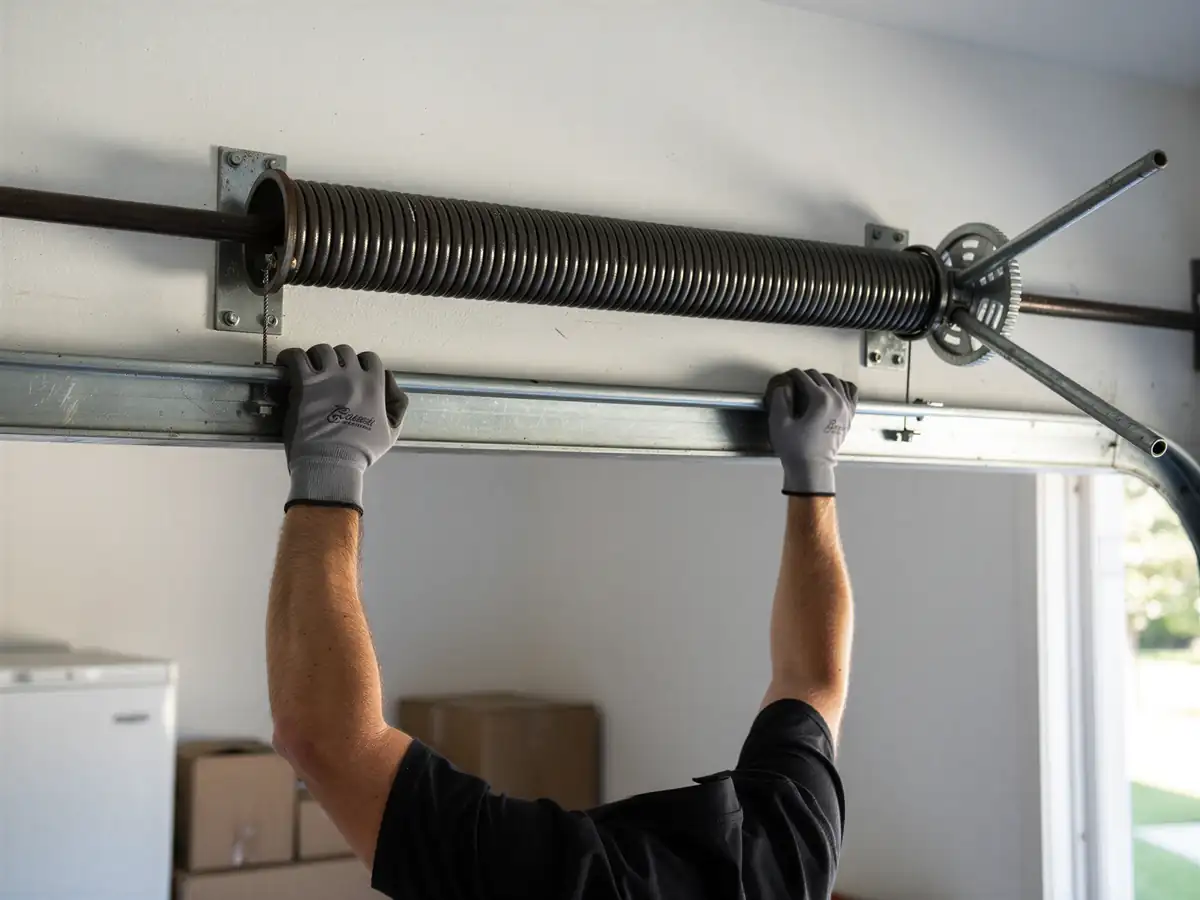
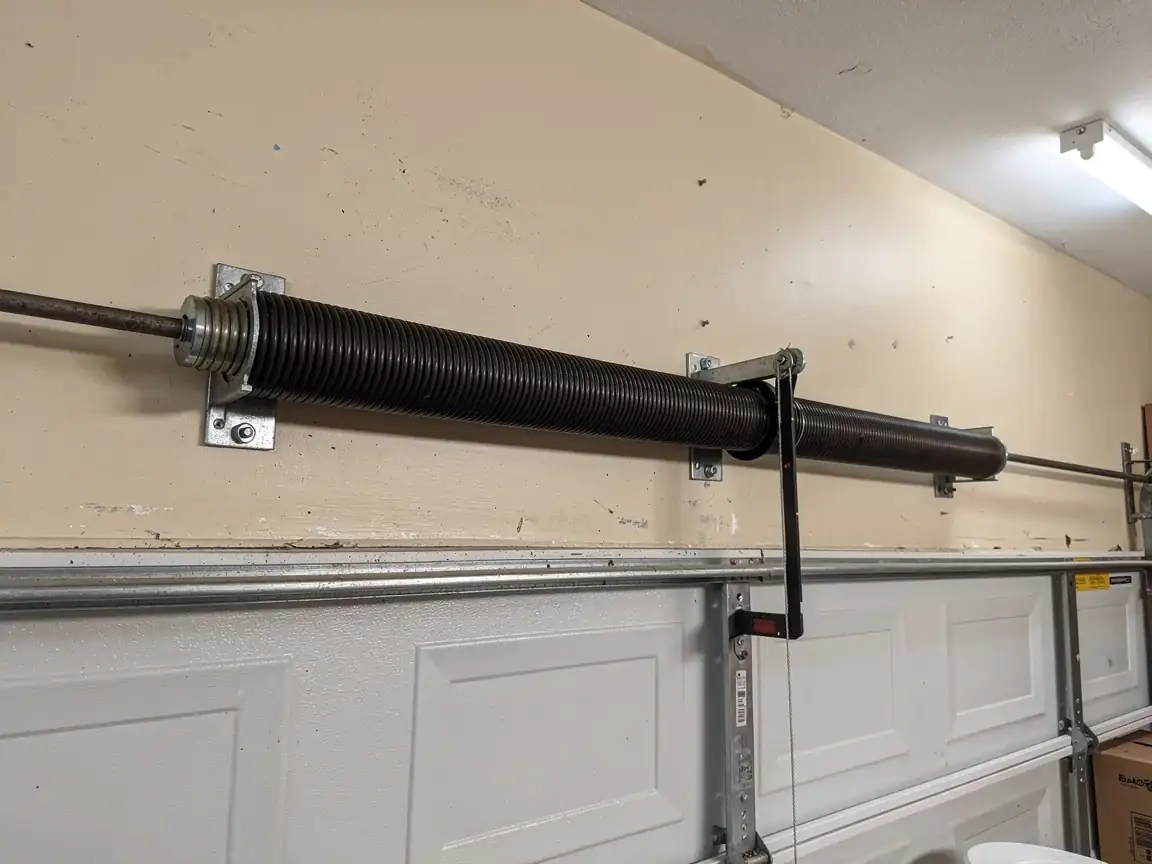
For cable repair calls we carry lift cable in the common gauges and lengths used on residential doors from the 1960s through current production, plus cable drums, clips, and the fittings that pair with them. We stock both the standard torsion setups found on most of the doors we work on and enough variety in drum sizes to cover older installs that haven't been upgraded.
We also carry safety cables for spring systems that were installed before that retrofit was standard - if your cable failure exposes a spring setup without one, we'll point it out and can add it the same visit.
What we don't carry on every truck is uncommon or long-discontinued hardware specific to a door brand that stopped making parts years ago. On a handful of older doors across this area, that means a short order delay for an exact match rather than an on-the-spot swap. We'll always offer a safe, working alternative for that visit so the door isn't left inoperable while we wait on the original part.
What You Are Seeing
A few signs point straight to a cable problem rather than something else
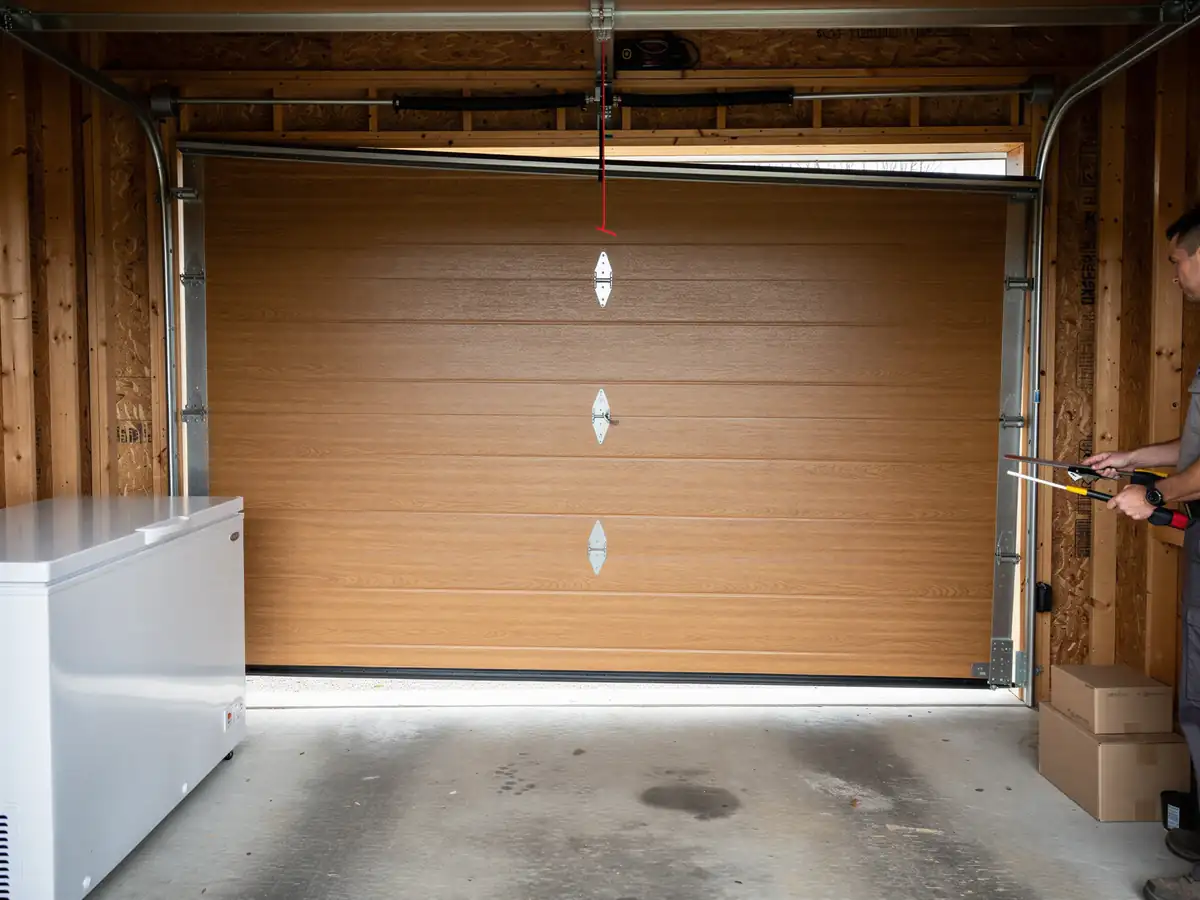
If the door drops unevenly - one side higher than the other, or it hangs cockeyed in the opening - that's usually a cable off the drum or snapped on one side while the other still holds tension. A visible frayed section, especially near the bottom bracket or where the cable wraps the drum, means it's a matter of time, not if.
A loud bang followed by the door refusing to move
Or moving only a few inches before stopping, often means a cable has let go entirely and the door is now resting on whatever caught it - sometimes safely on the track, sometimes not. Don't force the opener again if that happens; running the motor against a failed cable can bend the track or damage the opener itself.
Slack or visible looping in the cable when the door is down, rather than a cable pulled taut
Is an early sign worth a call before it becomes an emergency one. Given our winters, a cable showing any of this in October is one we'd rather replace before December.