We don't post a flat number here, because what a Wilmington install actually runs depends on the opening, the door material, and whether we're matching an original frame from a house built decades ago. What we can tell you: this isn't a market where a single price fits every job. Housing in this service area went up mostly between 1940 and 2001, with the bulk of it dating to the 1960s and '70s, and those openings were framed to specs that don't always match what a big-box store sells off the shelf today. That mismatch is the single biggest cost driver we see - not the door panel itself, but the jamb work and header reinforcement needed to make a modern door fit an old rough opening cleanly. Median household income across the area runs $87,826, and most of the jobs we price land somewhere between a basic steel replacement and a fully insulated door built for a cold climate. If you want a real number, we need to see the opening. Anyone quoting you a price over the phone without measuring your house first is guessing, and on housing this old, a guess is usually wrong in one direction or the other.
Why This Fails Locally
Wilmington sits in a severe cold climate band, and that matters more for a garage door than most homeowners expect. Cold snaps stiffen steel, shrink wood jambs, and make old rubber bottom seals crack and pull away from the slab - right when you need that seal doing its job. Combine that with housing stock concentrated in the 1960s and '70s across the sixteen named areas we work, and you get a specific, repeatable failure: original single-layer doors on non-insulated tracks, installed before anyone built to today's cold-climate standard, now fighting both age and weather at once. These doors weren't wrong when they went in. They just predate the expectation that a garage door also has to hold a thermal break. When a door that age finally gets replaced here, it's rarely just the panel - it's the track alignment, the header, and sometimes the slab transition, because none of that was built assuming a modern insulated door would sit in that opening.
What Is on the Truck
For an install call in this area, we carry a range of door widths and heights to match openings from the 1940s through the early 2000s, since that's the span most Wilmington houses fall into. We stock jamb extension and header material, because squaring up an old opening for a new door is routine here, not the exception. We carry insulated sections rated for a cold climate, along with the heavier-gauge track and hardware that pairing needs - a light-duty track under a heavy insulated door is a callback waiting to happen. What's usually not on the truck for a first visit: a custom wood door or a non-standard size ordered to spec. Those get measured on-site and ordered in, because guessing a custom width from a phone call is how you end up with a door that doesn't fit and a second trip nobody wanted to pay for.
What You Are Seeing
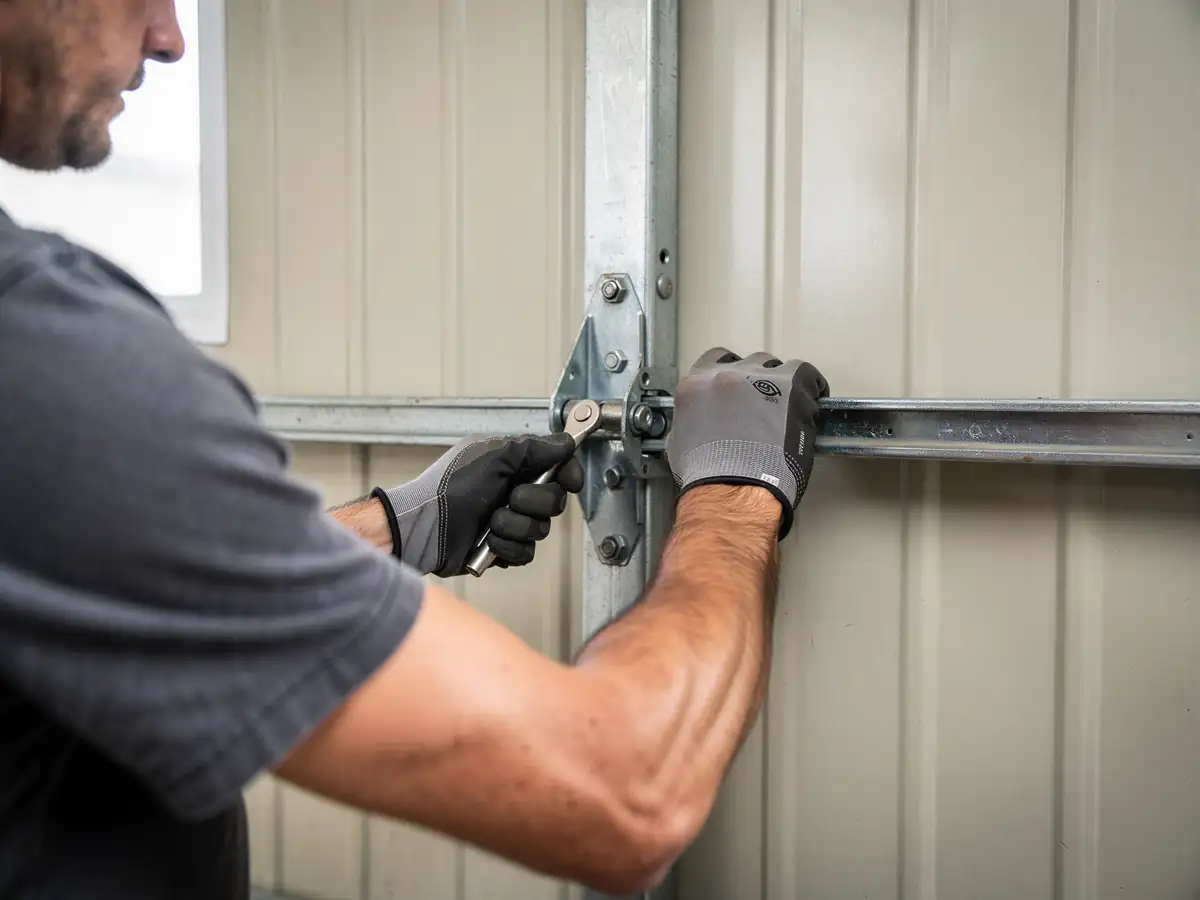
If your door is original to a house built in the 1960s or '70s, look for a bottom seal that's gone flat or cracked, a panel that's bowed rather than dented, or hardware that was clearly resized once already - a sign someone patched an opening instead of squaring it. In a cold-climate area like this, a door that drags in January and runs fine in July usually isn't the opener; it's wood or track that's moved with the season. If the door is original steel with no visible insulation layer inside the panel, you're looking at a design that predates the thermal expectations most owners have now, not a defect. That's a replacement conversation, not a repair one. We won't talk you into swapping a door that's sound just because it's old - if the track's square, the spring's rated right, and the panel's intact, sometimes the honest answer is a new seal and a tune, not a new door.
How it works
From “it’s stuck” to “it’s fixed”
A quick, honest process - no guesswork and no surprises, start to finish.
Why do so many garage doors in Wilmington need more than a panel swap?
Because the openings themselves are often old. With most housing here dating to the 1960s and '70s, the rough opening, header, and track were built to a different standard than modern insulated doors expect. A straight panel swap frequently uncovers framing or track work that has to happen first for the new door to seal and operate correctly.
Does Wilmington's cold climate actually affect garage doors?
Yes. This area sits in a severe cold climate band, and that stiffens steel, shrinks wood jambs, and breaks down old bottom seals faster than in milder regions. A door that worked fine in warmer months but drags or won't seal in winter is often showing cold-weather wear on aging hardware, not a new mechanical fault.
Can you give me a price without seeing the door?
Not accurately. Openings in this area vary enough by house age that a phone quote is a guess. We measure the opening, check the track and header condition, and price the actual job - that's the only number worth trusting on housing this old.
Do you install custom-sized doors same day?
No. Standard widths and heights that match common openings from the 1940s through early 2000s are stocked on the truck. A custom or non-standard size gets measured on-site and ordered, which adds lead time but avoids installing a door that doesn't fit.
Ready to get your garage door sorted?
Tell us what it’s doing and where you are in Wilmington - we’ll take it from there.