Why This Fails Locally
The housing stock in this part of the service area mostly dates to the 1960s and 70s, with a median build year around 1964 - right in the middle of the 1940-2001 range across our broader territory. Doors from that era were often hung on tracks mounted with hardware that's thinner-gauge than what goes in today, and after sixty years of expansion and contraction, the brackets holding that track to the frame work themselves loose a little at a time. You don't notice until the day the door comes off the rail entirely. This area also sits in a climate band we'd call severe cold, and that matters for off-track failures specifically: metal track contracts in a hard freeze, which opens up tiny gaps at the joints and bracket points. A door that was borderline all summer picks that moment to jump the rail. It's not dramatic, it's just metal doing what cold metal does, on hardware that was never over-built to begin with.
Doing It Yourself
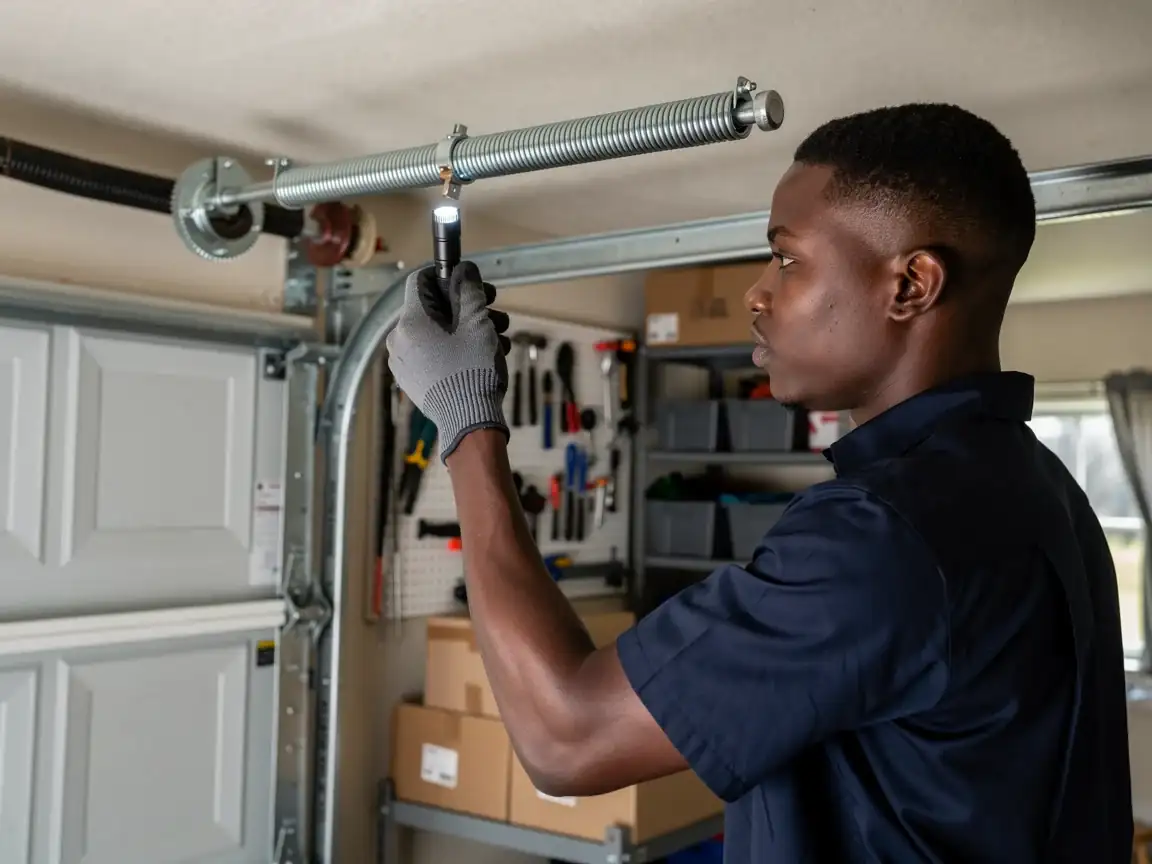
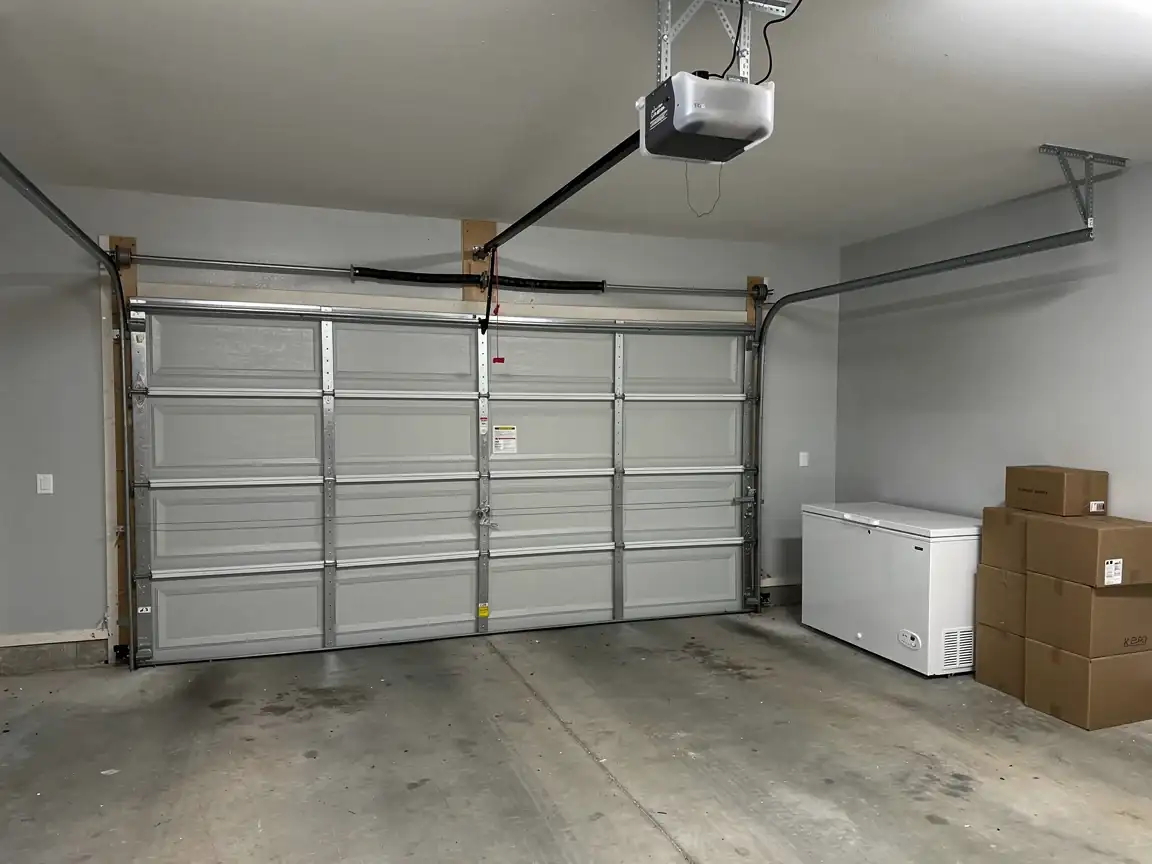
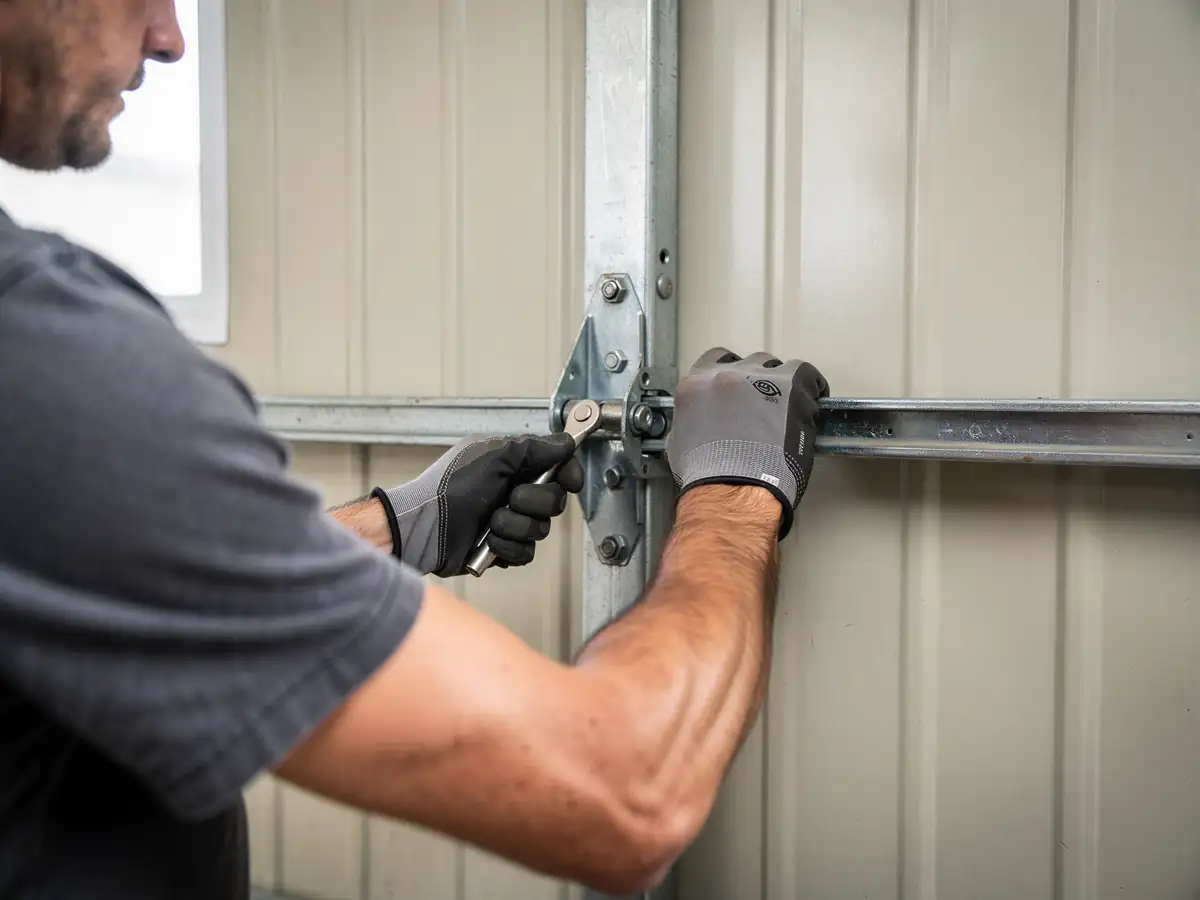
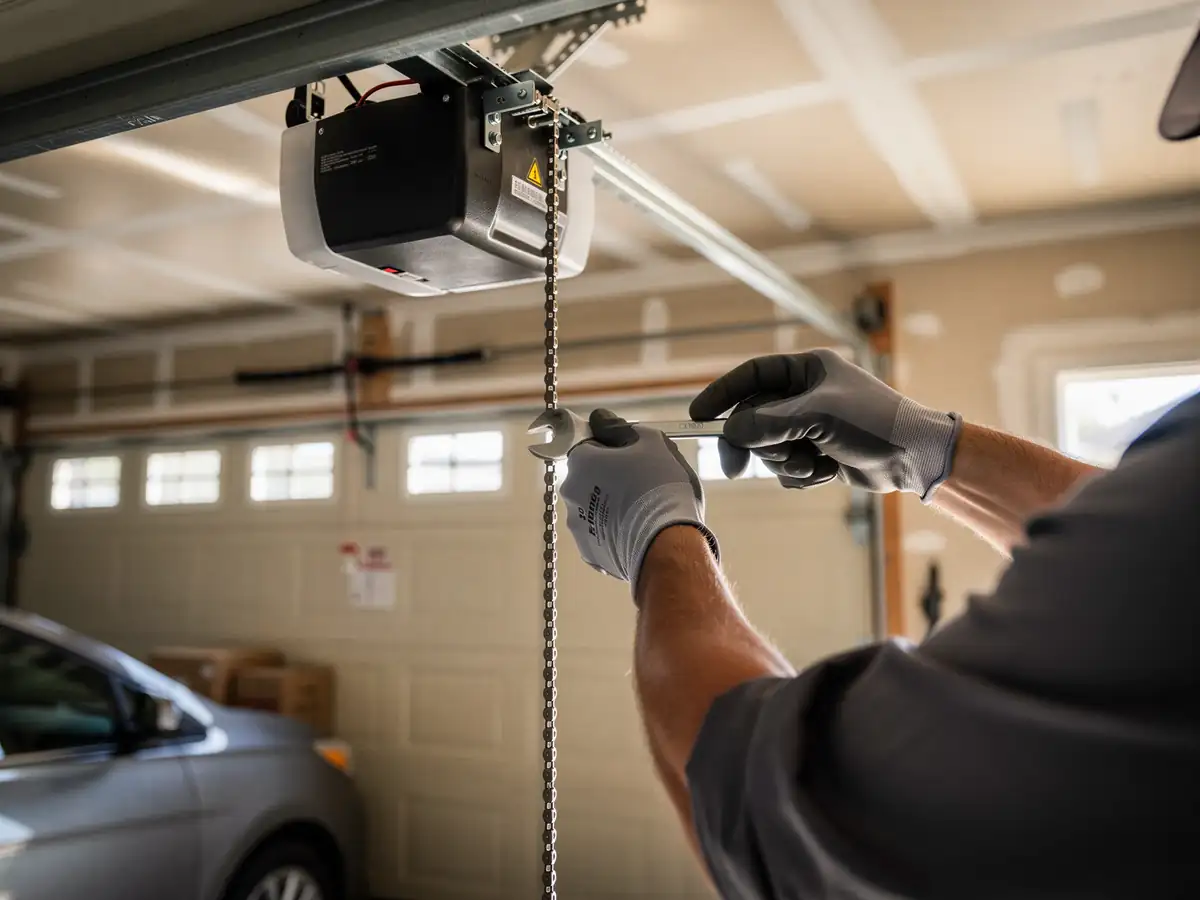
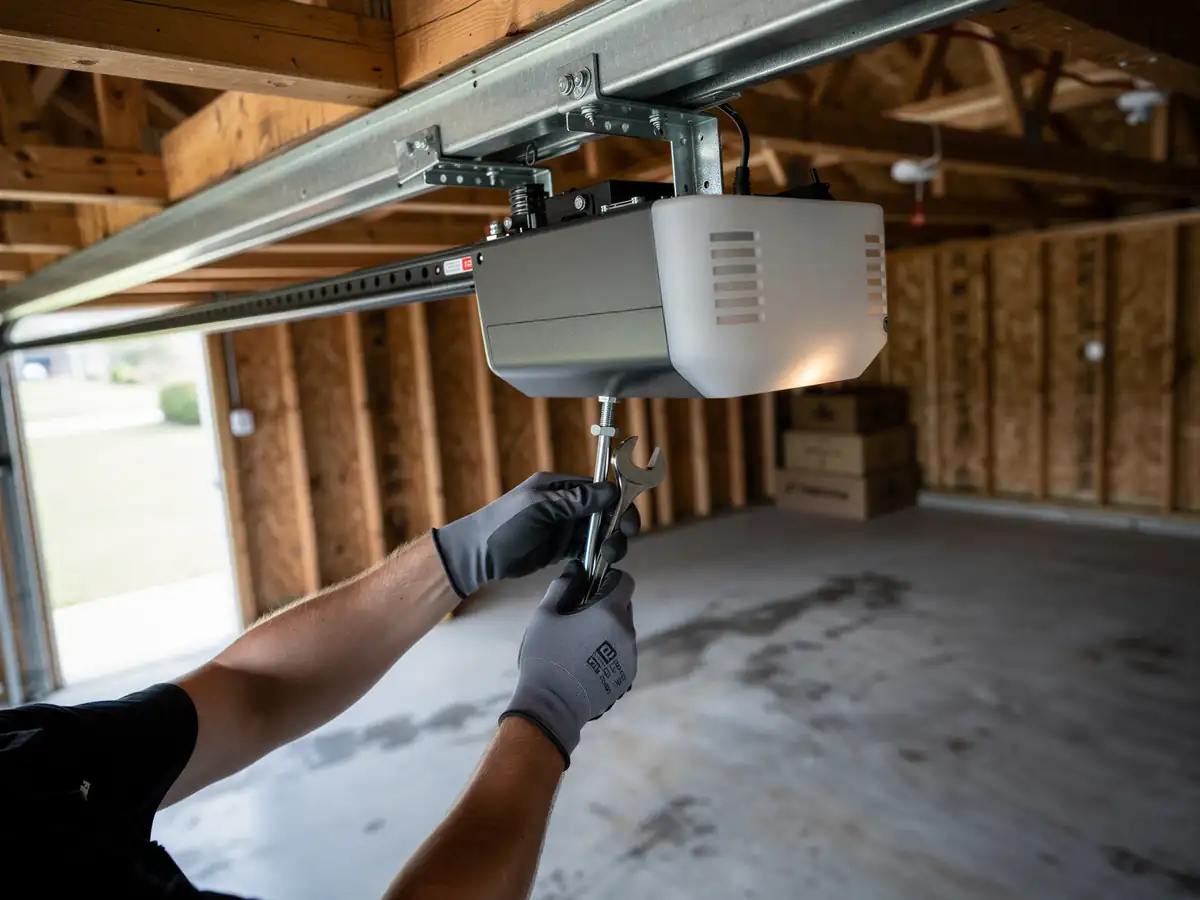
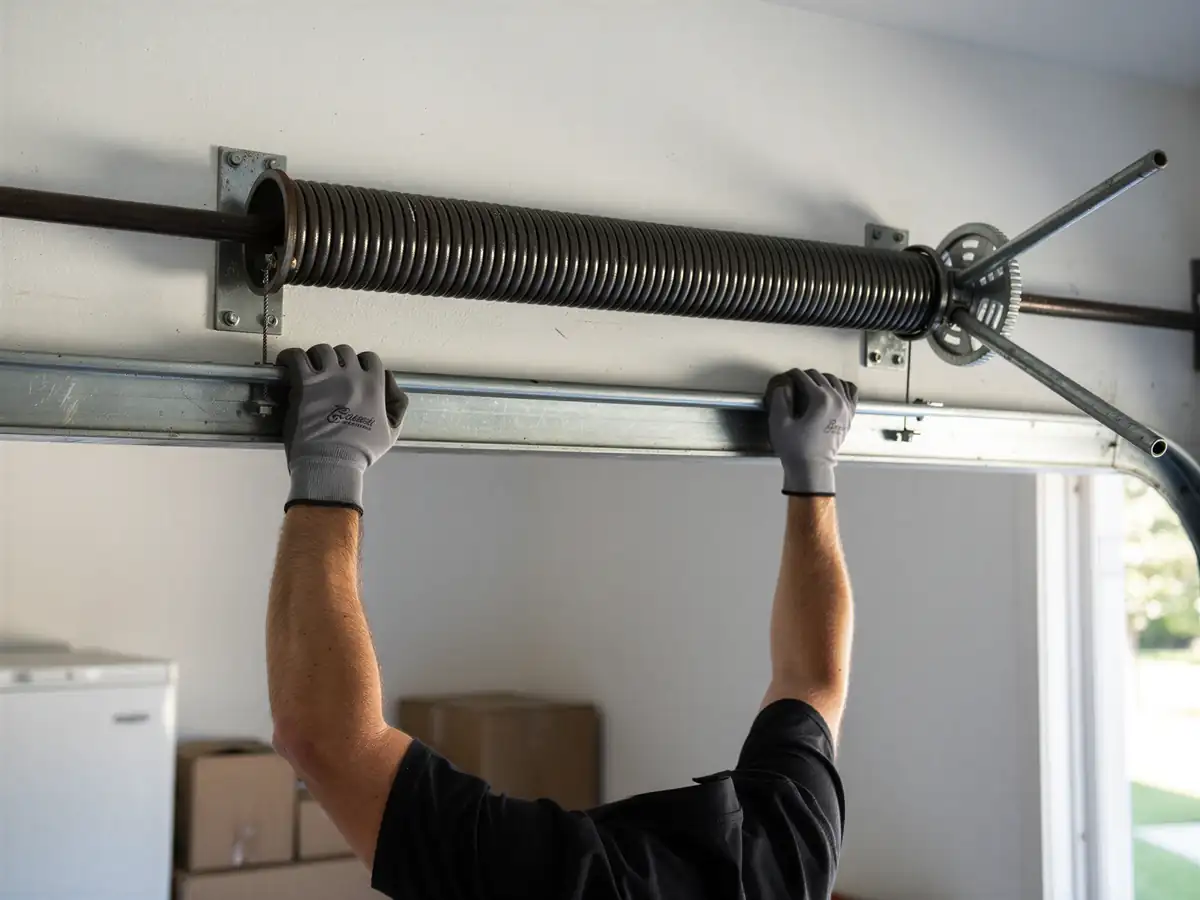
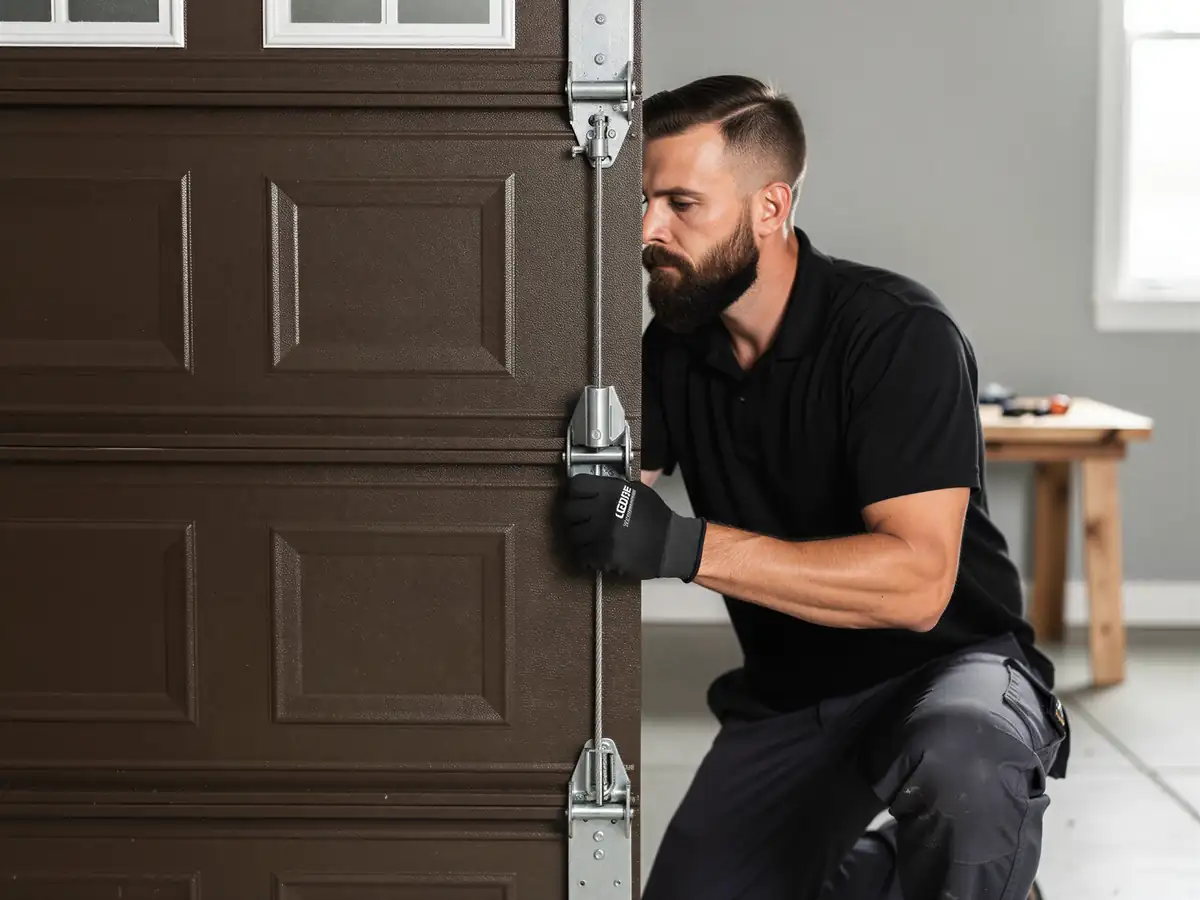
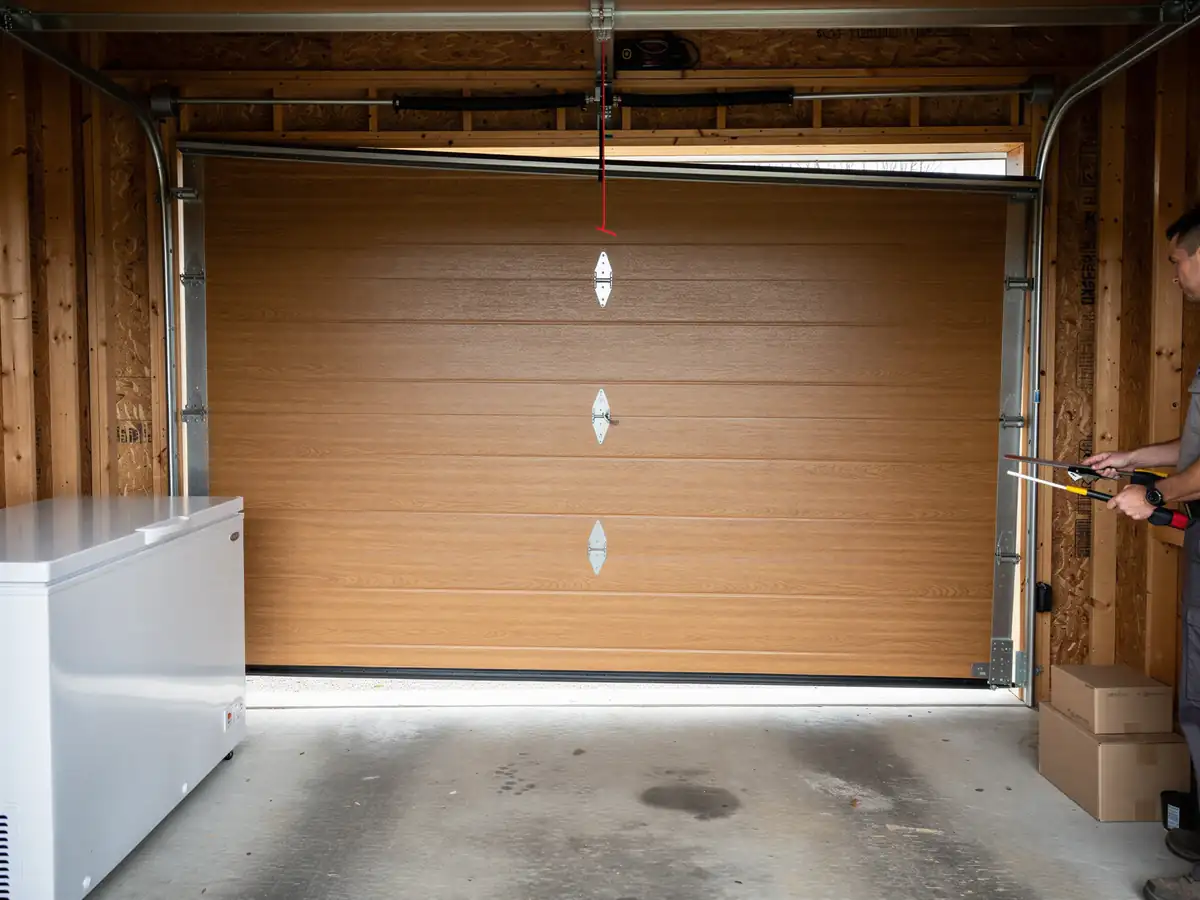
If your door is off track, the first thing to do is stop using the opener. Running the motor against a door that isn't seated in its track can bend the track further or snap a cable, and that turns a one-part fix into a three-part fix. Pull the release cord so the door is disconnected from the opener, and don't try to force the door back into the track by hand if a spring is under tension - that's a hand-injury risk, not a DIY job. What you can safely check: look at the track brackets where they bolt to the wall framing and see if any are visibly pulled away or hanging loose, and check whether the door came off on one side only or both. One side usually means a bent track or a roller that failed. Both sides coming off together usually points to something more serious with the spring or cable system, and that's not a repair to attempt without the right bars and clamps. When in doubt, leave the door where it is and call.