What It Costs
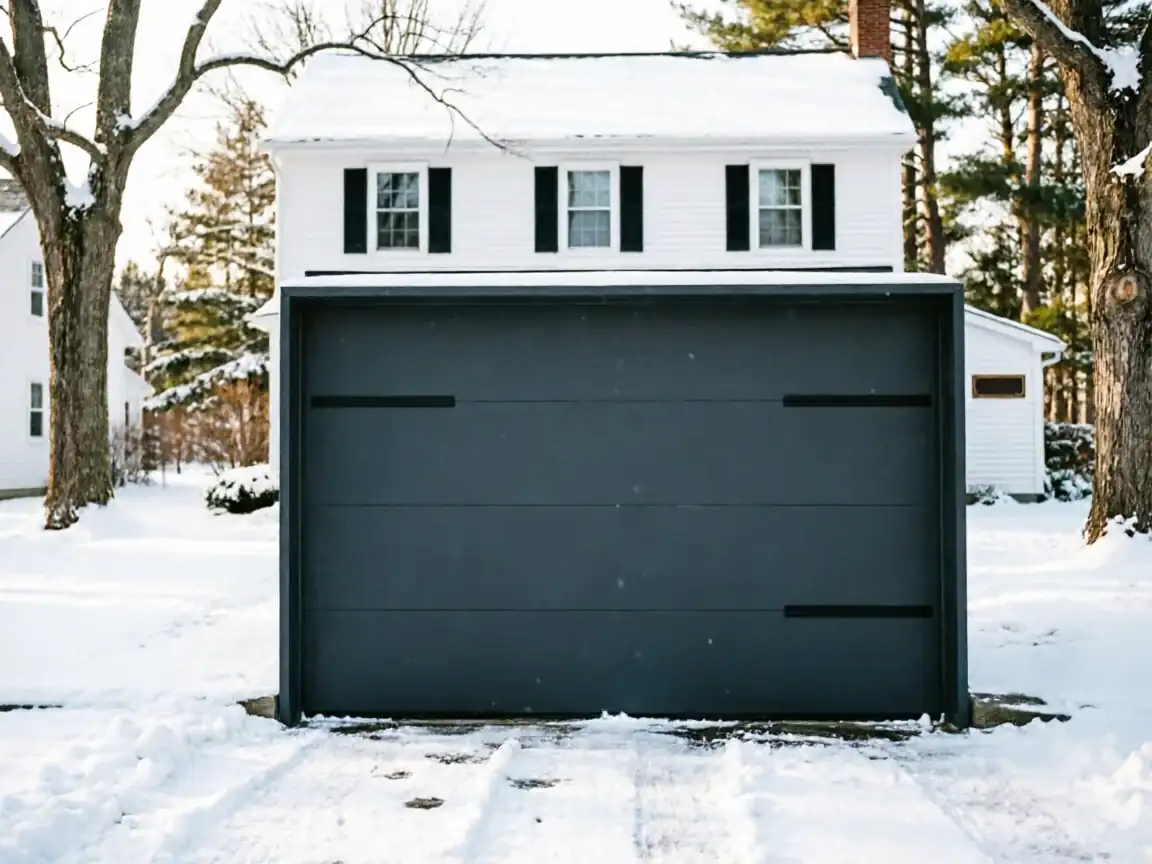
We don't price a Bellefonte job off a generic range, because the age of the opening is the first variable, not the door itself. A straightforward swap into a square, standard-width opening costs less than a job that needs header work, jamb repair, or a custom size to fit framing that predates modern door sizing. Insulation level, track type, and opener choice move the number too - and in a COLD-severe climate zone, we don't recommend skipping insulation to save money on the install, because you'll pay it back in heating bills and in hardware wear from the temperature swing on an uninsulated panel. The area's median household income runs close to $86,667, and most of the installs we see here land in a mid-range tier rather than a stripped-down or top-shelf one. We'll give you a firm number after we see the opening in person, not before.
How Long It Takes
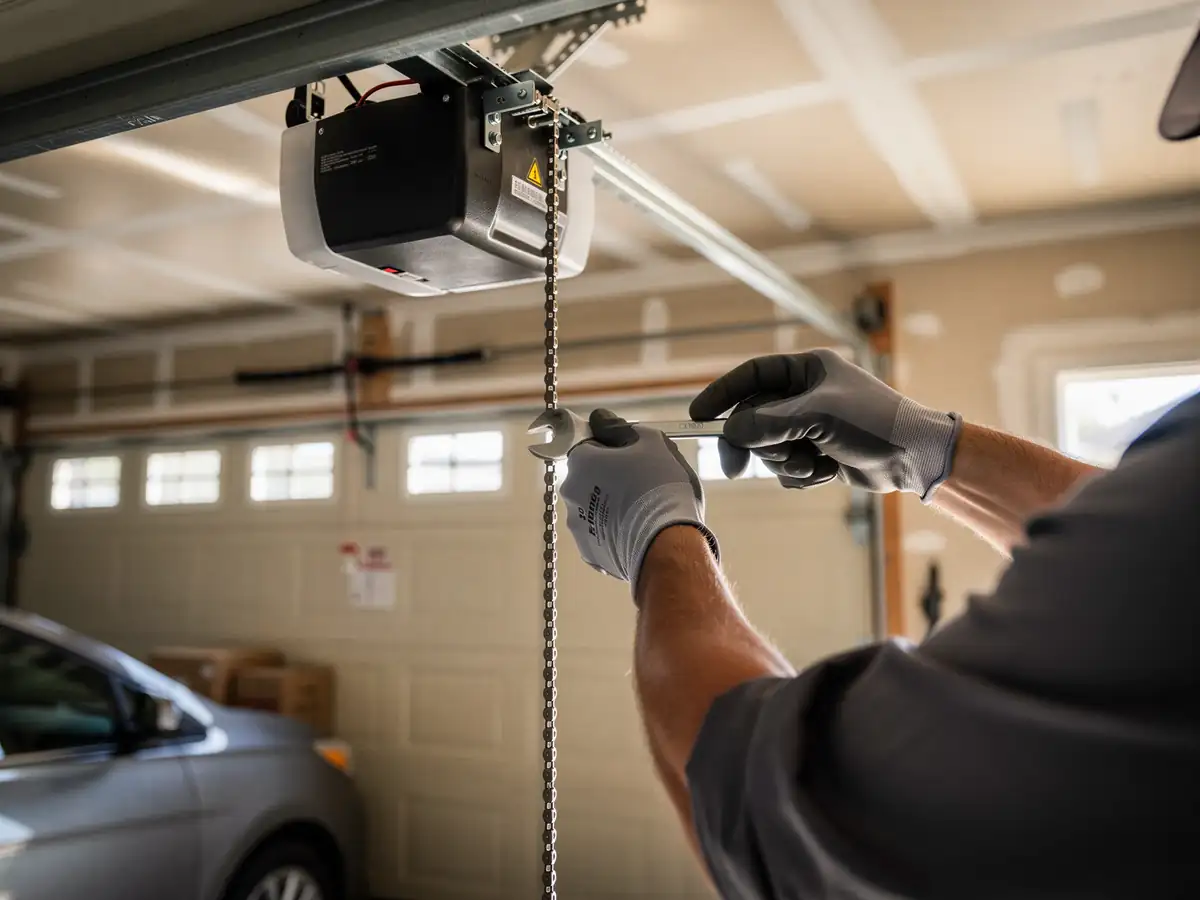
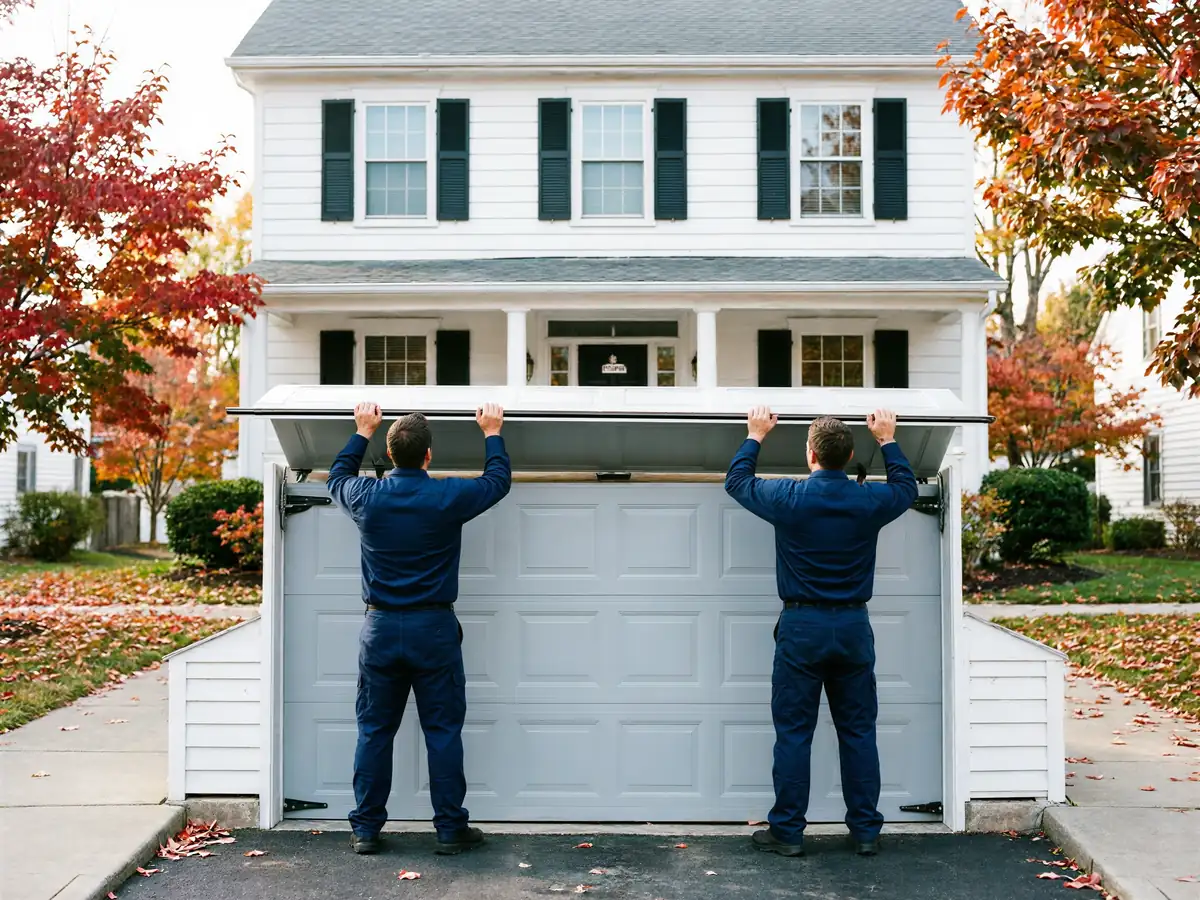
A standard replacement - same size opening, no header work - is a one-day job from removal to a working opener. Where Bellefonte adds time is in the small percentage of homes where the opening needs to be squared up or widened to fit a standard door, which can turn a one-day install into a two-day job if we have to reframe part of the header before the new door goes in. We'll tell you on the walk-through which category your house falls into. We don't pad the schedule to look fast, and we don't promise a same-day turn on a job that needs carpentry first - that's the honest limitation here, and it's better to hear it before the crew shows up than after.
Doing It Yourself
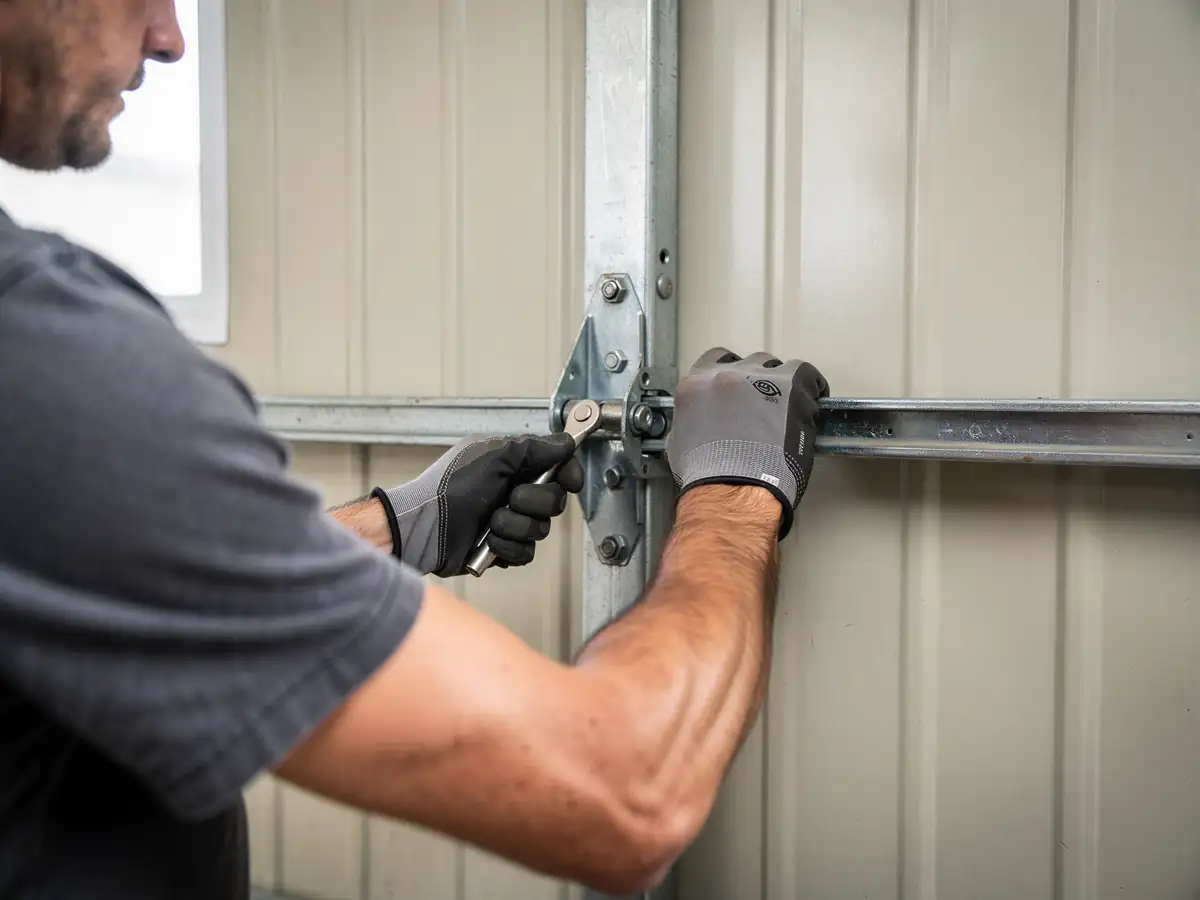
A new door is heavy, spring-loaded, and unforgiving if the opening isn't what you think it is - and in a town where a good share of houses still have their original 1940s framing, that's exactly where a DIY install goes wrong. Measuring a rough opening that looks square but isn't, or missing that a header won't clear a standard track without modification, are the two mistakes we get called to fix most. If your opening is a known standard size with no header issues, a capable homeowner can do a straightforward swap. If you're not sure which category you're in, that uncertainty is itself the sign to get someone out to look before you order a door.
What You Are Seeing
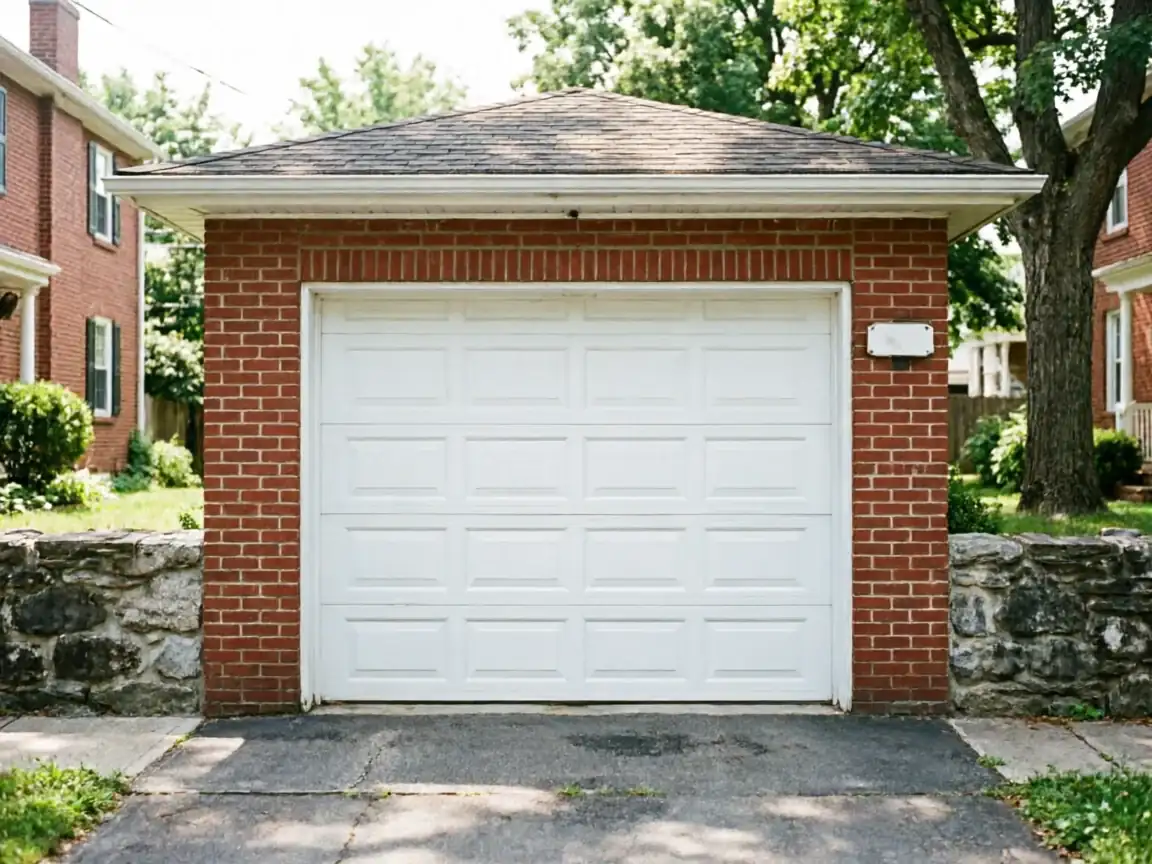
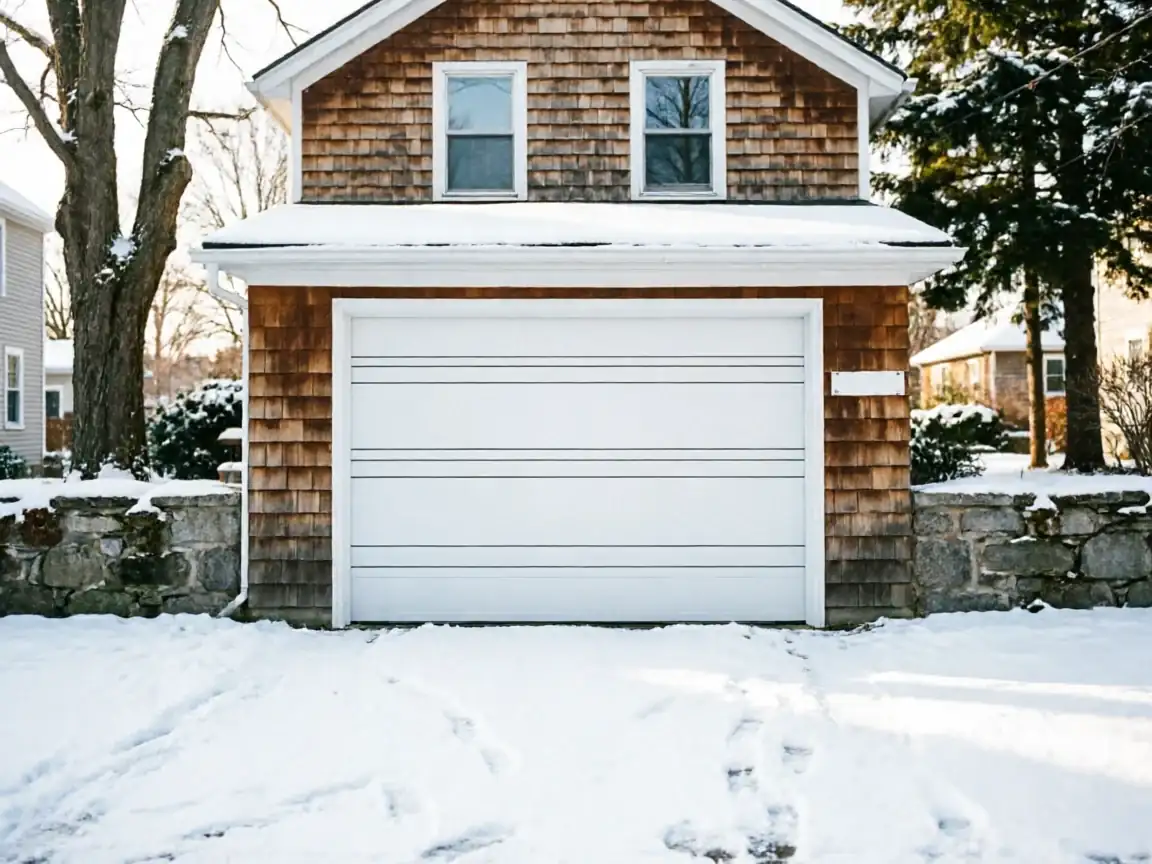
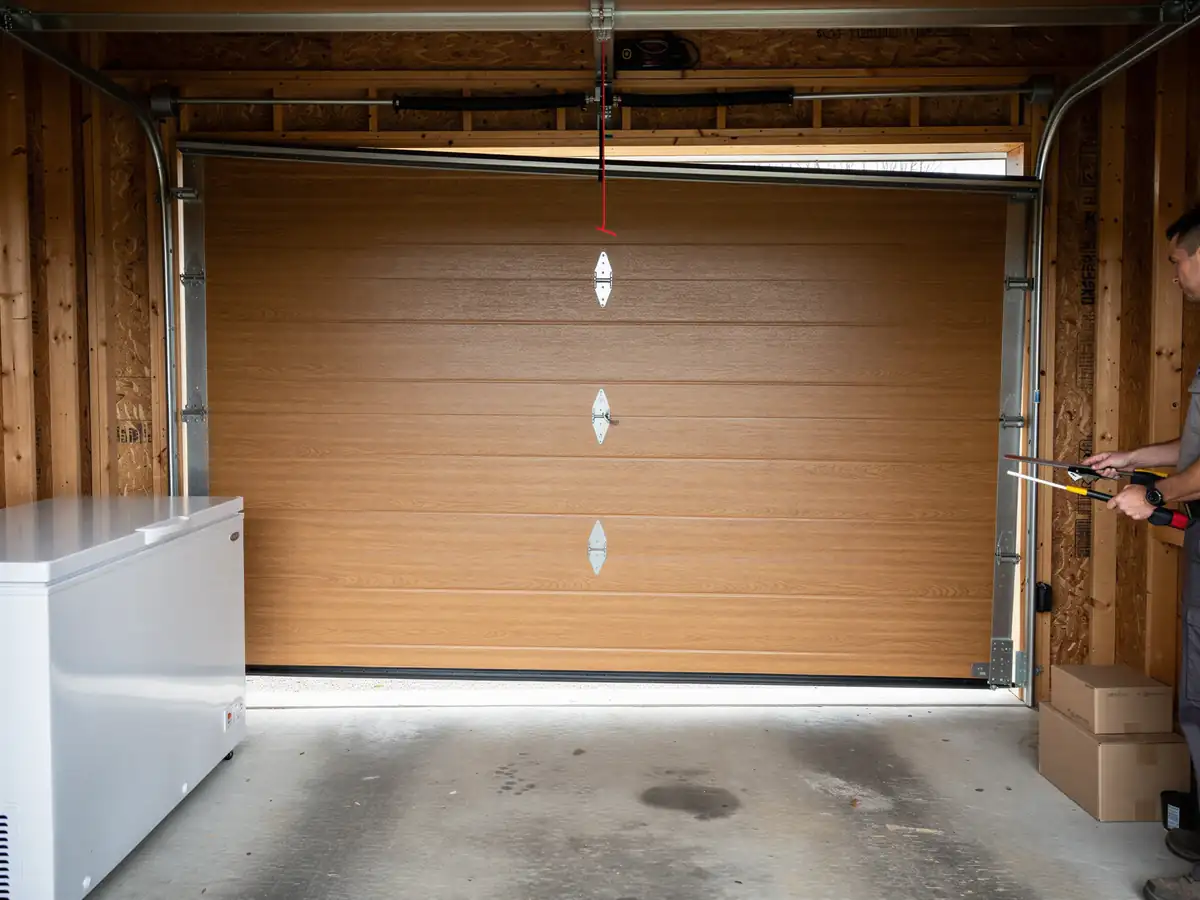
If your garage door sticks, binds, or won't seat flush at the bottom, on a house this age it's often the opening that's moved, not just the door that's worn out. Original 1940s framing in this area has had eight decades to settle, and small shifts in a jamb or header show up as a door that needs real muscle to close or one that's visibly crooked in its track. A door that's merely old but still sized correctly can often be repaired. A door fighting an opening that's shifted out of square is usually better replaced, because repairing hardware to compensate for bad framing is a short-term patch, not a fix. We'll tell you straight which one you're looking at.