What It Costs
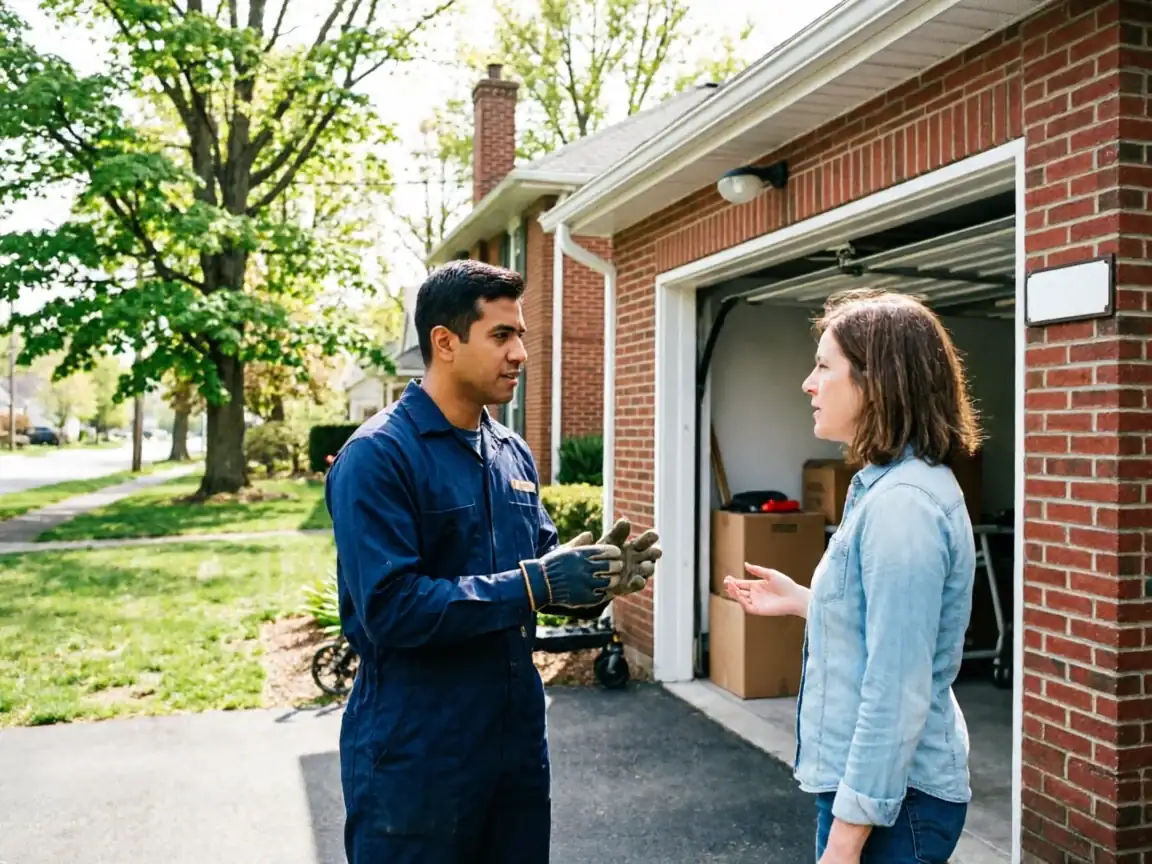
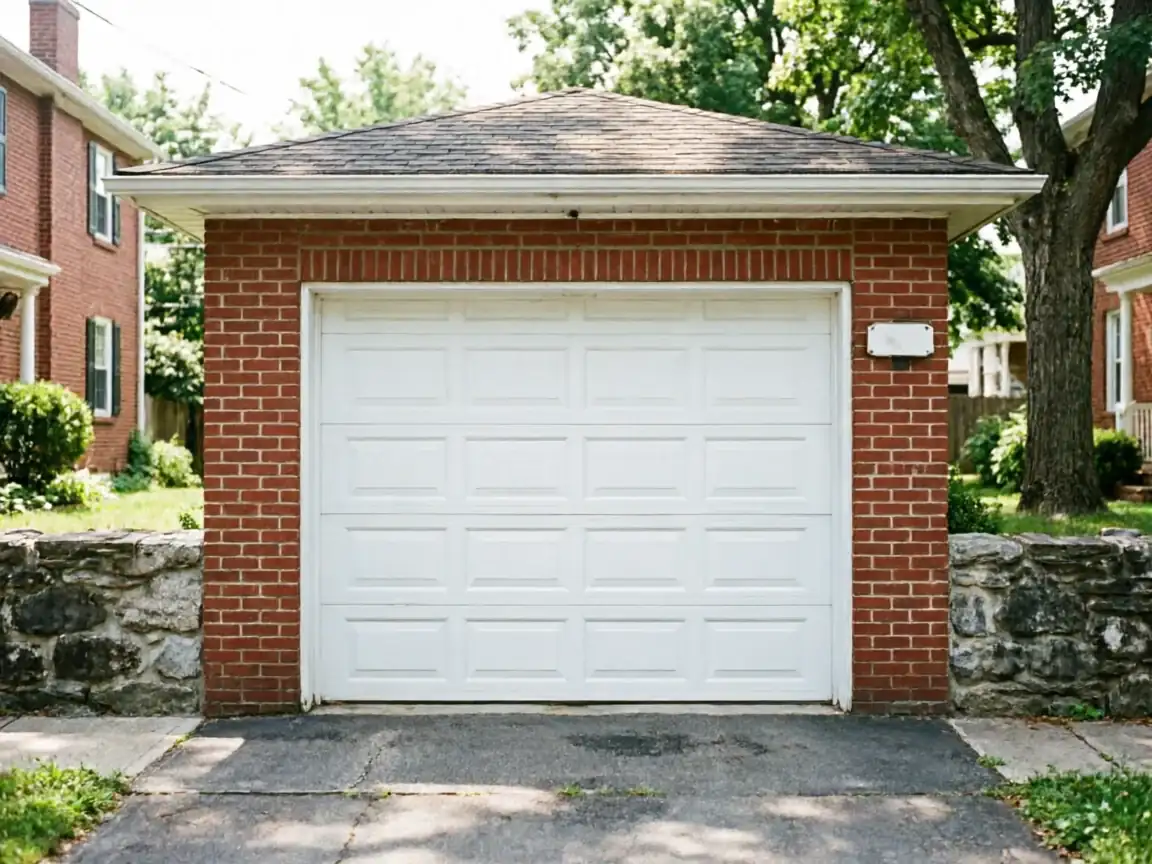
We don't have a Bellefonte-specific price list, and we're not going to invent one. What we can tell you is that older doors cost more to diagnose before they cost more to fix, because the parts on a 1940s-era setup often aren't the same gauge or mount pattern as what's on the truck. Sometimes that means a straightforward swap. Sometimes it means we're adapting a modern spring or track section to fit an opening that was never built to current standard sizes. Either way, the job gets priced after a look at what's actually there, not off a phone call.
How Long It Takes
A clean spring replacement or roller swap on a door this age usually isn't a long job once we're on site. What takes longer is when the original hardware is nonstandard - older extension spring systems and odd-width tracks sometimes need parts we have to source rather than pull off the truck. We'll tell you up front if that's the case rather than promise a same-day fix we can't back up from here. We run this from Wilmington, about 3 miles off, so travel isn't the bottleneck; the age of the hardware is.
Doing It Yourself
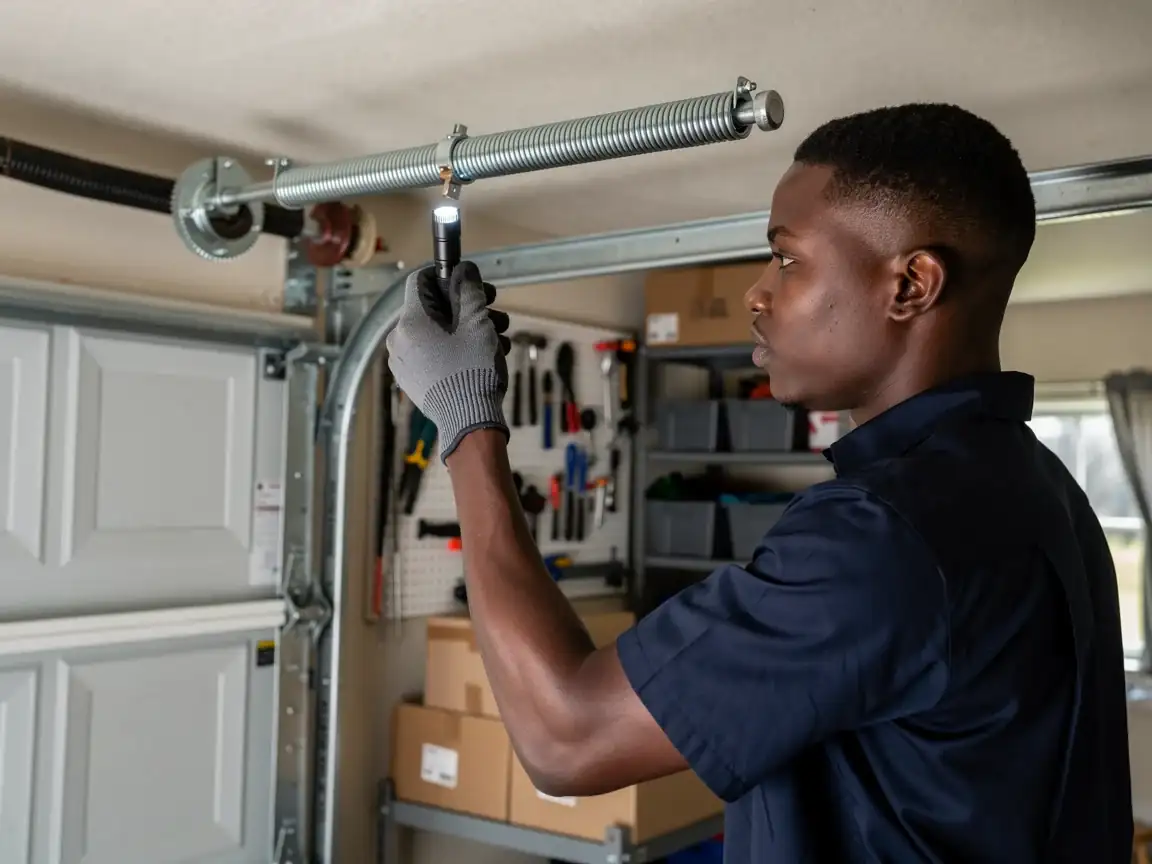
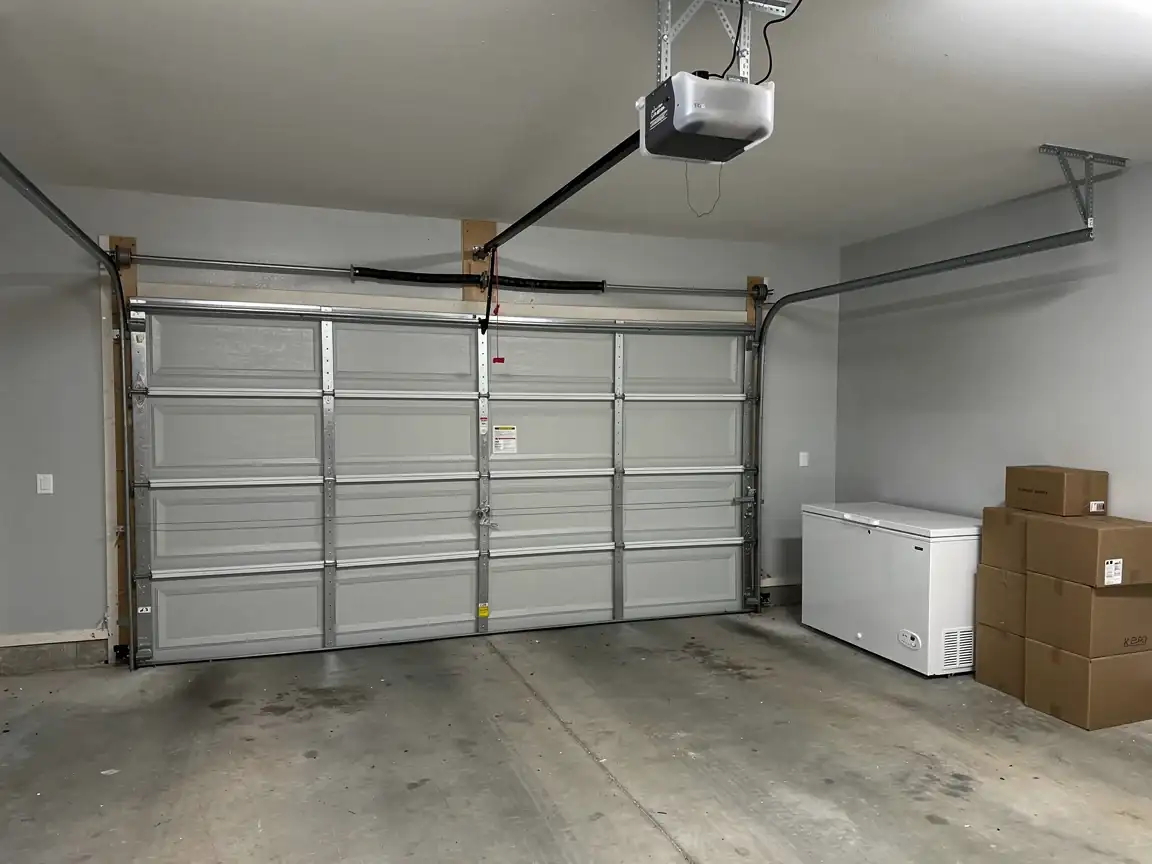
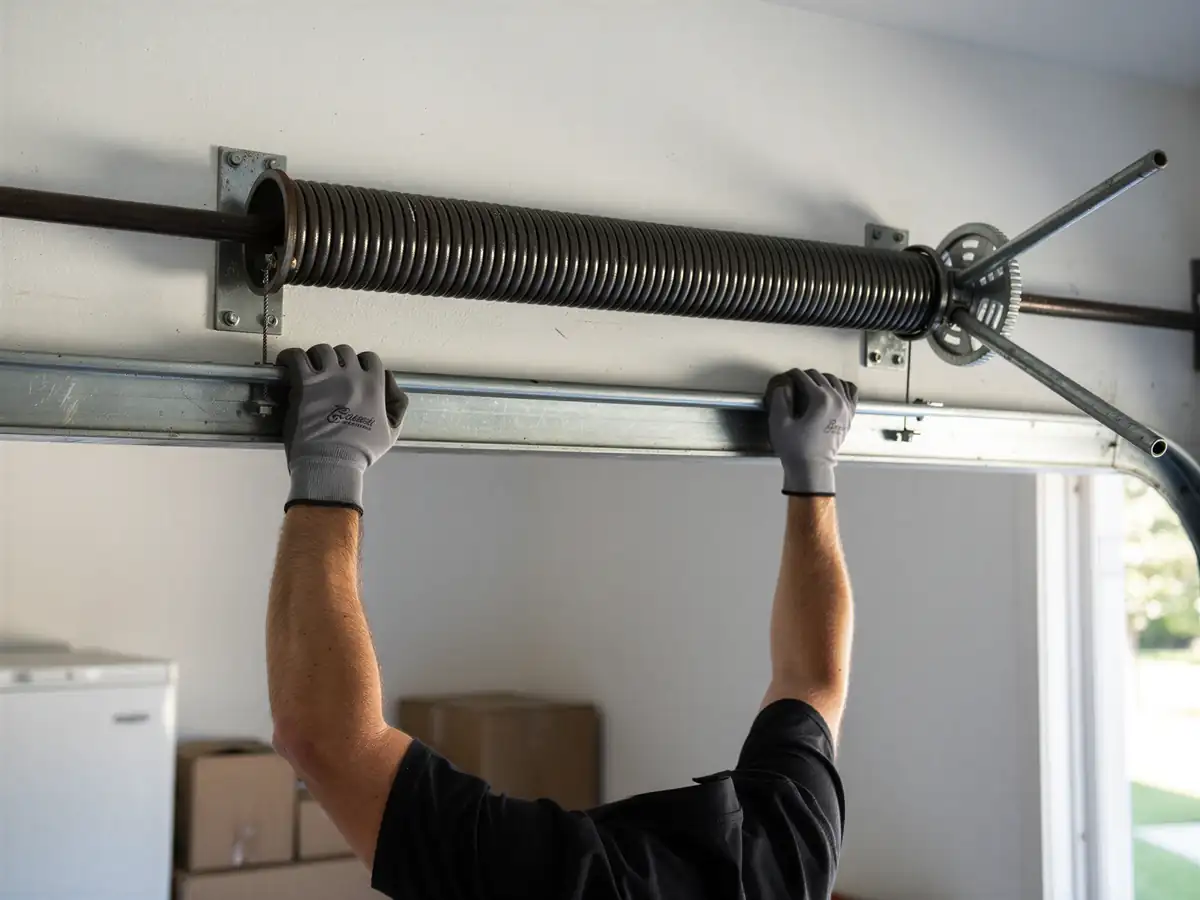
If your door is sticking or coming off track, it's tempting to free it up yourself, and sometimes that's fine - lubricating hinges and rollers, tightening loose bolts, clearing track debris. Where we'd stop you is the springs. On a cold winter day, a 1940s-era extension spring under tension lets go without warning, and without a modern containment cable there's nothing stopping it from traveling across the garage. That's not a DIY repair here, full stop. If the door won't move at all or one side has dropped lower than the other, leave it closed and call rather than forcing the opener.
What You Are Seeing
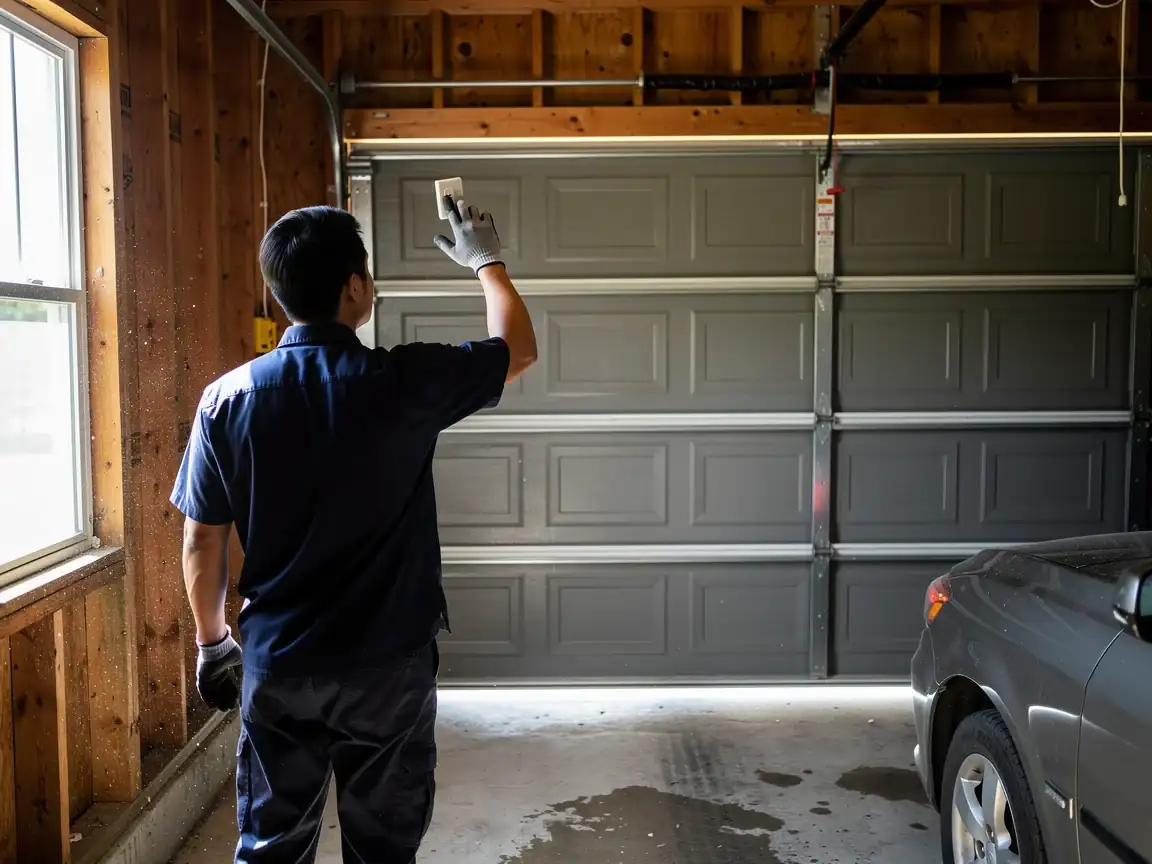
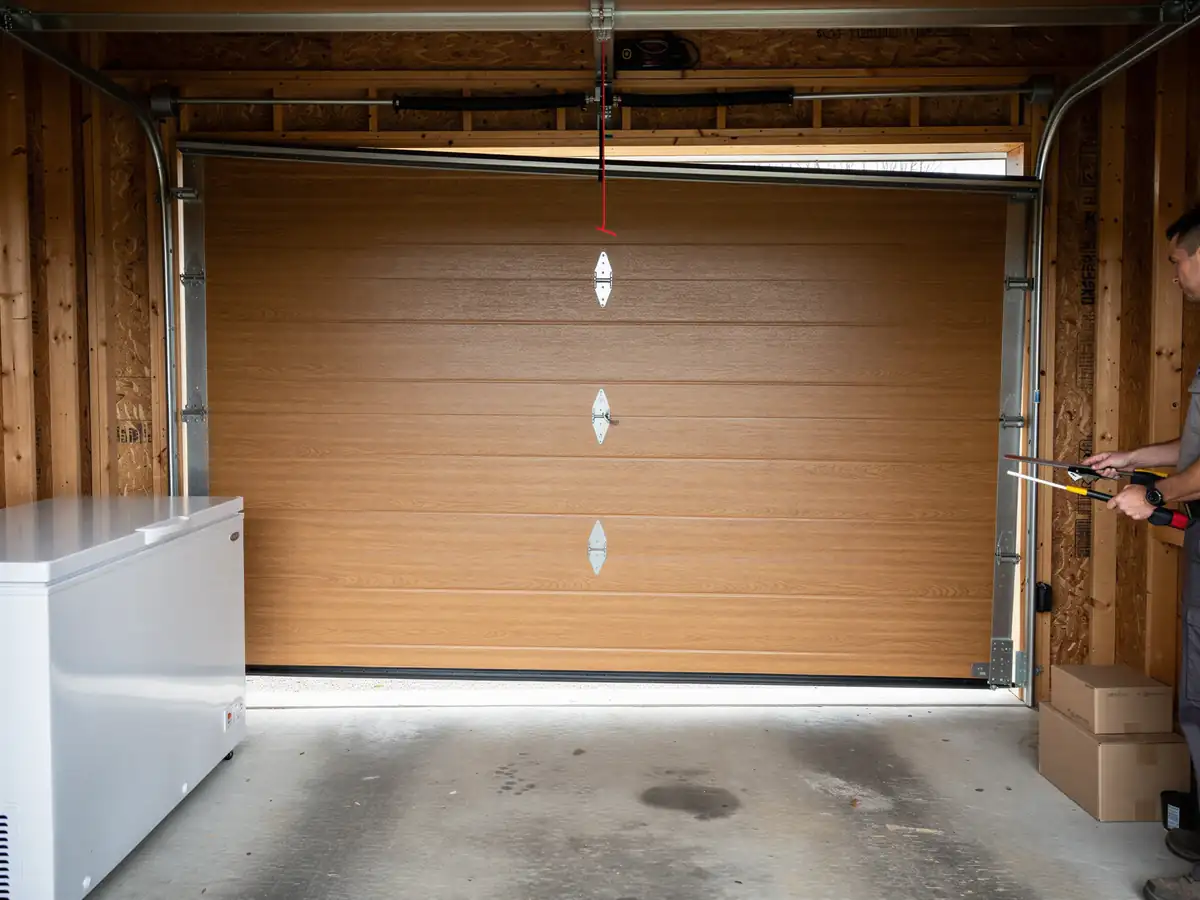
If you're hearing a grinding or popping sound through the wall when the door opens, that's often a worn roller in an old steel track rather than anything wrong with the opener. If the door looks crooked when it's halfway up, especially on an older extension-spring setup, one spring has likely lost tension relative to the other and the door is being pulled unevenly. A door that reverses right after it touches the floor can mean the track has shifted slightly out of alignment, which is common in homes built before 1950 where the framing has settled over the decades. None of these are urgent emergencies by themselves, but they're signs the hardware is reaching the end of what it can do safely.