Booking a Visit
We come out to Wilmington Manor from Wilmington, about 4 miles up the road
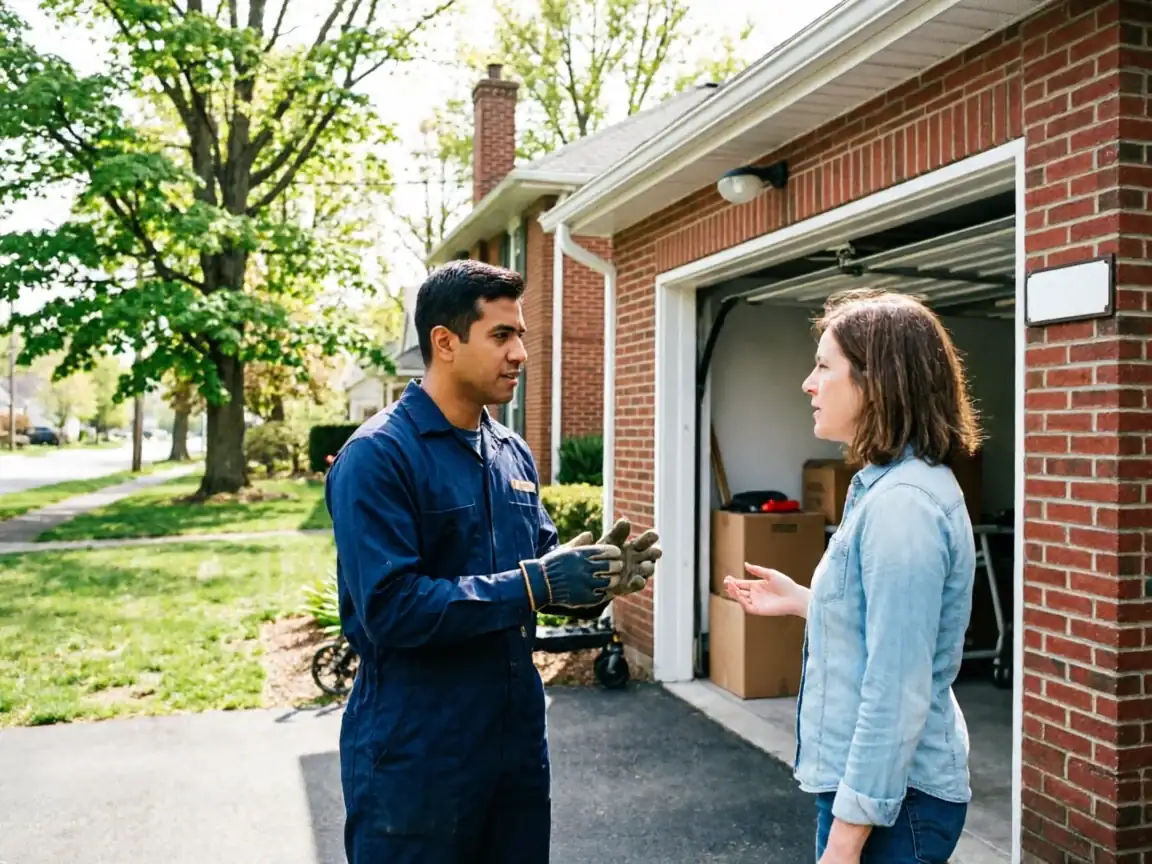
There's no branch or drop box sitting in the neighborhood - every job here is a trip we schedule, same as any other stop on the route. That's not a complaint, just how the area is covered, and it means we ask a few questions up front: what the opener does when you press the button, whether the light blinks a code, whether the door moves at all or just hums. Getting that before we load the truck means we show up with the right part instead of guessing.
- 4 miles
One honest limit: if your opener needs a part we don't carry stock of
Certain older logic boards, for instance - that part isn't something we keep on the truck for every make, and we'll tell you that on the spot rather than string out a visit pretending otherwise. Most Wilmington Manor calls don't hit that wall, but some do, and a second trip is sometimes the honest answer instead of a workaround.
You can see the full range of what we handle in the area on our garage door service page for Wilmington Manor
And the broader opener-repair rundown for the Wilmington side of things lives on our main opener repair page.
Why This Fails Locally
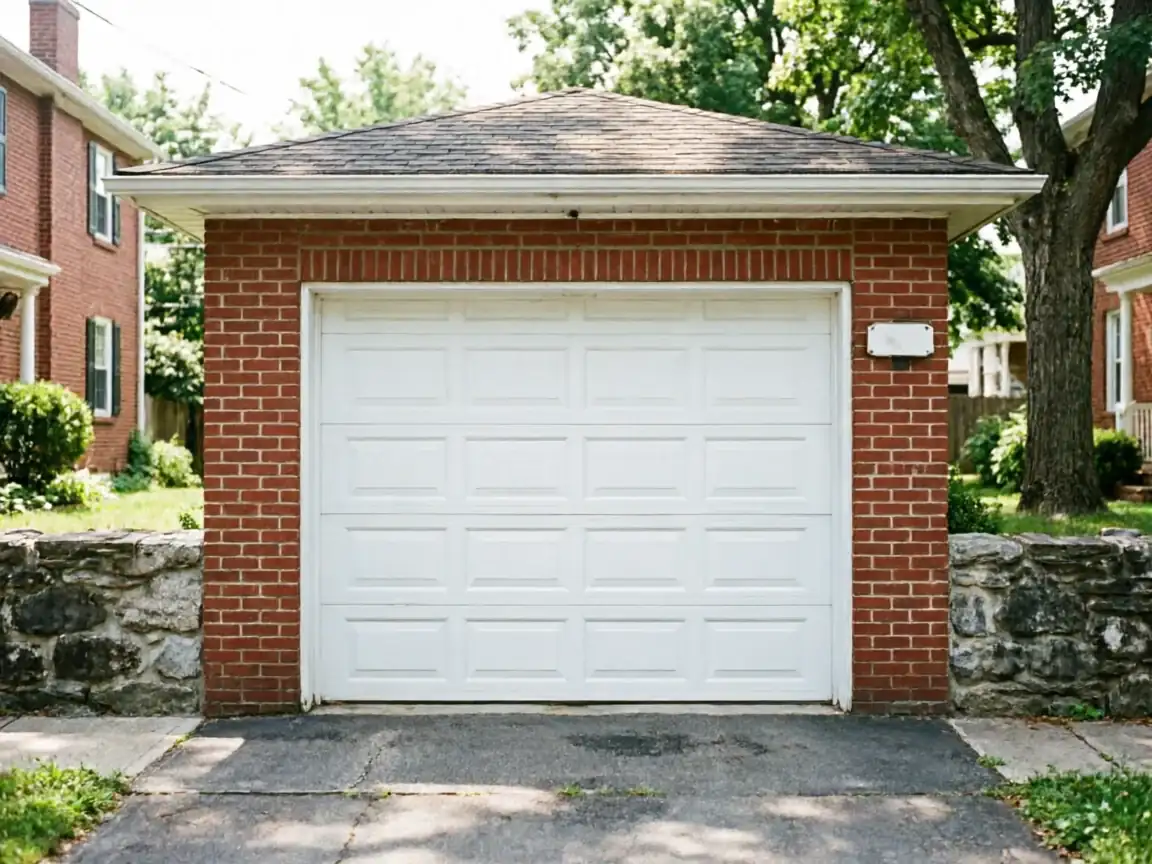
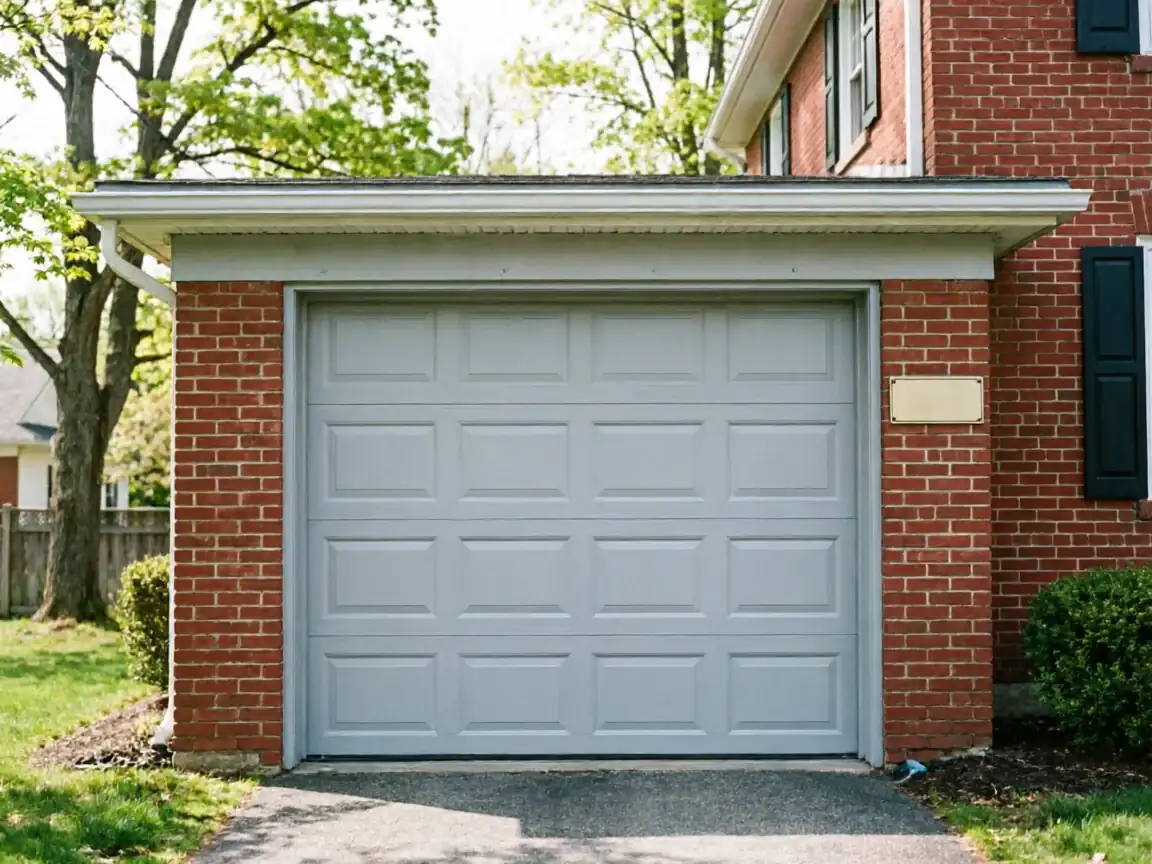
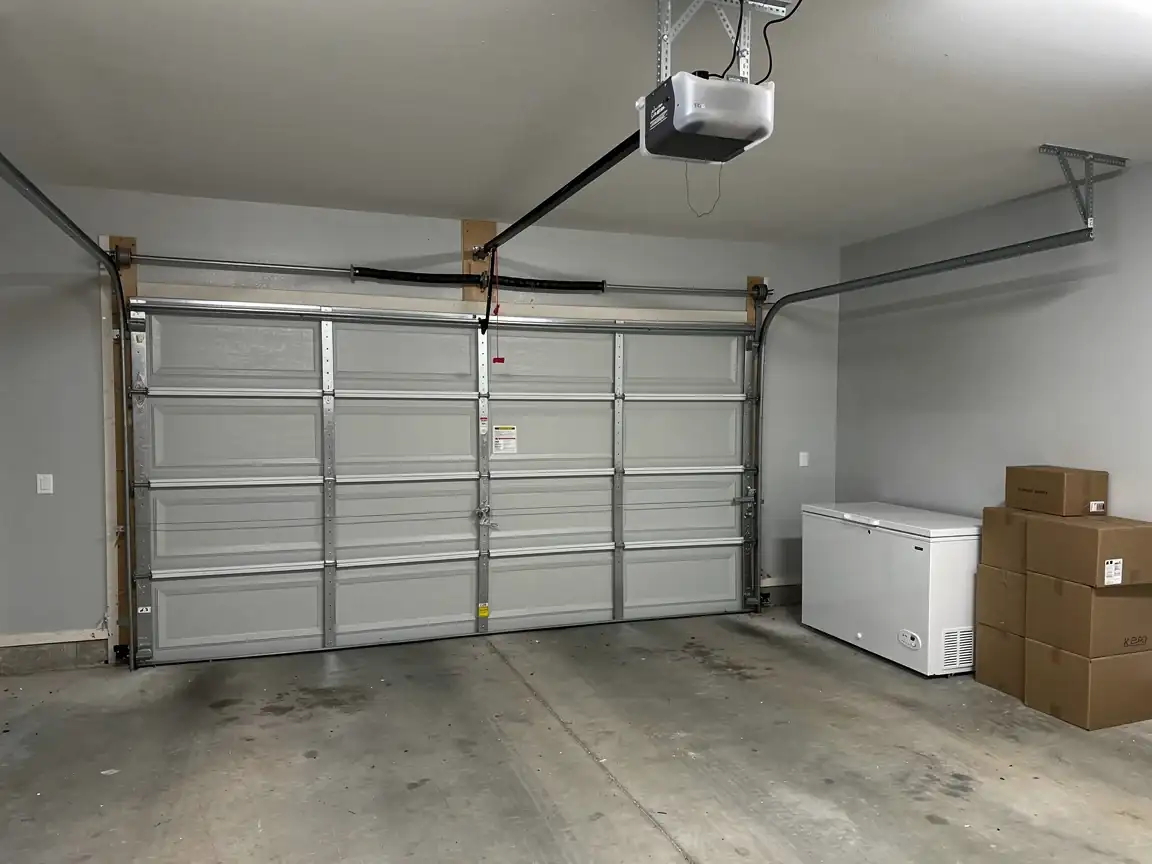
Most of Wilmington Manor went up around 1958. The doors on those original garages are narrow - a lot of one-car bays, some early two-car layouts - built to carry a wood or light steel panel door on a short, low-headroom track. Automatic openers weren't standard equipment on houses built that year; they got added afterward, sometimes years or decades afterward, which means the bracket holding the opener's rail to the header is often a retrofit, not original hardware.
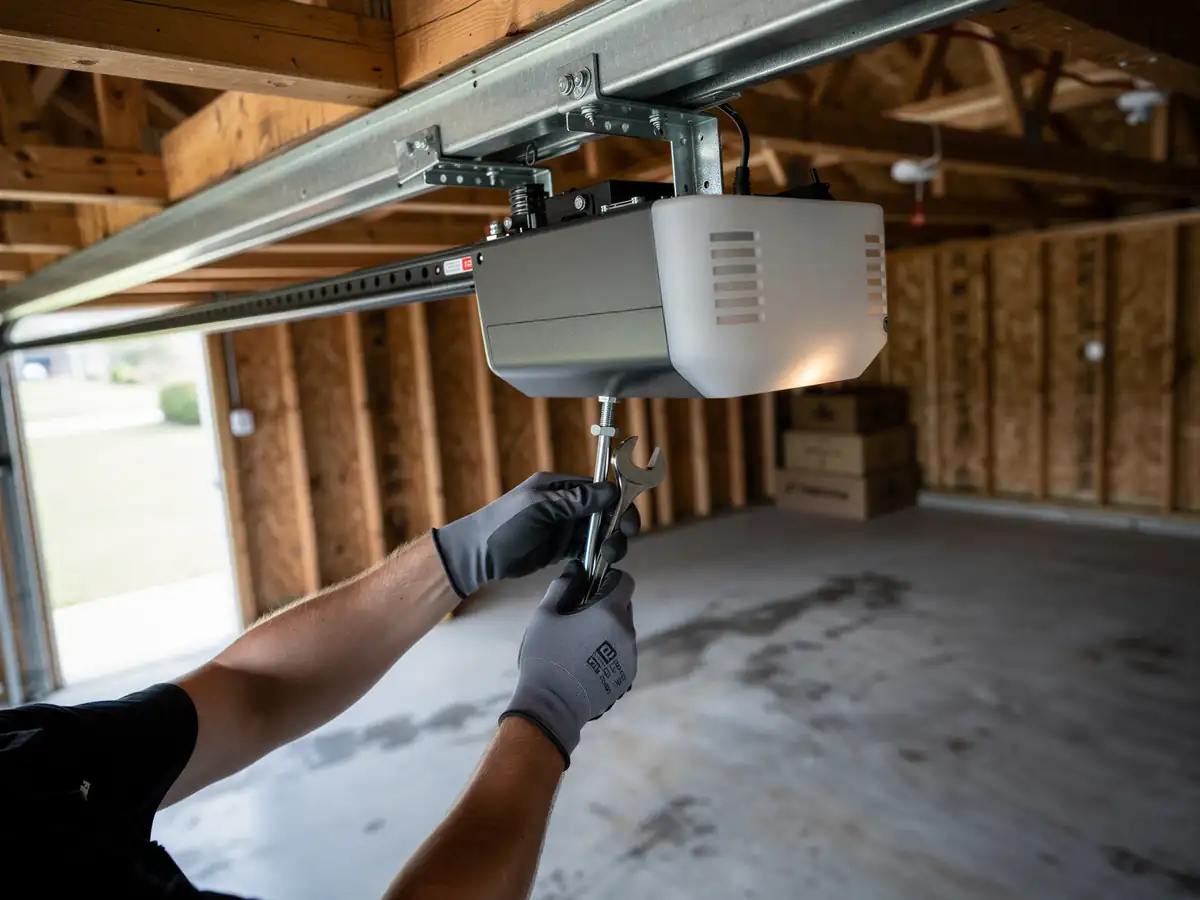
That's the part that fails. The header wasn't framed with an opener's weight and vibration in mind, so the mounting bracket works loose over time, the rail sags a fraction of an inch, and the opener starts straining against a door that isn't traveling square anymore. From the house, that shows up as a motor that runs but a door that doesn't move, grinding at the top of the travel, or a remote that works some days and not others.
It isn't a defect in the opener itself most of the time - it's a mismatch between a unit built for modern door weights and a door-and-header combination that's closer to seventy years old. Fixing the symptom without checking the bracket just means a repeat call.
What the Fix Involves
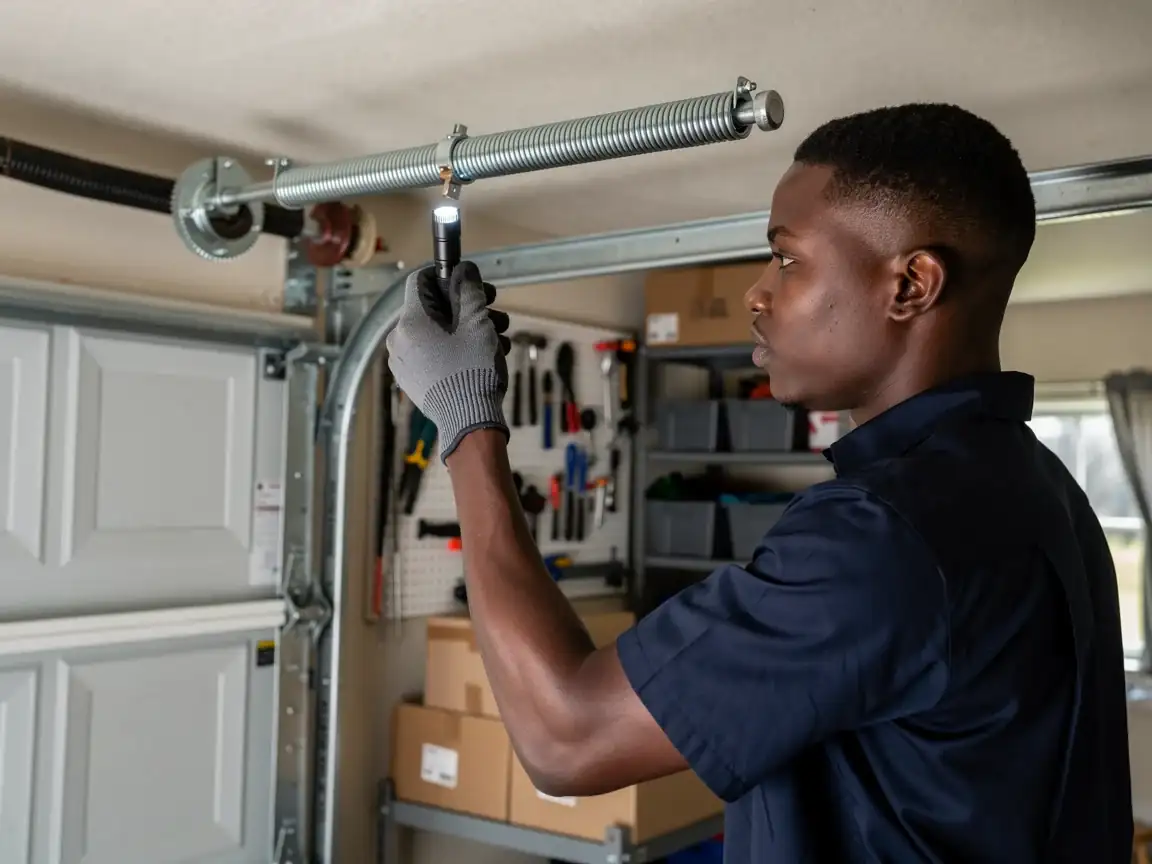
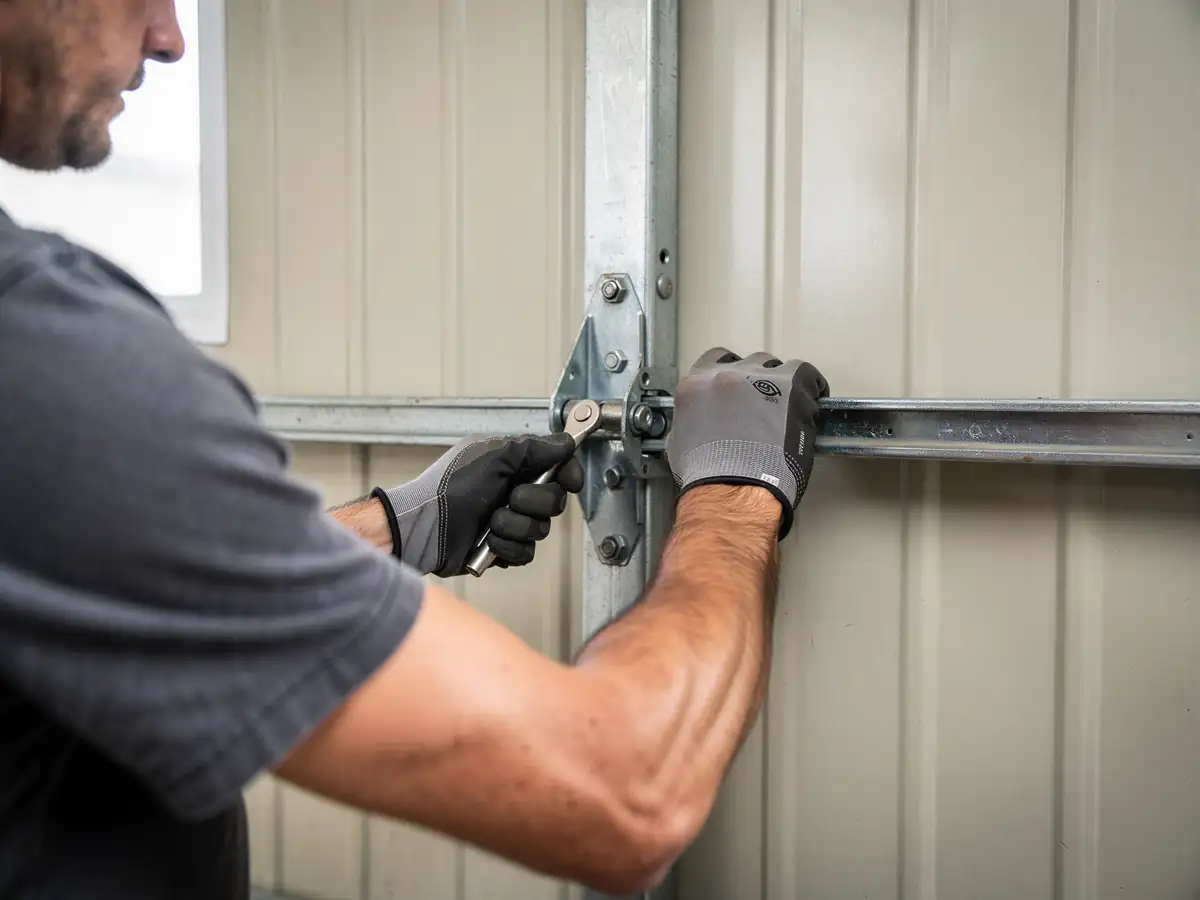
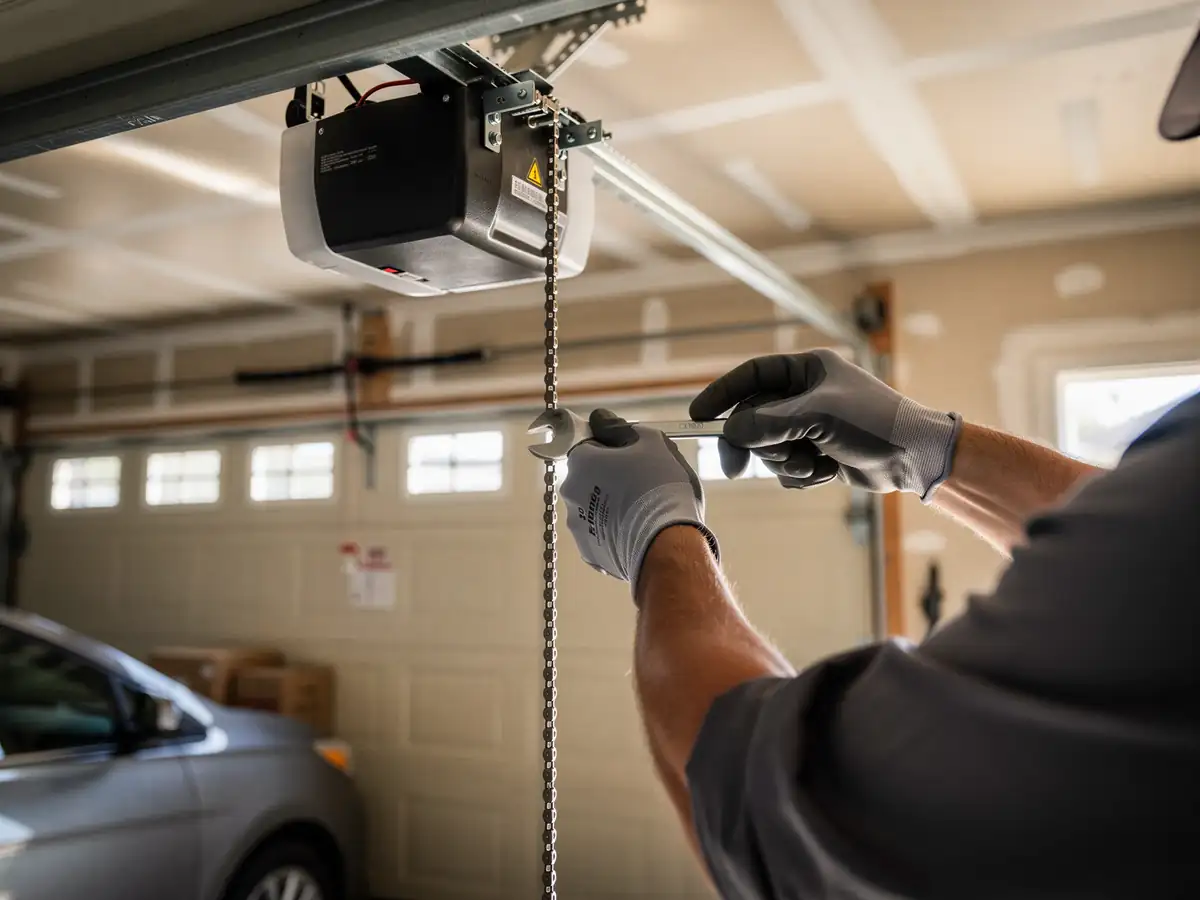
We start at the header, not the motor. If the mounting bracket for the rail has worked loose or the wood underneath has softened, that gets addressed before anything else - tightening down to a weak header just means the next visit is the same one. From there it's travel limits, the force setting, and the safety sensors at the bottom of the track, since a sensor knocked out of alignment reads to the opener as an obstruction and stops the door short every time.
On chain-drive units from an earlier retrofit, we check gear wear inside the housing - the nylon drive gear is usually the part that strips first, and it's a straightforward swap once we're in there. Belt and newer screw-drive units get a different set of checks, mostly around the carriage and the limit switches.
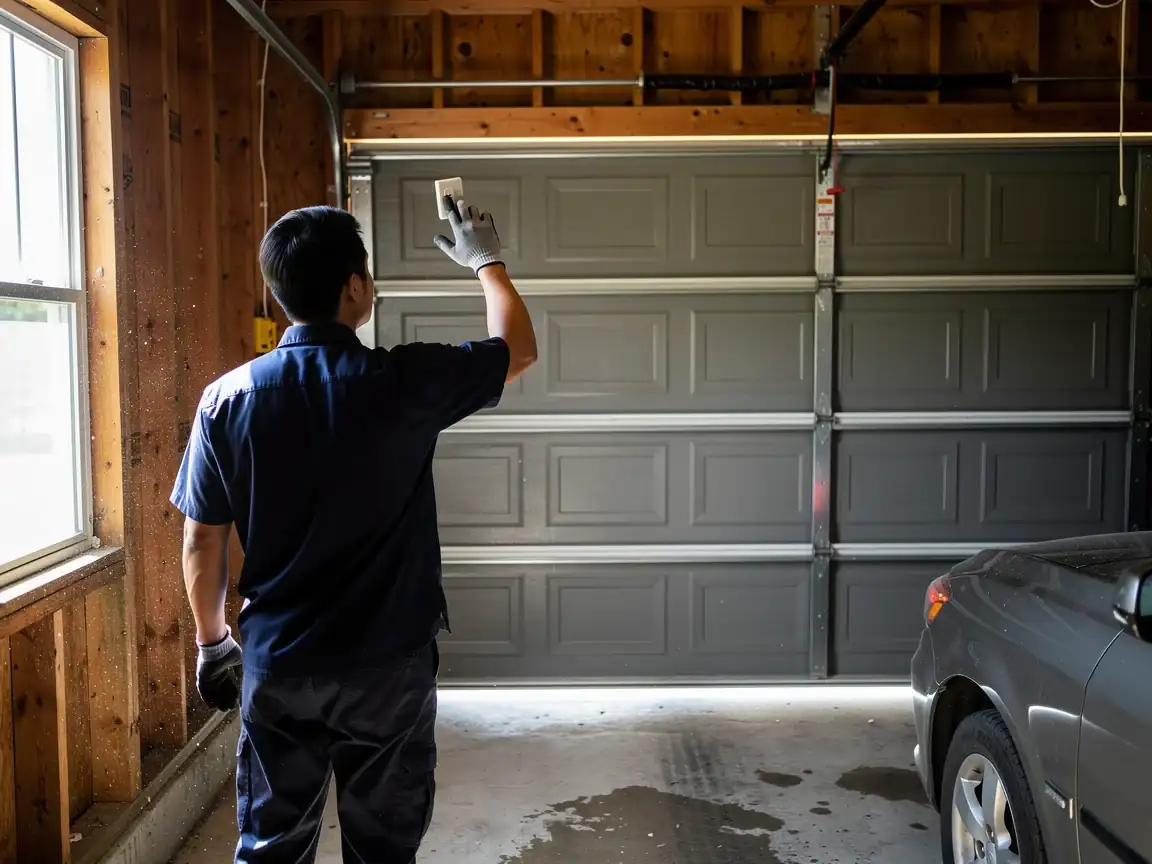
We program remotes and any wall control last, after the door is traveling correctly, since there's no point syncing a remote to a door that's still catching on the way up.
How Long It Takes
A straightforward opener repair
Bad sensor, stripped gear, a reset of travel limits - is a single visit. The bracket and header work that often comes with a 1958-era retrofit install adds time, since we're reinforcing or re-mounting hardware, not just swapping a part. We'd rather tell you that up front than rush it and have the rail work loose again in six months.
Parts availability is the other variable
Common opener components - sensors, drive gears, standard logic boards - we usually carry. Anything tied to a discontinued or uncommon model can mean ordering a part, which pushes the job to a second visit. We won't guess at a timeline we can't back up; if a part has to be ordered, we'll say so and give you what we actually know about when it'll arrive.
What Is on the Truck
For opener calls in Wilmington Manor, the truck carries the parts that fail most on this kind of housing stock: replacement safety sensor pairs, nylon drive gears for chain-drive units, standard limit switches, and mounting hardware sized for reinforcing an old or retrofit header bracket. Delaware's winters mean grease and lubricant stiffen up on older chain-drive units, so we carry cold-rated lubricant rather than the general-purpose kind, since the wrong grease just gums up again at the next cold snap.
We also carry a stock of universal remotes and keypad units, since matching an old opener to a replacement remote is one of the more common small jobs that comes up on the same visit as a bigger repair.
What we don't carry for every model is specialty circuit boards for older or less common openers - those sometimes have to be ordered, and we'll tell you that rather than hold the truck up guessing at a fix that isn't on board.